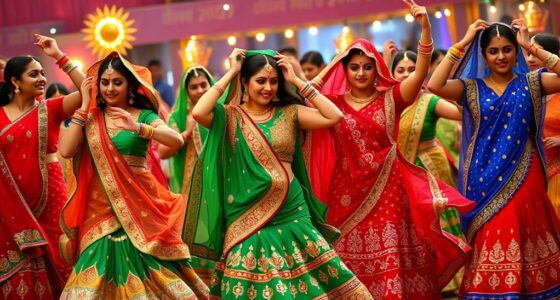
Indigenous weaving techniques hold deep cultural meaning, symbolizing history, spirituality, and social values. Today, these crafts are experiencing a revival as fashion embraces traditional patterns, motifs, and skills. By supporting artisans and their efforts to preserve their heritage, you help sustain these ancient methods and promote cultural pride. As their influence grows in modern design, more stories are shared worldwide. Keep exploring to discover how this vibrant tradition continues to evolve and inspire.
Key Takeaways
- Indigenous weaving techniques are being integrated into contemporary fashion to celebrate cultural heritage.
- Preservation efforts include teaching, cooperatives, and cultural festivals to sustain traditional craftsmanship.
- Modern designers incorporate traditional motifs and symbols, creating a fusion of cultural expression and fashion.
- Global appreciation and recognition elevate indigenous weaving, encouraging pride and economic support for artisans.
- Revival initiatives help keep ancient weaving techniques relevant, fostering respect for indigenous identity and cultural memory.
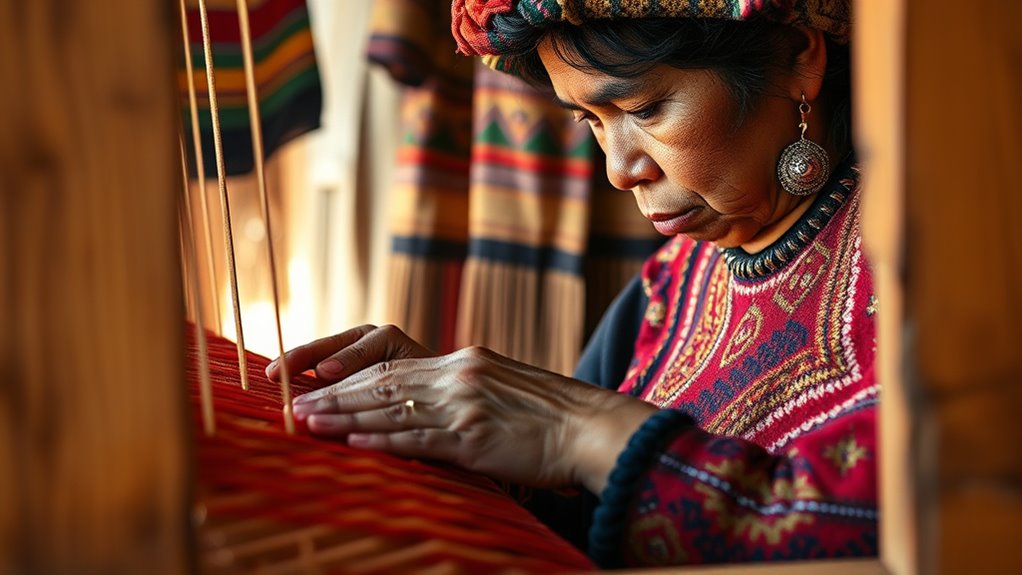
Have you ever wondered how indigenous communities preserve their cultural identity through intricate weaving techniques? These methods aren’t just about creating beautiful textiles; they serve as essential symbols of history, spirituality, and social values. Each pattern, color choice, and weaving style carries a story passed down through generations, making the craft a living record of their cultural significance. When you see an indigenous woven piece, you’re witnessing more than fabric—you’re observing a piece of history woven into every thread.
Indigenous weaving preserves history, spirituality, and social values woven into every intricate pattern and vibrant color.
The preservation efforts surrounding these weaving traditions are paramount, especially as modern influences threaten to overshadow traditional practices. Many indigenous groups are actively working to keep their techniques alive by teaching younger generations, establishing cooperatives, and integrating their crafts into contemporary fashion. These initiatives help maintain the cultural importance of their weaving, ensuring that it remains a vibrant part of community identity rather than fading into obscurity. You might notice that some artisans now collaborate with designers or participate in cultural festivals, which raises awareness and appreciation for their craft. Such efforts serve a dual purpose: they sustain the tradition economically and reinforce its importance as a cultural pillar.
In recent years, there’s been a growing recognition of indigenous weaving as more than just art; it’s seen as a form of cultural resistance and pride. By supporting these preservation efforts, you contribute to the safeguarding of their heritage. When you purchase or wear garments featuring indigenous weaving techniques, you’re helping to promote awareness and respect for their culture. Many artisans incorporate traditional symbols and motifs into their work, which act as a form of storytelling and cultural expression. When you embrace these textiles, you’re acknowledging the effort, history, and cultural significance embedded in each piece.
Furthermore, contemporary fashion has started to draw inspiration from these intricate weaving techniques, helping to elevate their status and reach a broader audience. This renewed interest encourages communities to continue their craftsmanship with pride, knowing their traditions are valued globally. Preservation efforts are essential not just for maintaining a craft but for honoring the identity and history of indigenous peoples. By learning about and supporting these weaving traditions, you play a part in their ongoing story—one where ancient techniques are celebrated and kept alive through modern appreciation. Recognizing the genetic variation that produces unique coat colors in animals like black retrievers can also inspire a deeper appreciation for diversity in traditional crafts and techniques.

Native American Clothing: An Illustrated History
Used Book in Good Condition
As an affiliate, we earn on qualifying purchases.
As an affiliate, we earn on qualifying purchases.
Frequently Asked Questions
How Do Indigenous Weaving Techniques Influence Modern Fashion Design?
You see how indigenous weaving techniques influence modern fashion design by incorporating cultural symbolism into your creations. These techniques inspire textile innovation, allowing you to blend traditional patterns with contemporary styles. By embracing these methods, you honor Indigenous heritage while creating unique, meaningful pieces. This fusion of old and new not only enriches your designs but also promotes cultural appreciation and sustainability in the fashion industry.
What Are the Main Challenges Faced in Reviving Traditional Weaving Methods?
You face challenges in reviving traditional weaving methods, like balancing cultural preservation with economic sustainability. As you work to keep these techniques alive, you often encounter limited resources, modernization pressures, and loss of craftsmanship. These hurdles threaten the rich symbolism woven into each piece, making it harder to sustain communities and honor heritage. Overcoming these obstacles requires dedication to both cultural integrity and creating viable economic opportunities.
How Can Consumers Support Indigenous Weavers Ethically?
You can support indigenous weavers ethically by choosing Fair Trade-certified products, ensuring fair wages and respectful working conditions. Show Cultural Appreciation by learning about their traditions and stories behind the designs, which helps preserve their heritage. Avoid mass-produced imitations, and instead, buy directly from artisans or reputable organizations. Your conscious purchasing supports sustainable livelihoods, empowers communities, and honors the cultural significance of their weaving techniques.
Are There Specific Regions Renowned for Unique Weaving Styles?
You’ll find that regions like Guatemala are renowned for their vibrant, intricate textile styles rooted in rich cultural heritage. Regional diversity influences weaving techniques, creating distinct patterns and materials. For instance, Mayan communities preserve their unique methods, showcasing centuries-old traditions. Supporting these regions helps sustain their cultural heritage, empowering local artisans. By choosing authentic, region-specific woven products, you honor their craftsmanship and guarantee their techniques continue thriving in the modern world.
What Role Do Government Policies Play in Preserving Indigenous Weaving?
Government policies play a vital role in preserving indigenous weaving by supporting cultural preservation initiatives. You’ll see policy impact through funding, education programs, and protective measures that encourage artisans to continue their traditions. These policies help safeguard traditional techniques from extinction, ensuring they’re passed down to future generations. By actively promoting indigenous weaving, governments empower communities, preserve cultural heritage, and integrate these unique styles into modern fashion, enriching cultural diversity worldwide.
handwoven indigenous fabric accessories
As an affiliate, we earn on qualifying purchases.
As an affiliate, we earn on qualifying purchases.
Conclusion
So, as you slip that indigenous woven piece into your wardrobe, remember you’re not just making a fashion statement—you’re keeping ancient secrets alive. Who knew thread and tradition could be so rebellious? Maybe next time, you’ll think twice before dismissing those old weaving methods as mere craft. After all, in a world obsessed with novelty, isn’t it delightfully ironic to wear history’s quiet rebellion? Keep weaving, keep questioning—and maybe, just maybe, change the world one stitch at a time.

Basket Weaving Lover Design for Basket Makers and Weavers T-Shirt
Basket Weaving Craft design. Handcrafted woven basketry pattern, ideal for weavers and basket makers who appreciate traditional weaving…
As an affiliate, we earn on qualifying purchases.
As an affiliate, we earn on qualifying purchases.

QAZWZML Native American Patterns Printed long scarf, fringed shawl, suitable for everyday wear or outdoor activities in spring, autumn and winter.
Material: Made from polyester fabric, this Native American Patterns printed scarf is warm and comfortable, providing warmth and…
As an affiliate, we earn on qualifying purchases.
As an affiliate, we earn on qualifying purchases.