To choose the right air purifier, first consider your space size—smaller models suit small rooms, while larger, more powerful units are better for big areas or shared homes. Look for features like sensors, effective filtration technologies like HEPA and UV, and easy maintenance. Budget accordingly, balancing cost with the device’s capabilities. For ongoing air quality, understanding these factors helps, and exploring more details can guide you to the best fit for your needs.

Get beauty and skincare favorites delivered free with Prime
- Fast, free delivery on millions of items
- Prime Video, Amazon Music and more included
- Member-only deals all year
Key Takeaways
- Match the purifier’s coverage area to your room size to ensure effective air filtration.
- Choose smaller, portable units for small spaces; larger, high-capacity models for big rooms.
- Select models with room-specific features like sensors and auto mode for shared or variable environments.
- Consider multi-stage filtration (HEPA, UV) based on pollutants common in your space.
- Prioritize ease of maintenance and appropriate capacity to sustain performance over time.
As an affiliate, we earn on qualifying purchases.
How Do I Choose the Right Air Purifier Size for My Space?
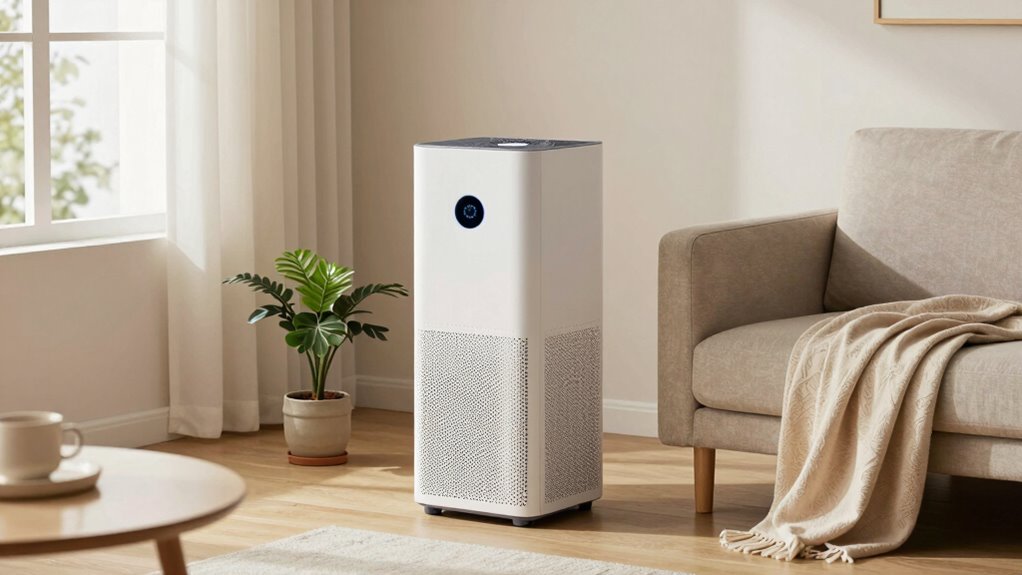
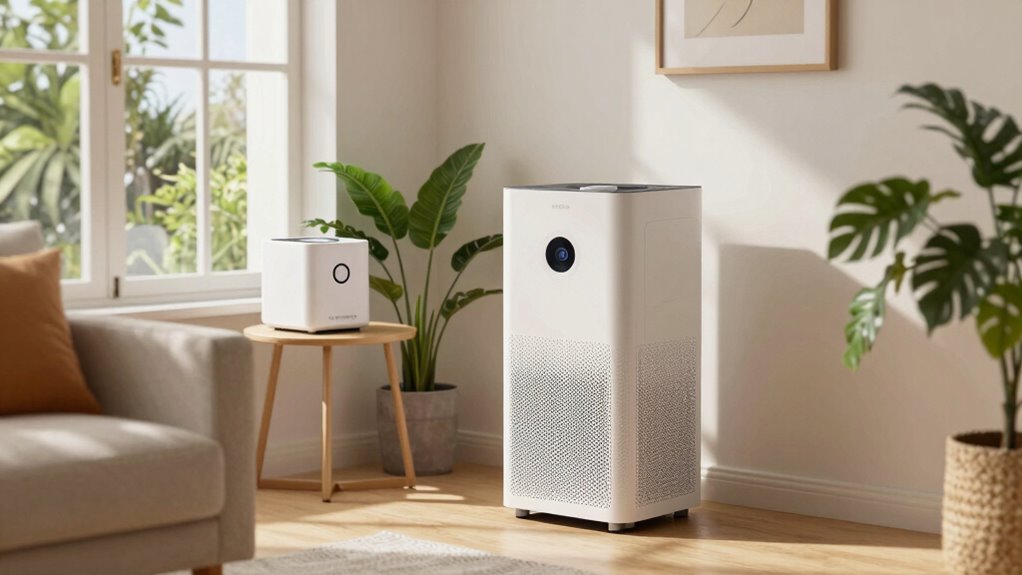
How do you determine the right air purifier size for your space? Start by considering your room size. Larger rooms need a more powerful purifier to effectively improve air quality, while smaller spaces require less coverage. Check the square footage the device claims to cover and match it to your room’s size. An undersized purifier won’t filter the air efficiently, leaving pollutants behind, while an oversized one might waste energy. Think about your air quality needs—if you have allergies or pollution concerns, choose a purifier suited for your room’s dimensions to guarantee ideal results. Properly sizing your air purifier guarantees better air quality and a healthier environment for you and your family. Additionally, understanding the air purifier’s capacity ensures you select a device that provides optimal performance for your specific space. Considering factors like microplastics in dust can also help you choose a purifier capable of addressing specific pollutants relevant to your environment. Paying attention to room airflow can further enhance your purifier’s effectiveness by ensuring the air circulates properly. Recognizing the importance of air exchange rates can help you select a model that maintains consistent air quality over time. Moreover, selecting a device with the right filter type can significantly impact how well it removes particular contaminants from your environment.
large space air purifier with UV filter
As an affiliate, we earn on qualifying purchases.
As an affiliate, we earn on qualifying purchases.
What Features Should I Look for in an Air Purifier for Different Homes?
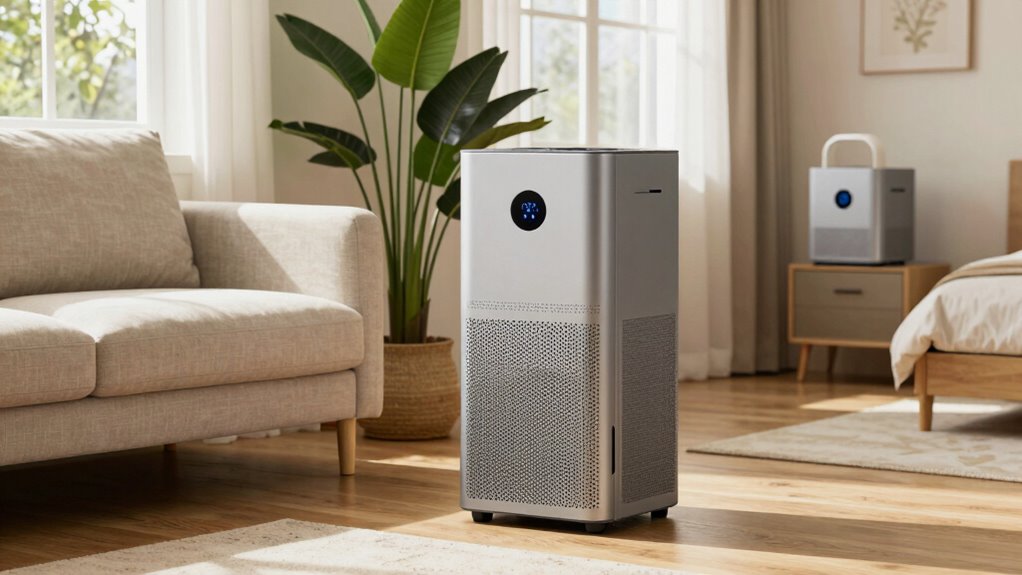
Different homes have unique needs, so choosing an air purifier with the right features can make a significant difference in air quality. Look for models that include clear air quality indicators, so you can easily monitor your indoor air and adjust settings as needed. These indicators help you understand how well your purifier is working and when to take action. Additionally, consider the filter lifespan—long-lasting filters reduce maintenance and replacement costs, ensuring consistent performance over time. Some purifiers offer auto mode, adjusting fan speed based on air quality readings, which is useful in shared homes or spaces with fluctuating pollutants. Prioritizing these features helps you select an air purifier that effectively improves your air quality while fitting your specific living environment. Incorporating air quality monitoring features can further enhance your ability to maintain a healthy indoor environment, especially when understanding website performance metrics can help you track how well your purifier is functioning over time. Being aware of the filter replacement intervals can also ensure your purifier continues to operate efficiently and effectively. Regularly reviewing filter lifespan and performance data can help you make timely replacements, maintaining optimal air purification.
air purifier with air quality sensors
As an affiliate, we earn on qualifying purchases.
As an affiliate, we earn on qualifying purchases.
Which Air Purifier Technologies Are Best for My Needs?
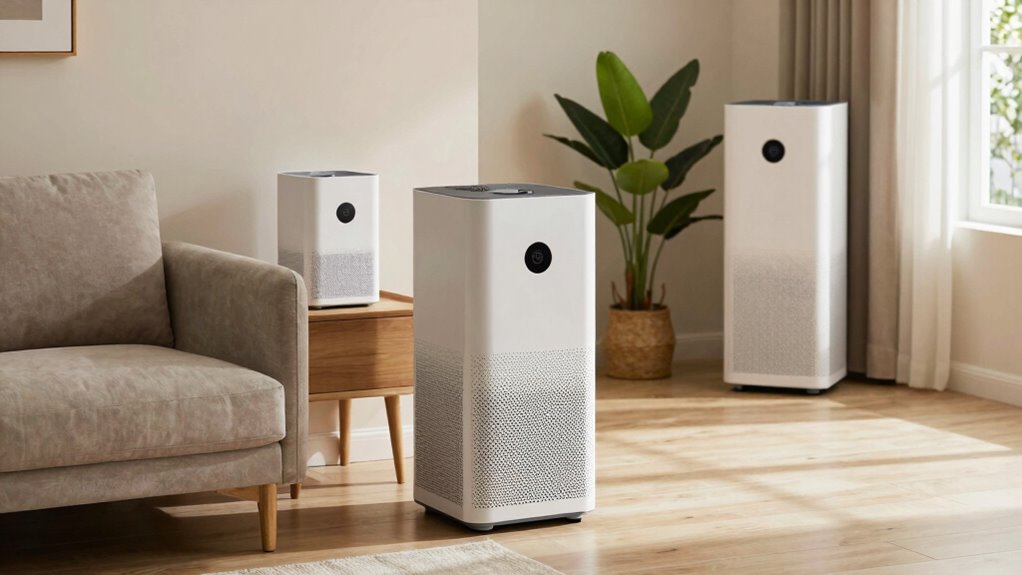
Choosing the right air purifier technology depends on your specific needs and the types of pollutants you’re aiming to remove. HEPA filters are excellent for capturing airborne particles like dust, pollen, pet dander, and smoke, making them ideal for allergy sufferers or those with respiratory issues. UV sterilization uses ultraviolet light to kill bacteria, viruses, and mold spores, providing an extra layer of protection, especially in shared or high-traffic spaces. If your main concern is particulate matter, a HEPA filter is your best bet. For biological contaminants, UV sterilization can enhance purification. Some advanced purifiers combine both technologies, offering all-encompassing filtration. Consider your environment and specific pollutants to choose the most effective technology for your home. Additionally, understanding the importance of sustainable weight loss and healthy lifestyles can help you maintain overall well-being, which also contributes to healthier indoor environments. It’s also worth noting that the effectiveness of air purifiers can be influenced by electric power generation with bike generators, as energy-efficient models help reduce overall environmental impact. Being aware of indoor air quality improvements can further assist in selecting the best system for your space, especially when considering toilet maintenance and water efficiency, which impacts overall home health and sustainability. Incorporating knowledge about dog breeds and their behaviors can also help in designing environments that reduce pet-related pollutants and allergens in shared homes.
portable air purifier for shared homes
As an affiliate, we earn on qualifying purchases.
As an affiliate, we earn on qualifying purchases.
How Much Should I Budget for a Quality Air Purifier?
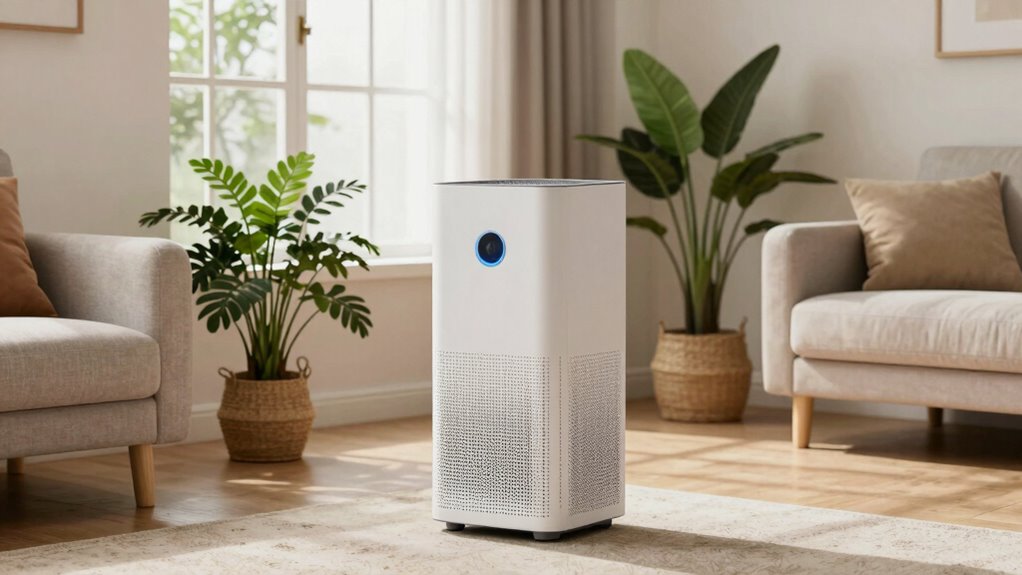
Investing in a quality air purifier doesn’t always mean breaking the bank, but it’s important to set a realistic budget based on your needs. Many fall prey to air quality myths, believing cheaper models are just as effective. In reality, higher-quality units often deliver better filtration and durability. Consider your space size and the features you need to avoid air purifier myths that suggest all models perform equally. Here’s a rough idea:
| Budget Range | Features & Quality |
|---|---|
| $50–$100 | Basic filtration, limited coverage |
| $100–$300 | Better filtration, medium coverage |
| $300–$600 | Advanced features, large spaces |
| $600+ | Premium, highest efficiency |
Knowing your needs helps you balance cost with performance, ensuring cleaner air without overspending. Incorporating natural filtration systems can further enhance air quality and sustainability, especially when combined with proper maintenance practices. Additionally, understanding the importance of filtration technology can help you select a model that effectively removes pollutants specific to your environment. It’s also beneficial to consider air quality standards to ensure your chosen purifier meets safety and health guidelines.
How Do I Maintain and Optimize My Air Purifier Over Time?
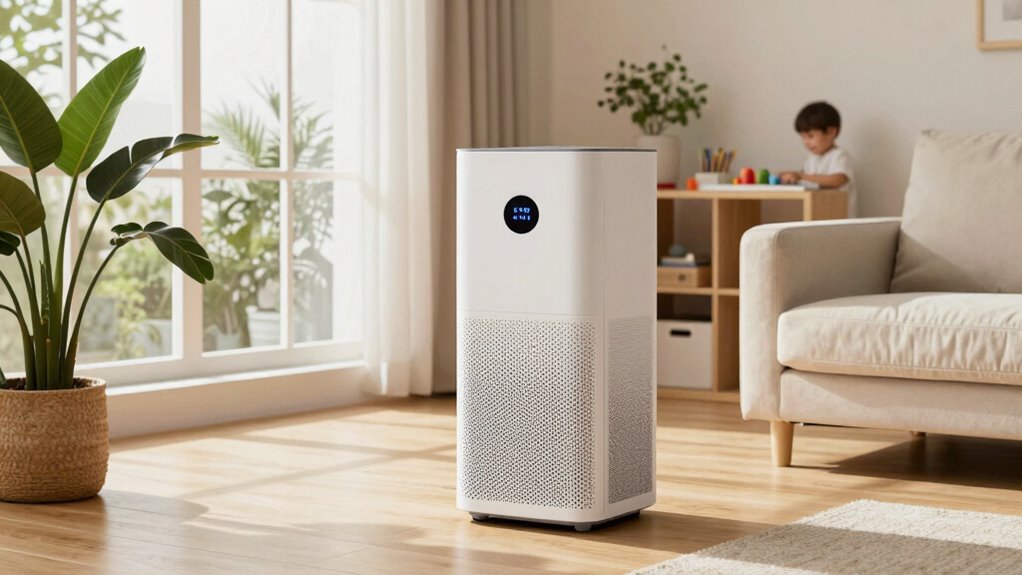
Regular maintenance is essential to keep your air purifier working effectively and guarantee it continues to improve your indoor air quality. Start by replacing filters as recommended by the manufacturer—clogged or dirty filters reduce efficiency and air quality. Keep track of filter replacement schedules and use high-quality filters suited to your unit. Additionally, perform air quality monitoring regularly to assess if your purifier is meeting your expectations. This helps you identify when performance drops or if your environment changes, requiring adjustments. Clean the exterior and vents periodically to prevent dust buildup. Proper maintenance ensures your air purifier operates at its best, prolongs its lifespan, and maintains the fresh air you need. Staying vigilant with filter replacement and air quality checks guarantees ongoing indoor air health. Understanding the importance of testing accuracy and proper measurement tools can help you better evaluate your indoor air quality and ensure your purifier is functioning optimally. Incorporating air quality sensors can further enhance your ability to monitor real-time conditions and optimize performance.
Frequently Asked Questions
Can I Use a Small Air Purifier in a Large Room Effectively?
You can use a small air purifier in a large room, but it won’t be as effective in improving air quality. Smaller units are designed for limited space, so their airflow and filtration capacity may struggle to cover the entire room size. To guarantee ideal air quality, choose an air purifier that matches your room size. Otherwise, you risk leaving some areas less clean, which defeats the purpose of air purification.
Are There Specific Filters Better for Shared Homes?
Yes, in shared homes, certain filter types like HEPA filters are better because they trap airborne particles effectively, improving overall air quality. Look for models with air quality sensors that automatically adjust fan speeds based on pollution levels, ensuring cleaner air without constant manual adjustments. Combining HEPA filters with activated carbon can also help combat odors and VOCs, making the environment healthier for everyone sharing the space.
How Loud Are Different Air Purifiers During Operation?
Different air purifiers vary in noise levels, with decibel ratings ranging from quiet to loud. Most models operate between 20-50 decibels, comparable to a whisper or background noise. Cheaper units may be noisier, especially on high settings, while higher-end purifiers are designed to operate quietly. When choosing, consider noise levels if you’re sensitive, and look for decibel ratings in product specs to find one that suits your environment.
Do Smart Features Improve Air Purification Performance?
Smart features can enhance air purification by optimizing filter effectiveness and adapting to your environment. Imagine your purifier as a vigilant guard, adjusting its efforts based on real-time air quality data. These technologies allow the device to run more efficiently, improving overall performance. While they don’t directly purify the air, smart technology guarantees the filter works at its best, providing cleaner air more consistently and conveniently.
Can Air Purifiers Remove Odors From Multiple People’s Activities?
Yes, air purifiers can remove odors from multiple people’s activities. They use activated carbon filters for odor elimination, effectively absorbing activity odors like cooking, pets, and smoke. To handle odors from several sources, choose a purifier with a high-capacity carbon filter and good airflow. Regularly replace filters and guarantee proper placement in shared spaces for the best results, keeping the air fresh and odor-free.
Conclusion
Choosing the right air purifier is like finding the perfect puzzle piece—when it fits just right, your home breathes easier. By considering your space size, desired features, and budget, you’ll find an appliance that works harmoniously with your lifestyle. Regular maintenance keeps your purifier humming along smoothly, ensuring fresh air flows like a gentle breeze through your home. With a little research, you’ll turn your living space into a sanctuary of clean, healthy air.
Halloween Picks
halloween
As an affiliate, we earn on qualifying purchases.