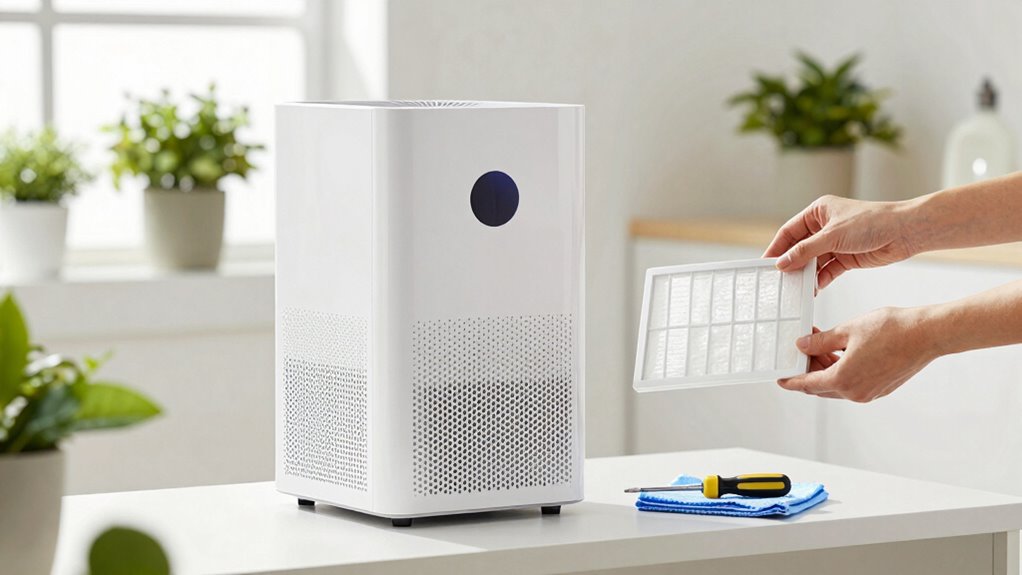

To make your air purifier last longer, place it in a central, open space away from walls and obstacles, and keep windows and doors closed during operation. Regularly check and replace filters based on manufacturer guidelines—HEPA filters every 6-12 months, carbon filters every 3-6 months, and clean pre-filters monthly. Avoid common mistakes like blocking vents or neglecting maintenance. This quick guide covers essential tips to help your device work efficiently for years to come.

Get beauty and skincare favorites delivered free with Prime
- Fast, free delivery on millions of items
- Prime Video, Amazon Music and more included
- Member-only deals all year
Key Takeaways
- Place the purifier on a stable, central surface away from walls to ensure proper airflow.
- Regularly clean pre-filters and replace main filters per manufacturer’s schedule to maintain efficiency.
- Keep the surrounding area free of dust and obstructions to prevent airflow blockages.
- Monitor air quality and reset or calibrate the device when sensors indicate the need.
- Perform routine inspections and clean air inlets and sensors to prevent dust buildup and maintain performance.
Products Worth Considering

Levoit Vital 100S-P Smart Air Purifier with Washable Pre-Filter

LEVOIT Vital 200S-P Smart Air Purifier for Large Rooms up to 1875 ft², Quiet 27 dB Operation, AHAM VERIFIDE Certified, Air Quality Monitor,

Blueair Blue Pure 211i Max Air Purifier for Large Rooms
As an affiliate, we earn on qualifying purchases.
How to Set Up Your Air Purifier for Best Results

To guarantee your air purifier works effectively, proper setup is essential from the start. First, place it in a central location, away from walls or furniture that could block airflow. This placement helps facilitate optimal air circulation, improving overall air quality. Confirm the unit is on a stable, flat surface. Keep windows and doors closed during operation to prevent outside pollutants from entering. Adjust the settings according to your needs, whether for general air quality or specific concerns like allergies. Regularly check the filter compartment to ensure it’s installed correctly, as improper placement can reduce efficiency and shorten filter lifespan. Additionally, understanding air quality standards can help you monitor and maintain a healthier environment. Being aware of common indoor pollutants, such as microplastics in dust, can further guide you in optimizing your air purifier’s performance. Proper setup not only enhances air quality but also ensures your purifier runs smoothly, saving you money and extending its longevity. Proper placement is key to optimizing your air purifier’s performance. Proper maintenance routines further contribute to its long-term effectiveness.
How Often Should You Change or Clean Filters?

Regularly checking and maintaining your filters is key to ensuring your air purifier works efficiently. The frequency of cleaning or replacing filters depends on filter types and your environment. HEPA filters typically need replacement every 6-12 months, while carbon filters may last 3-6 months. Pre-filters require monthly cleaning, especially in dusty areas. Follow the manufacturer’s suggested replacement schedules for ideal performance. Additionally, understanding the filter lifespan can help you plan proactive replacements and avoid reduced air quality. Proper maintenance also involves air purifier placement, which can influence filter longevity and overall efficiency. Ensuring proper air circulation within the room can also help extend the life of your filters. Recognizing environmental factors that affect filter wear is essential for optimal air quality management, especially in areas with pollution levels that can accelerate filter deterioration.
Routine Maintenance Tips to Keep Your Air Clean

Maintaining your air purifier regularly guarantees it operates at peak performance and keeps your indoor air clean. To improve air quality and extend the filter lifespan, check and clean the pre-filter often, removing dust and debris. Replace or clean filters as recommended by the manufacturer to assure maximum filtration. Keep the exterior of your unit dust-free with a soft cloth, preventing dust buildup that can hinder airflow. Regularly inspecting the air quality and replacing filters when needed prevents strain on the motor and maintains efficient operation. Avoid neglecting routine maintenance, as it can lead to reduced airflow and decreased filter effectiveness. Proper calibration of sensors and measurement tools, similar to testing accuracy, ensures your air purifier functions correctly and provides reliable results. Staying informed about digital concepts related to air purification can also help you optimize its performance. Additionally, understanding filter technology can assist you in choosing the most effective replacement filters for your model. By staying consistent with these tips, your air purifier will deliver cleaner air longer and perform reliably over time. Furthermore, following manufacturer guidelines for maintenance schedules can help optimize its lifespan and efficiency. Incorporating biosensors into your maintenance routine can also provide real-time feedback on air quality, enabling more precise and timely interventions.
Common Mistakes That Hurt Your Air Purifier’s Performance

Neglecting common mistakes can considerably diminish your air purifier’s effectiveness and shorten its lifespan. One major error is disregarding filter replacement, which harms air quality and reduces filter lifespan. Overusing the purifier in a dusty environment without regular cleaning also strains the device. Additionally, placing it in poorly ventilated spaces or blocking air intake vents hampers airflow. To visualize, consider this table:
| Mistake | Effect | Consequence |
|---|---|---|
| Ignoring filter replacement | Reduced air quality | Shortens filter lifespan |
| Operating in dusty areas | Clogs filter quickly | Decreases performance |
| Blocking vents | Impairs airflow | Strains the motor |
Ensuring proper landscaping around your device can also help prevent dust buildup and maintain optimal airflow. Incorporating proper airflow techniques can significantly enhance the efficiency of your air purifier. Regular maintenance and awareness of air purifier placement are crucial for optimal performance. Maintaining clear air intake vents and avoiding clutter around the device can further improve airflow. Being mindful of air quality levels in your environment can help you make necessary adjustments to prolong your device’s lifespan. Avoid these errors to ensure your air purifier runs efficiently, maintains good air quality, and prolongs its usability.
Troubleshooting Tips for Long-Term Efficiency

To keep your air purifier running efficiently over the long term, troubleshooting common issues quickly is essential. Regularly check your device’s air quality monitoring to identify if filters need replacement sooner than expected. Here are some tips:
Regularly monitor air quality and troubleshoot promptly to keep your purifier working efficiently and extend its lifespan.
- Check the filter lifespan – If airflow decreases or odors persist, replace the filter promptly to maintain performance.
- Inspect for blockages – Ensure vents aren’t obstructed, which can impair air circulation.
- Reset the device – Sometimes, a simple reset can resolve sensor or display glitches.
- Clean sensors and air inlets – Dust accumulation can affect air quality monitoring accuracy, leading to inefficient operation. Being mindful of regional air quality factors can help you anticipate when more frequent maintenance might be needed.
- Be aware of regional flavors or additives – Certain air pollutants or fragrances, similar to regional coffee and tea flavorings, can influence your air purifier’s effectiveness and require more frequent maintenance. Additionally, understanding air purification technology can help you optimize your device’s longevity and performance. Recognizing regional pollutant levels can also guide you in scheduling timely filter replacements and servicing.
Frequently Asked Questions
Can I Use Any Filter Type With My Air Purifier Model?
You can’t use any filter type with your air purifier; filter compatibility depends on your model. Check your user manual or manufacturer’s guidelines to find compatible filters. Using the wrong filter can damage your device or reduce its efficiency. Follow recommended replacement schedules to keep it running smoothly. Always choose filters designed specifically for your model to guarantee peak performance and longevity.
How Do I Program or Schedule My Air Purifier for Daily Use?
Sure, programming your air purifier might seem like rocket science, but it’s just device compatibility and simple programming techniques. Most models have a digital control panel or app where you set daily schedules—think of it as giving your purifier a daily to-do list. Just tap or swipe, choose your preferred times, and let it do its job. Now, your air stays fresh, all without you lifting a finger—ironic, isn’t it?
Are There Specific Cleaning Products Recommended for Maintaining the Device?
You should use mild, non-abrasive cleaning products, like a damp cloth with a gentle detergent, to maintain your air purifier. Avoid harsh chemicals that could damage filters or components. Follow your device’s cleaning schedule and pay attention to replacement indicators, which signal when filters need changing. Regular cleaning guarantees peak performance and longevity, making your air purifier last longer and work more efficiently.
What’s the Ideal Placement to Maximize Air Purifier Efficiency?
You should place your air purifier in a central location away from walls and furniture to ensure ideal placement. This position allows it to effectively improve indoor air quality by maximizing airflow and coverage. Keep it elevated on a table or shelf if possible, and avoid placing it near sources of pollution or high humidity. Proper placement helps your device operate efficiently, extending its lifespan and maintaining clean, healthy air in your space.
How Can I Tell if My Air Purifier Is Malfunctioning?
You notice strange noises or a sudden increase in noise levels, signaling your air purifier might be malfunctioning. If the filter lifespan seems shorter than usual or if air quality doesn’t improve despite running it regularly, these are red flags. Pay attention to persistent odors or decreased airflow too. These signs suggest it’s time to check or replace filters, ensuring your device functions efficiently and quietly, safeguarding your indoor air quality.
Conclusion
Think of your air purifier as a trusted garden that needs regular tending. When you set it up correctly, clean and replace filters on schedule, and perform routine maintenance, it blooms with revitalized, clean air. Avoid common mistakes, troubleshoot issues early, and your purifier will thrive, providing you with healthier air for years to come. With consistent care, you’re nurturing a gust of fresh life—your sanctuary of clean, pure air.