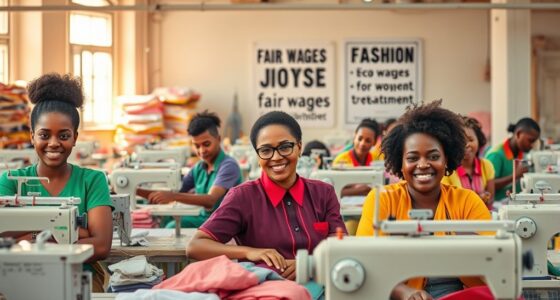
Zero-waste fashion patterns focus on designing clothing that minimizes fabric waste by maximizing material use from the start. You can create innovative shapes and cuts, like interlocking pieces or asymmetrical designs, that fit together efficiently, reducing scraps. Choosing sustainable fabrics and thinking about the entire lifecycle of your garments also play key roles. If you keep exploring, you’ll discover how to blend creativity with sustainability, making stylish yet eco-friendly clothing possible.
Key Takeaways
- Utilize innovative pattern techniques like folding, draping, and interlocking pieces to maximize fabric use and minimize waste.
- Design shapes that fit together like a puzzle to eliminate excess fabric scraps during pattern layout.
- Select sustainable, eco-friendly textiles to ensure environmentally responsible fashion production.
- Incorporate creative cuts and asymmetrical designs that optimize fabric efficiency while maintaining style.
- Consider the full lifecycle of garments, from sourcing sustainable materials to ethical manufacturing practices.
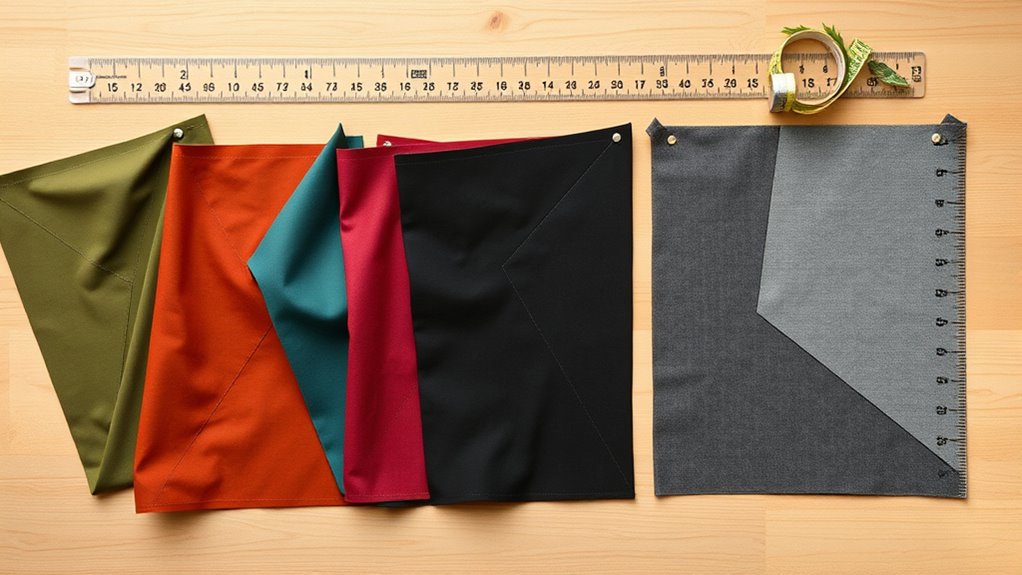
Zero-waste fashion patterns are transforming the way designers and DIY enthusiasts approach sustainable clothing. Instead of generating excess fabric scraps that often end up in landfills, you now have the opportunity to craft garments that maximize fabric use from the very start. This approach encourages you to think critically about your design process, guaranteeing every inch of fabric serves a purpose. By focusing on zero-waste techniques, you’re not only reducing waste but also aligning your creative efforts with sustainable textile choices that minimize environmental impact. When selecting fabrics, you might opt for organic cotton, hemp, or recycled textiles—materials that are eco-friendly and ethically sourced. This conscious choice supports ethical manufacturing practices by promoting transparency and fair labor standards, which are essential components of sustainable fashion.
Designing with zero-waste patterns pushes you to innovate and think outside traditional patterns that often leave behind unusable scraps. Instead, you learn to develop shapes and cuts that fit together like a puzzle, making the most of your fabric while maintaining a stylish and functional garment. These patterns often involve creative techniques such as draping, asymmetrical designs, or pattern pieces that interlock seamlessly, reducing the need for additional fabric. As you experiment with different styles, you also become more aware of how your choices impact the environment. Zero-waste techniques challenge you to consider not just the aesthetics but also the lifecycle of your clothing, fostering a mindset of responsible consumption. Incorporating fabric efficiency into your design process can significantly reduce textile waste and promote sustainability.
Furthermore, adopting zero-waste patterns can foster a deeper connection to ethical manufacturing practices. When you design with intention, you’re more likely to prioritize sourcing from suppliers who adhere to fair labor standards, use sustainable textiles, and maintain environmentally friendly processes. This holistic approach ensures your clothing aligns with your values, supporting a fashion industry that respects both people and the planet. It’s empowering to know that your craftsmanship can contribute to reducing textile waste and promoting transparency in the supply chain.
Ultimately, zero-waste fashion patterns invite you to be both creative and conscientious. They challenge you to rethink how garments are made, emphasizing efficiency, sustainability, and ethics. With each project, you move closer to a wardrobe that’s not only stylish but also environmentally responsible, proving that fashion can be innovative while respecting our planet’s finite resources.
Frequently Asked Questions
How Do Zero-Waste Patterns Impact Garment Fit and Comfort?
Zero-waste patterns can improve garment fit and comfort by enhancing garment mobility and fabric drape. When you design with efficiency, you carefully consider how the fabric moves and hangs, resulting in a better fit that follows your body’s natural movements. This approach minimizes excess fabric and stress points, making your clothes feel more comfortable and allow for greater ease of movement, ensuring that your wardrobe is both stylish and functional.
What Tools Are Essential for Creating Zero-Waste Fashion Patterns?
You need crucial pattern drafting tools like rulers, French curves, and pencils to create precise zero-waste fashion patterns. Cutting tools such as rotary cutters, scissors, and marking chalk are indispensable for accurate fabric manipulation and seamless pattern assembly. These tools help you design efficiently, minimize waste, and ensure your patterns fit well. With the right equipment, you can streamline your process and produce sustainable, well-crafted garments effortlessly.
Can Zero-Waste Techniques Be Applied to Mass Production?
You can absolutely apply zero-waste techniques to mass production, and it’s a smart move. Coincidentally, many mass production challenges like waste and inefficiency are tackled with scalable strategies rooted in zero-waste principles. By integrating these methods, you improve sustainability and reduce material waste. The key is adapting zero-waste design to high-volume processes, ensuring that your scalable strategies align with zero-waste goals for efficient, eco-conscious manufacturing.
How Do Designers Balance Creativity With Sustainability in Pattern Making?
You balance creativity with sustainability in pattern making by embracing sustainable innovation and working within creative constraints. You explore innovative techniques that reduce waste while maintaining design integrity, challenging yourself to think outside the box. By viewing constraints as opportunities, you develop unique patterns that are both artistic and eco-friendly. This approach guarantees your designs are sustainable without sacrificing originality, making your fashion practice more responsible and inspiring.
Are There Specific Fabrics Best Suited for Zero-Waste Designs?
You should choose fabrics that prioritize material sustainability, like organic cotton, hemp, linen, or recycled fabrics. These options support eco-friendly fabric selection and reduce waste during production. Natural fibers often have a lower environmental impact, making them ideal for zero-waste designs. By selecting sustainable materials, you guarantee your pattern aligns with eco-conscious goals while maintaining quality and creativity in your fashion pieces.
Conclusion
By embracing zero-waste fashion patterns, you can create stunning designs without waste, making your process more sustainable and rewarding. Some might think it’s limiting, but you’ll find it sparks creativity and innovation. Don’t let the idea of constraints hold you back—see them as opportunities to craft unique, efficient pieces that stand out. With a little practice, you’ll enjoy designing more thoughtfully while contributing to a healthier planet.