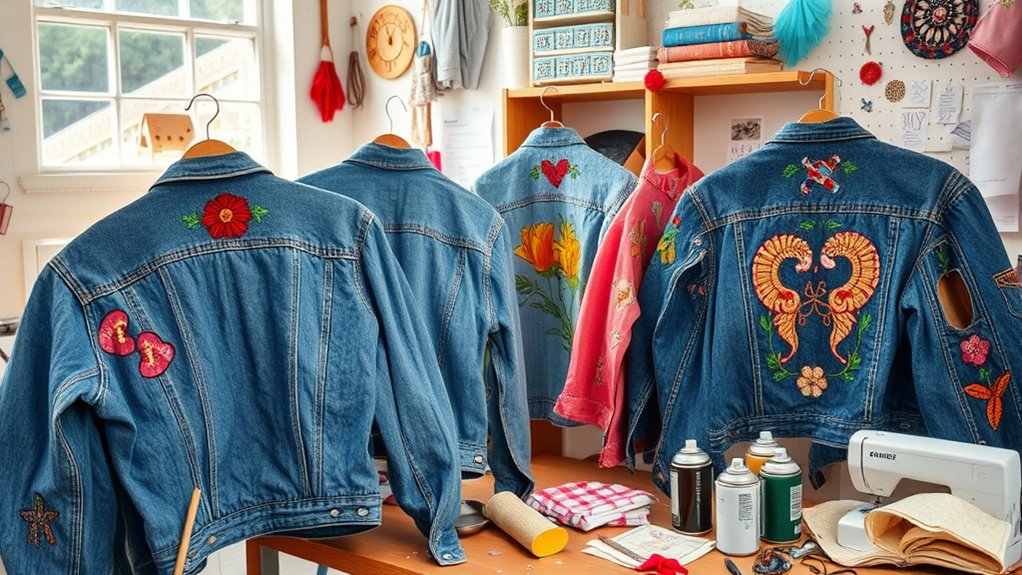

Upcycling and customization let you turn your wardrobe into a unique, eco-friendly expression of your style. By repurposing old clothing through simple DIY projects like patching, distressing, or embroidery, you reduce waste and cut costs. These personalized touches help showcase your individuality while supporting sustainable fashion practices. Whether you’re new to DIY or want fresh ideas, exploring these techniques can boost your confidence and creativity — and there’s plenty more to discover below.
Key Takeaways
- Upcycling reduces waste and environmental impact by transforming old clothing into unique, fashionable pieces.
- DIY customization projects like distressing, patches, and embroidery allow personal expression without professional skills.
- Personalizing wardrobe items fosters creativity, individuality, and a deeper connection to your clothing.
- Community resources such as tutorials and workshops inspire sustainable fashion practices and skill development.
- Customization and upcycling promote eco-friendly wardrobe building, saving money while making stylish, environmentally responsible choices.
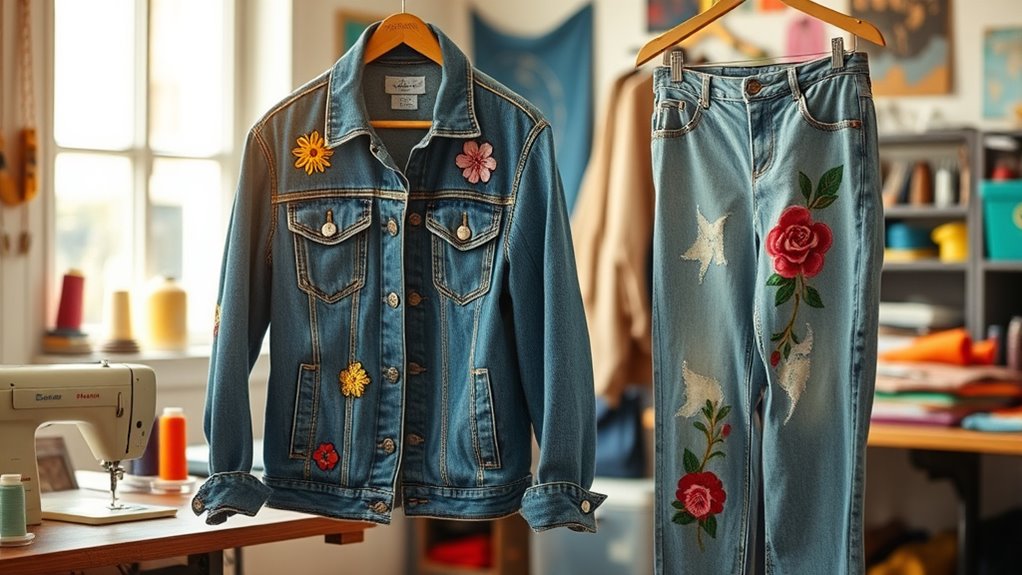
Upcycling and customization have become popular ways to give new life to old items while expressing your personal style. When you choose to upcycle, you’re actively participating in sustainable fashion, reducing waste and the demand for fast fashion’s environmental toll. DIY clothing projects are at the heart of this movement, allowing you to transform worn or outdated pieces into something fresh, unique, and truly yours. Instead of discarding old t-shirts or jeans, you can breathe new life into them with a little creativity and effort. This not only saves money but also minimizes your environmental footprint, making your wardrobe more eco-friendly.
Getting started with DIY clothing projects is easier than you think. You don’t need to be a professional seamstress to add a personal touch to your clothes. Simple modifications like distressing jeans, sewing on patches, or adding embroidery can make a big difference. For example, take an old, plain t-shirt and turn it into a statement piece with fabric paint or embellishments. Or transform a pair of baggy jeans into fitted, stylish ones by taking in the seams or customizing the pocket designs. These small, manageable projects help you develop your skills while giving your wardrobe a unique edge. Plus, they allow you to experiment with different styles without the financial commitment of buying new items.
Start simple: distress jeans, add patches, or embellish shirts to personalize your wardrobe sustainably.
When you upcycle, you’re not just creating something visually appealing—you’re making a statement about your values. Customization lets you reflect your personality through your clothing choices, making each piece one-of-a-kind. Whether you’re adding patches to show off your favorite bands or tie-dyeing a plain dress, these modifications turn mass-produced items into personal artifacts. This process encourages you to think creatively and sustainably, fostering a deeper connection to what you wear. It’s empowering to know that you can craft something that’s both environmentally responsible and stylish.
Moreover, the community around upcycling and DIY clothing projects offers endless inspiration. You can find tutorials online, join local workshops, or swap ideas with friends. Sharing your projects not only boosts your confidence but also spreads awareness about sustainable fashion. The more people participate, the more we can challenge the throwaway culture of fast fashion. Additionally, considering the contrast ratio in your clothing choices can help you select colors and materials that enhance your custom designs and overall style. Ultimately, upcycling and customization give you the tools to build a wardrobe that’s eco-conscious, expressive, and uniquely yours. It’s a practical way to reduce waste, save money, and showcase your creativity—all while making a positive impact on the planet.
Top picks for "upcycl customization personaliz"
Open Amazon search results for this keyword.
As an affiliate, we earn on qualifying purchases.
Frequently Asked Questions
What Are the Best Tools for Beginner Upcycling Projects?
For beginner upcycling projects, start with simple tools like fabric scissors, a sewing needle, and fabric glue. These make fabric selection easier and help you create clean finishes. Remember to prioritize tool safety; always handle scissors carefully and work in a well-lit space. As you gain confidence, you can explore more advanced tools. Keep your workspace organized to guarantee safety and efficiency in your upcycling journey.
How Do I Choose Fabrics Suitable for Customization?
Imagine running your fingers over a soft, sturdy fabric—it’s the perfect clue. When choosing fabrics, look for types like cotton, denim, or linen, which are easy to work with and hold up well. Pay attention to material care labels; choose fabrics that match your skill level and project needs. By doing so, you guarantee your customization efforts are fun and successful, giving your wardrobe a truly personal touch.
Are There Eco-Friendly Dyes for Fabric Painting?
Yes, there are eco-friendly dyes for fabric painting. You can choose eco-friendly dyes made from natural pigments, which are safer for the environment and your skin. Look for brands that emphasize sustainable practices and use plant-based or mineral-based ingredients. These dyes often produce beautiful, vibrant colors while reducing chemical waste. By opting for eco-friendly dyes, you’re helping to minimize environmental impact and create personalized, sustainable garments.
How Can I Prevent Color Bleeding During Upcycling?
Did you know that using colorfast techniques can prevent 90% of color bleeding? To keep your upcycling project vibrant, start with fabric pre-treatment, which seals in the dye. Always wash your fabric with cold water and a gentle detergent before painting. Applying a commercial fixative after coloring also helps set the color. These steps make certain your masterpiece stays bright and prevents unwanted bleeding.
What Safety Precautions Should I Take When Customizing Clothes?
When customizing clothes, you should always wear safety gear like gloves and masks to protect your skin and lungs from harmful fumes or dyes. Make sure you work in a well-ventilated area, opening windows or using fans to avoid inhaling fumes. Keep your workspace organized, and follow product instructions carefully to prevent accidents. Taking these safety precautions guarantees you enjoy your creative process without risking your health.
Conclusion
By embracing upcycling and customization, you turn your wardrobe into a true reflection of your style and eco-consciousness. Don’t be afraid to get creative—after all, even the most legendary fashion icons would have loved a good DIY project. Remember, in this modern age, your unique touch can make old garments look like they just stepped out of a boutique. So go ahead, channel your inner couture creator and make sustainability stylish!