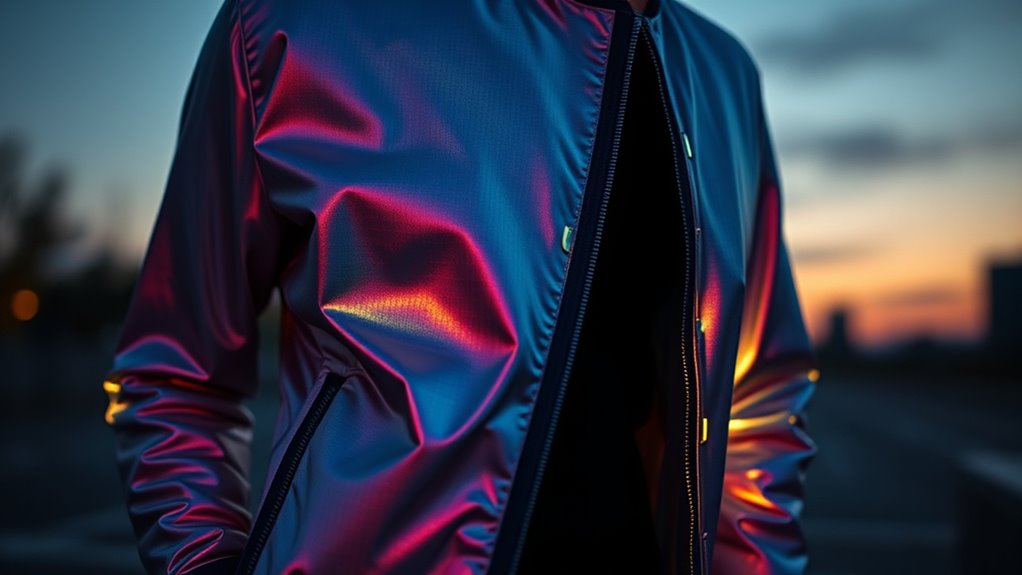

Smart fabrics incorporate technology directly into your clothing, turning ordinary garments into functional tools for health, performance, and environmental awareness. These textiles embed sensors that monitor essential signs, adjust to conditions, or communicate with devices—all without sacrificing comfort or style. As technology advances, smart fabrics become more affordable and versatile, transforming everyday clothing into interactive, responsive items. Keep exploring to discover how this innovation can truly change the way you wear and interact with your clothes.

Get beauty and skincare favorites delivered free with Prime
- Fast, free delivery on millions of items
- Prime Video, Amazon Music and more included
- Member-only deals all year
Key Takeaways
- Smart fabrics embed wearable sensors into textiles for continuous health, performance, and environmental monitoring.
- Integration of conductive fibers enables garments to communicate, charge devices, and adapt to user needs.
- Advances allow mass production of durable, flexible smart clothing suitable for everyday use.
- Applications include medical monitoring, athletic performance enhancement, and interactive fashion.
- Future smart fabrics will create personalized, responsive clothing that seamlessly interacts with users and surroundings.

Have you ever wondered how textiles can do more than just cover your body? Today’s smart fabrics are transforming everyday clothing into high-tech tools, thanks to advances in textile innovation. These innovative textiles integrate wearable sensors directly into fabric fibers, enabling your clothing to monitor health, track movement, or even communicate with other devices. It’s no longer just about fashion; it’s about creating functional, responsive garments that serve a purpose beyond aesthetics.
Imagine slipping into a shirt that subtly tracks your heart rate or monitors your hydration levels throughout the day. These smart fabrics incorporate wearable sensors seamlessly into the textile itself, making the technology almost invisible. Unlike bulky gadgets, these sensors are woven into the fabric, providing real-time data without sacrificing comfort. Textile innovation makes this possible by embedding tiny sensors directly into fibers during manufacturing, ensuring durability and flexibility. This approach also opens new avenues for customization, allowing clothing to adapt to your specific needs, whether for athletic performance, medical monitoring, or everyday convenience.
Smart fabrics hide sensors seamlessly, offering real-time health data without sacrificing comfort or style.
The use of wearable sensors in textiles is a game-changer. They can detect changes in temperature, moisture, or even biochemical markers, giving you actionable insights instantly. For athletes, this means garments that can adjust ventilation or provide feedback to improve performance. For medical patients, smart fabrics can continuously monitor vital signs without the need for invasive procedures or cumbersome devices. This integration makes health management more accessible and less intrusive. Plus, with the rise of textile innovation, these sensors are becoming more affordable and easier to produce on a large scale, meaning smart clothing isn’t just a futuristic concept but a practical reality.
Moreover, textile innovation isn’t limited to health and fitness. It’s also paving the way for clothing that interacts with your environment. For instance, fabrics that change color based on temperature or light, or garments that can charge your devices using embedded conductive fibers. This technology is pushing the boundaries of what clothing can do, making it smarter and more responsive. Wearable sensors embedded in textiles can even enable garments to communicate with other devices, creating a connected ecosystem that enhances your lifestyle. Whether for safety, convenience, or entertainment, the possibilities are vast.
In short, smart fabrics are revolutionizing how you think about clothing. Thanks to textile innovation and wearable sensors, your everyday garments are becoming smarter, more functional, and personalized. It’s a future where your clothing doesn’t just cover you—it actively interacts with your body and environment, making your daily routines more seamless and efficient. Additionally, understanding merchant services and their role in supporting innovative products like smart fabrics is vital for navigating the market and securing necessary funding and logistics.
As an affiliate, we earn on qualifying purchases.
Frequently Asked Questions
How Durable Are Smart Fabrics in Daily Wear?
Smart fabrics are generally quite durable for daily wear, thanks to their enhanced fabric longevity and wear resistance. You can expect them to withstand regular washing and movement without losing their tech features or structural integrity. However, their durability can vary depending on the quality and type of technology embedded. Proper care, like gentle washing and avoiding harsh chemicals, helps maintain their longevity and keeps your smart clothing functioning well over time.
Can Smart Fabrics Be Washed Without Damage?
You might wonder if smart fabrics can survive a wash, and the answer is yes—if you follow proper fabric care and gentle washing methods. To avoid damage, always check manufacturer instructions, use cold water, and skip harsh detergents. Hand washing or delicate cycles help preserve the embedded technology. Stay cautious, because a wrong move could compromise the fabric’s smart features, making careful washing essential for longevity.
What Is the Cost Difference Between Smart and Regular Clothing?
You’ll find that smart fabrics cost more than regular clothing due to higher manufacturing costs. These advanced textiles involve specialized materials and tech integration, which drive up production expenses. Consequently, market pricing for smart clothing is usually 20-50% higher than standard garments. This difference reflects the added value of technology, but over time, as manufacturing improves, prices may become more competitive and accessible for everyday wear.
Are Smart Fabrics Environmentally Sustainable?
Smart fabrics can be environmentally sustainable if you consider recyclability concerns and eco-friendly manufacturing. You should look for fabrics made from biodegradable or recyclable materials and produced with eco-conscious methods. While some smart fabrics might pose challenges in recycling due to embedded electronics, advancements are improving recyclability. Choosing brands committed to sustainability helps reduce environmental impact, making smart fabrics a more eco-friendly choice for your wardrobe.
How Do Smart Fabrics Impact Wearer Comfort Over Time?
You’ll find that smart fabrics can enhance your comfort over time through better thermal regulation and responsive sensor sensitivity. As the fabric detects changes in your body temperature, it adjusts accordingly, keeping you comfortable in varying conditions. However, prolonged wear might cause some sensor sensitivity issues or slight discomfort if the fabric isn’t breathable. Overall, these fabrics aim to improve your experience by adapting seamlessly to your needs.
wearable health monitoring clothing
As an affiliate, we earn on qualifying purchases.
As an affiliate, we earn on qualifying purchases.
Conclusion
Now that you know how smart fabrics blend technology with your daily wardrobe, it’s clear they’re paving the way for a future where clothing does more than just cover. As you explore these innovations, remember that the ball is truly in your court to embrace and adapt to this new fashion frontier. Don’t wait for tomorrow—get ahead of the curve and let your wardrobe work smarter, not harder. The sky’s the limit when technology meets your clothing.
As an affiliate, we earn on qualifying purchases.
As an affiliate, we earn on qualifying purchases.
Fall Picks
fall essentials
As an affiliate, we earn on qualifying purchases.