To design a portable reflector with household materials, start by gathering items like aluminum foil or white poster boards for reflective surfaces and tissue paper, sheer fabric, or plastic bags for diffusion. Use wire hangers, stiff cardboard, or PVC pipes to build a collapsible frame that’s lightweight and easy to carry. Attach your materials securely, ensuring diffusion layers are taut for even lighting. Keep experimenting with different setups—exploring these tips will help you craft an effective reflector on the go.
Key Takeaways
- Use lightweight household items like wire hangers, PVC pipes, or stiff cardboard to create a collapsible frame.
- Cover a sturdy frame with reflective materials such as aluminum foil or white poster boards for optimal bounce.
- Attach diffusion layers like tissue paper or sheer fabric in front of reflective surfaces to soften light.
- Secure materials with tape, clips, or staples, ensuring diffusion layers are stretched taut for even lighting.
- Design the reflector to be foldable or collapsible for portability and easy transport during shoots.

Have you ever struggled to achieve perfect lighting for your photos or videos on the go? A portable reflector can dramatically improve your results, but you don’t need to buy expensive gear to craft one yourself. Instead, you can use household materials to design an effective reflector that’s lightweight, versatile, and easy to carry. The key to making a successful reflector lies in understanding diffusion techniques and careful material selection. Diffusion techniques help soften harsh light, creating a more flattering glow, while material selection determines how well your homemade reflector performs in terms of brightness, durability, and portability.
When choosing materials, think about what’s readily available in your home that can reflect or diffuse light. Common options include aluminum foil, white poster boards, or even a large piece of white fabric. Aluminum foil is highly reflective, making it ideal for bouncing light onto your subject, but it can be harsh if not diffused properly. To soften its effect, you can implement diffusion techniques—placing a semi-transparent material like tissue paper, sheer cloth, or even a thin plastic wrap in front of the foil. This combination spreads light evenly, reducing glare and creating a more natural appearance. For example, stretch aluminum foil over a piece of cardboard and then cover it with tissue paper or sheer fabric. This not only improves light diffusion but also prevents unwanted hotspots from bright reflections.
Material selection plays a vital part in your reflector’s effectiveness. White poster boards or foam boards are excellent because they reflect light evenly without creating harsh shadows. They’re lightweight, inexpensive, and easy to manipulate into a curved or flat shape depending on your needs. If you want a softer, more diffused reflection, adding a layer of white fabric or paper over your reflective surface will help. For a more portable option, consider using a large, white plastic trash bag or a shower curtain; these materials are flexible, lightweight, and diffuse light well when stretched taut. Keep in mind that the sturdiness of your reflector depends on the frame you build; you can use inexpensive materials like wire hangers, PVC pipes, or even stiff cardboard to create a collapsible frame that supports your chosen diffusion and reflection surfaces. Additionally, understanding the materials needed for candle making can inspire creative ways to build lightweight, durable frames for your reflector project.

5-in-1 Photography Reflector 12"(30cm), Multi-Disc Collapsible Light Reflector with Bag – Super Portable for Studio/Macro Photography – Translucent, Silver, Gold, White and Black
5-in-1 Versatile Light Effects: Includes gold, silver, white, black, and translucent covers. Gold warms image; Silver enhances brightness;…
As an affiliate, we earn on qualifying purchases.
As an affiliate, we earn on qualifying purchases.
Frequently Asked Questions
How Can I Make the Reflector Adjustable for Different Angles?
You can make your reflector adjustable for different angles by creating a flexible mounting system. Use household items like a cardboard box or plastic container as a base, and attach the reflector with a hinge made from tape or a paperclip. This allows you to easily tilt and adjust the reflector to the desired angle. Guarantee the mounting is secure enough to hold the reflector steady when you change its position.
What Household Materials Are Best for Reflecting Light Effectively?
You should use aluminum foil or Mylar sheets for effective light reflection. Aluminum foil is inexpensive and easy to shape, making it perfect for reflecting light efficiently. Mylar sheets, on the other hand, offer high reflectivity and a glossy finish, which can amplify light even more. Both materials are lightweight, portable, and simple to attach to your reflector frame, ensuring you get maximum light bounce wherever you need it.
How Durable Is a Homemade Reflector in Outdoor Conditions?
Your homemade reflector’s durability depends on the materials you choose. For example, if you use aluminum foil taped onto cardboard, it may withstand light rain temporarily but won’t last long outdoors. Generally, household materials lack long-term weather resistance, so your reflector’s material longevity is limited. To improve durability, consider using weather-resistant items like plastic or coated surfaces, but expect some deterioration over time due to exposure to sun, wind, and moisture.
Can I Use Recycled Materials to Make a Reflector?
Yes, you can use recycled materials to make a reflector, but keep in mind that the effectiveness depends on the material’s reflectivity. Items like aluminum foil, shiny plastic, or silver-painted cardboard work well. Recycled materials are eco-friendly and budget-friendly, but make certain they’re smooth and clean for the best reflector effectiveness. Test your homemade reflector under different lighting conditions to optimize its performance.
How Do I Prevent the Reflector From Blocking Light Unintentionally?
To prevent your reflector from blocking light unintentionally, position it carefully to minimize light spill and avoid creating a reflector shadow. Keep it at an ideal distance from your light source and subject, ensuring it reflects light where needed without casting unwanted shadows. Adjust angles as necessary, and test different placements to find the setup that maximizes light efficiency while avoiding unintentional obstructions.
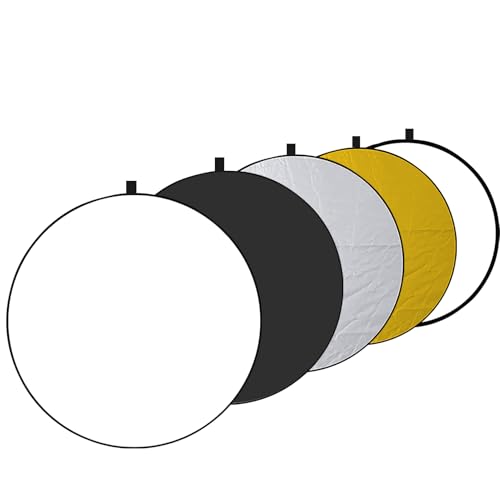
EMART 24'' (60cm) 5 in 1 Photo Collapsible Photography Reflector with Bag – Portable Camera Panel for Studio Video,Outdoor Lighting, Indoor Shooting, Portraint -Translucent, White, Silver, Gold, Black
【5-in-1 Multi-Purpose Photography Reflector】 This portable reflector features gold, silver, white, black, and translucent surfaces, plus a soft…
As an affiliate, we earn on qualifying purchases.
As an affiliate, we earn on qualifying purchases.
Conclusion
Now that you know how to design a portable reflector using household materials, you can create it quickly, customize it easily, and carry it effortlessly. With simple supplies, you can brighten your photos, improve your lighting, and enhance your creativity. By following these easy steps, you’ll save money, gain confidence, and enjoy the process. So, get your materials ready, start experimenting, and let your imagination shine just like your new reflector does!

NEEWER 43 Inch/110 Centimeter Light Reflector Diffuser 5 in 1 Collapsible Multi Disc with Bag – Translucent, Silver, Gold, White, and Black for Studio Photography Lighting Outdoor
43" 110CM 5 in 1 Collapsible Multi Disc Light Reflector
As an affiliate, we earn on qualifying purchases.
As an affiliate, we earn on qualifying purchases.

Selens Soft White Diffuser Foldable Light Diffuser Light Diffusion Panel with Carry Bag, Diffuser Fabric Light Modifier for TV Production Video Studio Photography Interview Portrait Shots -31x47in…
Pop up soft light diffuser is made of high quality material for long term use. Also, outer frame…
As an affiliate, we earn on qualifying purchases.
As an affiliate, we earn on qualifying purchases.