
TL;DR

Get beauty and skincare favorites delivered free with Prime
- Fast, free delivery on millions of items
- Prime Video, Amazon Music and more included
- Member-only deals all year
An analysis published by Cosmetics Business examines how microneedling products are classified across global regulatory frameworks, asking whether skin-puncturing tools marketed with cosmetic claims cross into medical device territory. The growth of at-home devices has sharpened the regulatory question.
An analysis published by trade publication Cosmetics Business examines a question now facing regulators and beauty brands worldwide: at what point does a microneedling product stop being a cosmetic and become a medical device? The report, which surveys how microneedling products are approached and classified across different regulatory frameworks, comes as at-home microneedling devices have proliferated over the past five years, promising salon-style results without medical oversight.
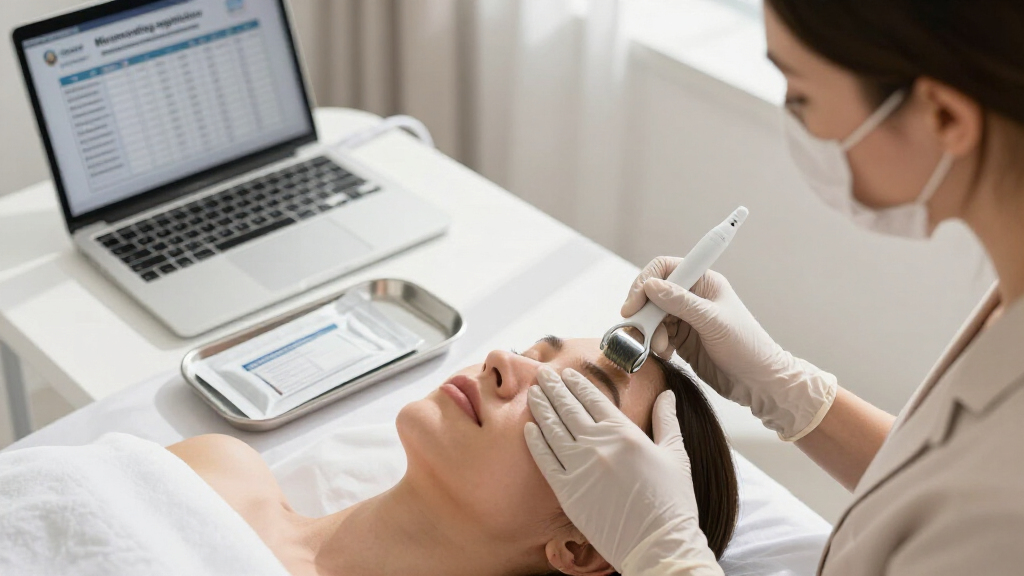
Microneedling is a minimally invasive technique that uses very fine needles to create minute perforations in the skin. According to the Cosmetics Business analysis, the procedure aims to enhance the penetration of active ingredients into deeper layers of the skin, which may generate faster and more noticeable results. The micro-injuries created by the needles may also stimulate collagen production and trigger a natural healing response, the report states.
The core regulatory problem, the analysis argues, is that microneedling can serve different purposes — and those purposes do not necessarily follow the same regulatory pathway. A device used in a dermatology clinic to treat scarring may be regulated as a medical device, while a consumer roller marketed for ‘glow’ may fall under cosmetic rules, even though both physically puncture the skin.
The report notes that over the past five years microneedling has become widely used in dermatological and aesthetic settings, and that growing demand for cosmetic products with prolonged, more effective release has led the industry to develop at-home prototypes intended to provide a similar experience without requiring medical approval. The promise behind these products, according to the analysis, includes improving acne or its after-effects, skin texture, skin rejuvenation, and reducing the appearance of fine lines.
Why the Classification Line Matters
The distinction is not academic. Products regulated as medical devices typically face stricter requirements — evidence of safety and performance, quality management systems, notified-body or regulator review, and restrictions on who can sell and use them. Products regulated as cosmetics face lighter regimes focused largely on ingredient safety and claim substantiation.
For brands, misclassification risks enforcement action, product recalls, or blocked market entry. For consumers, the stakes are different: an at-home device that physically punctures the skin sits uneasily with ordinary cosmetic expectations of safety. The analysis frames this as a broader problem of convergence — cosmetic formulations paired with skin-puncturing technologies — which existing category boundaries were not designed to handle cleanly.
Because the same physical technique can be marketed for aesthetic enhancement, skin-condition improvement, or medical treatment, the intended use and claims made on packaging and advertising are likely to determine the regulatory pathway. That makes marketing language, not the needle itself, the decisive factor in many jurisdictions.
Products Worth Considering

Oral-B iO Series 9 Limited Rechargeable Electric Toothbrush with 7 Cleaning Modes

Hyperice Normatec 3 Leg Compression Boots – Standard Size

LEVOIT Vital 200S-P Smart Air Purifier for Large Rooms
As an affiliate, we earn on qualifying purchases.
From Clinic Procedure to Bathroom Shelf
Microneedling originated as a professional technique used in dermatological and aesthetic clinics, where needle depth, sterility, and practitioner training are controlled. According to the Cosmetics Business analysis, the past five years have seen the technique migrate toward consumer use as demand grew for innovative cosmetic products with prolonged and more effective release of actives.
The analysis states that this shift produced at-home prototypes designed to replicate the professional experience while avoiding the medical approval pathway. That commercial logic — professional-grade results without professional oversight — is precisely what places these products at the boundary between the two regulatory regimes, prompting the report’s central question: where does cosmetic care end and medical device regulation begin?
What the Public Report Leaves Open
The Cosmetics Business article is partially paywalled, and the publicly available extract does not specify which jurisdictions or frameworks are examined in detail, nor does it state any concrete regulatory decisions, classifications, or enforcement actions. It is not yet clear from the public portion whether the analysis covers the EU Medical Device Regulation, US FDA positioning, or UK rules specifically.
How individual regulators currently classify at-home microneedling rollers, pens, and stamp devices — and whether any harmonised approach is under discussion — remains unstated in the available material. Readers should treat jurisdiction-specific conclusions as requiring the full report or primary regulatory sources.
Watchpoints for Brands and Regulators
The full Cosmetics Business analysis, available to subscribers, examines how microneedling products are currently classified across different frameworks worldwide. Brands developing or selling at-home microneedling products will need to watch for regulator guidance on intended-use claims, and for any enforcement signals distinguishing cosmetic from device marketing. Consumers using at-home devices in the meantime should follow product instructions carefully and consult a qualified professional if they have active skin conditions, infections, or acne inflammation, since puncturing compromised skin carries infection and scarring risks.
Key Questions
What is microneedling?
A minimally invasive technique using very fine needles to create minute perforations in the skin. According to the Cosmetics Business analysis, it aims to enhance penetration of active ingredients and may stimulate collagen production and a natural healing response.
Why is there a regulatory question over microneedling products?
The same skin-puncturing technique is marketed both for cosmetic purposes (texture, glow, fine lines) and for outcomes that resemble medical treatment (acne improvement, rejuvenation). Different intended uses can fall under different regulatory regimes, and the boundary between cosmetic and medical device regulation is not consistently drawn.
Are at-home microneedling devices medical devices?
It depends on jurisdiction and on the claims made. The Cosmetics Business analysis notes that some at-home products are designed to avoid requiring medical approval, but classification ultimately hinges on intended use and marketing claims. The public extract does not give jurisdiction-specific determinations.
What risks come with at-home microneedling?
Needles that puncture the skin carry risks of infection, irritation, and scarring, especially on active acne or compromised skin. Users should follow instructions, keep devices clean, and seek professional advice for pre-existing skin conditions.
Where can I read the full analysis?
The full article is available to premium subscribers of Cosmetics Business at cosmeticsbusiness.com. The public extract outlines the regulatory question but not the detailed jurisdictional comparison.
Source: rss