If you’re choosing between bakuchiol and retinol, consider your skin’s sensitivity and goals. Retinol is proven to deliver faster, visible anti-aging results but can cause irritation, especially for sensitive skin. Bakuchiol is gentler and suitable for daily use, offering promising benefits without harsh side effects. To find the best fit for your skin type and needs, explore how each ingredient works and what suits your routine better.
Key Takeaways
- Retinol offers rapid, proven anti-aging results but may cause irritation; bakuchiol provides a gentler, natural alternative with similar benefits.
- Retinol stimulates collagen and cell turnover effectively, while bakuchiol mimics these effects with fewer side effects.
- Those with sensitive skin or beginners in anti-aging skincare should consider bakuchiol for its milder, less irritating profile.
- Retinol requires cautious use and dermatologist guidance, whereas bakuchiol can be incorporated easily into daily routines.
- Choosing between them depends on skin sensitivity, desired speed of results, and preference for natural versus synthetic ingredients.
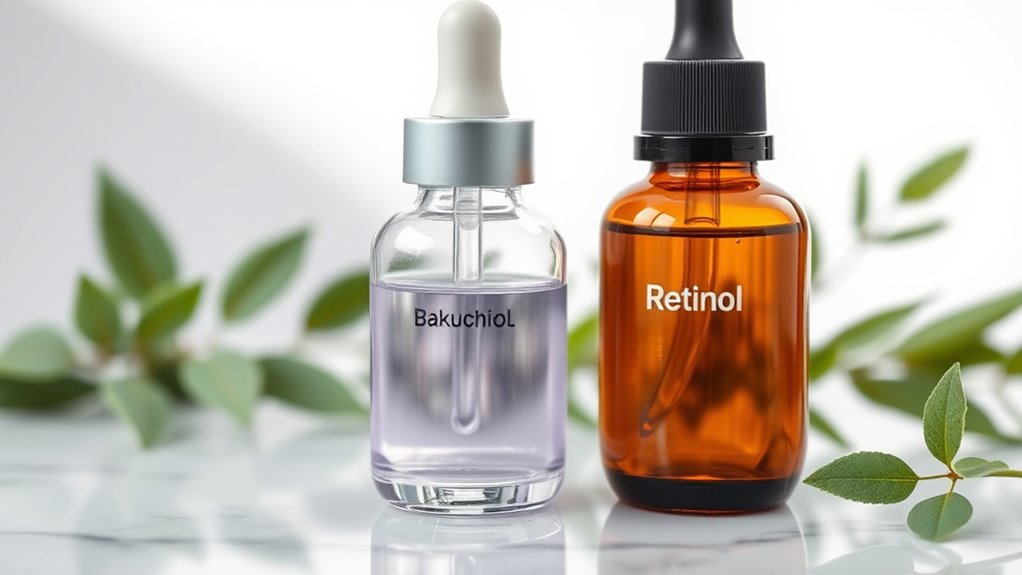
Are you wondering whether bakuchiol or retinol is the better skincare choice? When it comes to anti-aging treatments, understanding the differences can help you make an informed decision. Both ingredients target signs of aging like fine lines, wrinkles, and uneven skin tone, but they do so in different ways. If you’re interested in natural skincare options, bakuchiol often stands out because it’s derived from a plant, making it appealing to those seeking gentle, plant-based ingredients. On the other hand, retinol, a derivative of vitamin A, has been extensively studied and backed by dermatologist recommendations for its proven efficacy. Knowing which one aligns with your skin type and goals can make a significant difference in your skincare routine.
Retinol is considered the gold standard for anti-aging because it stimulates collagen production and accelerates cell turnover. This means your skin can become smoother, brighter, and less prone to wrinkles over time. However, retinol can also cause irritation, dryness, and sensitivity, especially for those with sensitive or dry skin. That’s why dermatologist recommendations often include starting with lower concentrations and gradually increasing usage to minimize side effects. If you have sensitive skin or are prone to irritation, retinol might feel harsh, making natural skincare options like bakuchiol more attractive.
Retinol boosts collagen and cell turnover but may cause irritation for sensitive skin.
Bakuchiol offers a gentler alternative that mimics many of retinol’s benefits without the typical side effects. It’s a plant-based compound that has shown promising results in reducing signs of aging, improving skin elasticity, and evening out skin tone. Since it’s naturally derived, bakuchiol appeals to those who prefer natural skincare routines and want to avoid synthetic ingredients. Many dermatologists now recommend bakuchiol as a safer, milder option for individuals with sensitive skin or those new to anti-aging products. It can be used daytime and nighttime, and because it’s less irritating, you might find it easier to incorporate into your daily regimen. Additionally, understanding the chemical composition of these ingredients can help you better evaluate their benefits and potential effects on your skin.
Ultimately, your choice depends on your skin’s needs and your personal preferences. If you’re looking for rapid, proven results and don’t mind the potential for irritation, retinol might be the better choice. But if you want a more natural, gentle approach, bakuchiol could be ideal. Consulting with a dermatologist can help clarify which ingredient suits your skin type and concerns best. Whether you opt for the potent effects of retinol or the plant-based benefits of bakuchiol, understanding your skin and listening to its responses will guide you toward a more effective and enjoyable skincare routine.
Top picks for "bakuchiol retinol choos"
Open Amazon search results for this keyword.
As an affiliate, we earn on qualifying purchases.
Frequently Asked Questions
Can Bakuchiol Replace Retinol Entirely?
Bakuchiol can serve as a natural alternative to retinol, but it might not fully replace retinol for everyone. It offers gentle exfoliation and reduces signs of aging without the irritation retinol can cause. If you have sensitive skin or want a milder option, bakuchiol is a great choice. However, for more dramatic results, especially in severe skin aging, retinol may still be necessary.
Are There Any Age Groups That Benefit More From Bakuchiol?
Like a gentle breeze on a warm day, bakuchiol offers age-specific benefits that can help you maintain youthful skin. It’s especially beneficial for those with sensitive skin or early signs of aging, typically younger adults and middle-aged individuals. If you’re looking for a natural, less irritating option to boost your skin’s energy, bakuchiol can be a great choice to support your skin’s youthful glow at various ages.
How Do I Identify Genuine Bakuchiol Products?
To identify genuine bakuchiol products, focus on ingredient authenticity and product verification. Check the label for “bakuchiol” listed as a primary ingredient, preferably near the top. Look for reputable brands with transparent ingredient lists and third-party testing. Research the company’s reputation and read reviews to confirm product quality. Avoid products with vague labels or synthetic additives, ensuring you’re using a trustworthy, authentic bakuchiol serum or cream for best results.
Can Bakuchiol Be Used Alongside Other Skincare Actives?
Your skincare routine can be a powerhouse when you use bakuchiol with other actives. It’s highly compatible, so you can layer it effectively without risking irritation. To maximize benefits, follow proper layering techniques—apply bakuchiol after cleansing and before heavier creams. Just be cautious with potent ingredients like acids or vitamin C, and introduce new actives gradually. This way, your skin stays happy and glowing without turning into a skincare battlefield!
What Are the Long-Term Effects of Using Bakuchiol?
Using bakuchiol long-term is generally safe, thanks to its favorable long-term safety profile. You might notice your skin gradually adapts, becoming less sensitive over time, which can enhance its benefits. Unlike retinol, bakuchiol tends to cause fewer irritations, making it suitable for ongoing use. However, it’s always wise to monitor your skin’s response and consult a dermatologist for personalized advice, especially if you have sensitive skin.
Conclusion
So, which one’s right for you—bakuchiol or retinol? Think about your skin’s sensitivity and goals. If you prefer a gentler option with fewer side effects, bakuchiol might be your best bet. But if you’re aiming for stronger results and your skin can tolerate it, retinol could be the way to go. Isn’t it worth choosing the ingredient that suits your skin’s unique needs for that youthful glow?