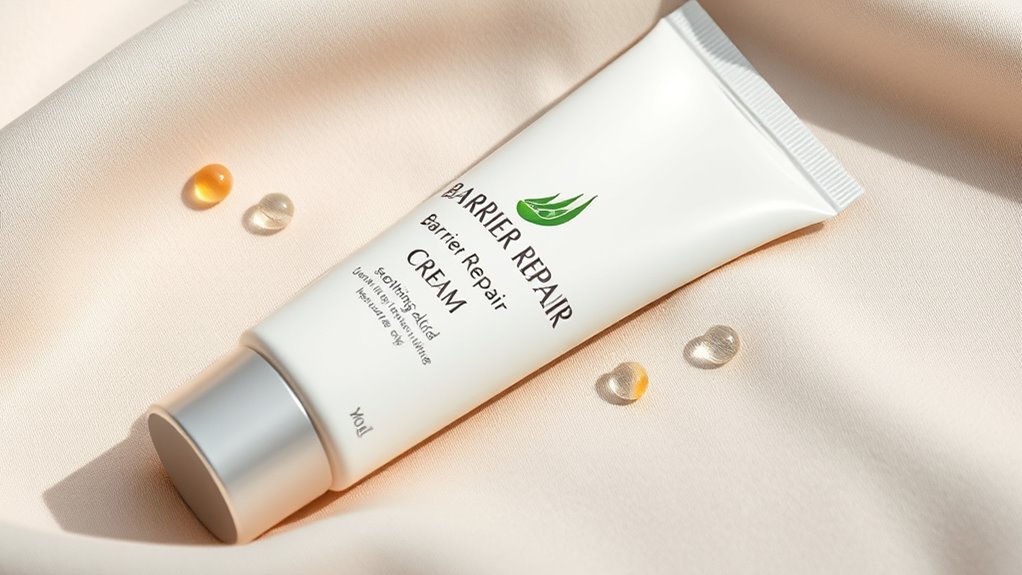

When choosing a barrier repair cream, look for products that contain nourishing ingredients like ceramides, hyaluronic acid, and glycerin to restore moisture and strengthen your skin’s natural defenses. Avoid harsh fragrances, alcohols, and unnecessary preservatives that can irritate sensitive skin. Opt for formulations in airtight, opaque packaging to preserve their effectiveness. If you want to learn how to choose the best product for your skin, continue exploring the key features to contemplate.
Key Takeaways
- Look for products containing ceramides, hyaluronic acid, and glycerin to replenish lipids and boost hydration.
- Choose formulations in airtight, opaque packaging to preserve sensitive ingredients and maintain efficacy.
- Avoid harsh fragrances, alcohols, and preservatives that can irritate sensitive skin.
- Opt for hypoallergenic, gentle creams with calming ingredients like niacinamide and panthenol.
- Apply after cleansing to lock in moisture, support barrier repair, and enhance skin resilience.
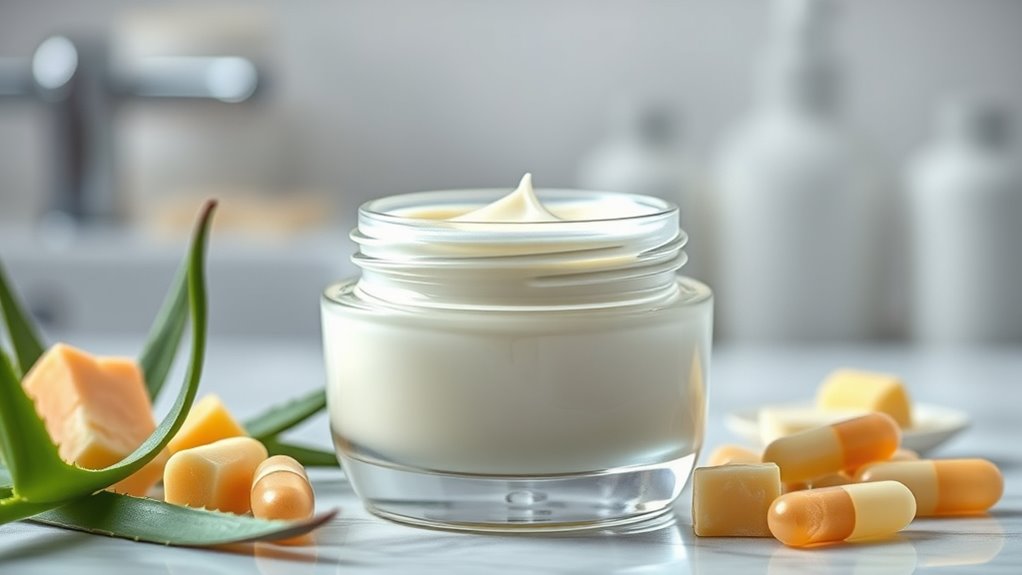
Your skin’s natural barrier protects you from environmental damage, moisture loss, and irritants. When that barrier becomes compromised, it can lead to dryness, redness, sensitivity, and even discomfort. That’s where barrier repair creams come into play. To effectively support your skin, you need to pay attention to what’s inside the product. Moisturizing ingredients are key, so look for formulations that include ceramides, hyaluronic acid, glycerin, or fatty acids. These components help replenish the lipids in your skin’s barrier, locking in moisture and preventing further damage. A good barrier repair cream should contain these nourishing ingredients to restore your skin’s resilience and comfort.
Equally important is considering the packaging of these products. Since many active ingredients are sensitive to air and light, opt for creams packaged in airtight, opaque containers. Such packaging helps preserve the integrity of the moisturizing ingredients, ensuring you get the full benefit with each use. Pumps or jars with secure seals are preferable because they reduce contamination and exposure to environmental factors that can degrade the product over time. Proper packaging also makes it easier to control dosage and avoid unnecessary waste, so you can use the cream efficiently and consistently.
When choosing a barrier repair cream, avoid products with harsh fragrances, alcohols, or preservatives that can further irritate sensitive skin. Instead, seek out formulas labeled as hypoallergenic or suitable for sensitive skin types. These are less likely to cause reactions and can help soothe redness and irritation while repairing your skin’s natural defenses. Additionally, check for ingredients that promote healing, like niacinamide or panthenol, which can enhance the repair process and provide additional calming effects.
Research indicates that proper packaging not only preserves the active ingredients but also helps maintain the product’s efficacy over time, which is crucial for sensitive skin repair.
Consistency is vital when using a barrier repair cream. Apply it after cleansing to lock in moisture and reinforce your skin’s natural defenses. Be mindful of how your skin responds, and if you notice increased irritation, switch to a more gentle, fragrance-free option. Remember, the goal is to support and strengthen your skin’s barrier, so select a product that aligns with your skin’s specific needs and uses high-quality moisturizing ingredients. By choosing wisely and paying attention to packaging considerations, you can guarantee your skin gets the protection and repair it needs to stay healthy, resilient, and comfortable every day.

COSRX Ceramide Skin Barrier Moisturizer for Face with 7 Ceramides, Hyaluronic Acid & Panthenol for All Skin Types, 2.7 fl.oz, Korean Skin Care
200+hrs of Deep Hydration: Lock in moisture for 200+ hours with 1 use. Experience moisturized soothed, and stronger…
As an affiliate, we earn on qualifying purchases.
As an affiliate, we earn on qualifying purchases.
Frequently Asked Questions
Are Barrier Repair Creams Suitable for Sensitive Skin?
Yes, barrier repair creams are suitable for sensitive skin if you choose the right formulations. Look for products labeled as gentle, fragrance-free, and hypoallergenic, as these are less likely to cause irritation. You want creams with soothing ingredients like ceramides and niacinamide that help restore your skin’s natural barrier. Always patch-test new products to make sure they work well with your sensitive skin and avoid any potential reactions.
How Often Should I Apply a Barrier Repair Cream?
You should apply a barrier repair cream twice daily, morning and night, to support your skin’s recovery. The application frequency depends on your skin sensitivity; if your skin is very sensitive or irritated, you might want to start with once daily and adjust as needed. Consistent use helps restore your skin’s barrier, reduces irritation, and keeps your skin hydrated, especially if you notice increased sensitivity or dryness.
Can Barrier Repair Creams Be Used With Other Skincare Products?
Yes, you can use barrier repair creams with other skincare products, but you should pay attention to product compatibility and ingredient interactions. Apply the barrier repair cream after lighter serums and before heavier moisturizers. Avoid combining with strong acids or active ingredients that may cause irritation or reduce effectiveness. Always patch test new combinations and consult with a dermatologist if you’re unsure about specific product interactions to guarantee safe and effective skincare.
Do Barrier Repair Creams Contain Any Potential Irritants?
Barrier repair creams can contain ingredient irritants, so you should always check ingredient safety. Look out for potential irritants like fragrances, alcohol, or certain preservatives that may cause redness or discomfort, especially if you have sensitive skin. Always read labels carefully, and choose products formulated with gentle, nourishing ingredients. If you experience irritation, discontinue use and consult a dermatologist to find the best, irritation-free barrier repair cream for your skin.
Are Barrier Repair Creams Effective for Aging Skin?
Barrier repair creams are effective for aging skin because they provide anti-aging benefits and improve skin texture. You’ll notice firmer, more elastic skin as these creams help restore your skin’s protective barrier, reducing fine lines and wrinkles. By locking in moisture and promoting cell renewal, they support a more youthful appearance. Incorporate a good barrier repair cream into your routine to enhance your skin’s overall health and achieve smoother, younger-looking skin.

Vanicream Daily Facial Moisturizer With Ceramides and Hyaluronic Acid – Formulated Without Common Irritants for Those with Sensitive Skin, 3 fl oz (Pack of 1)
Vanicream is the #1 Dermatologist recommended Brand for Sensitive Skin: Source IQVIA ProVoice Survey, 12 months ending July…
As an affiliate, we earn on qualifying purchases.
As an affiliate, we earn on qualifying purchases.
Conclusion
When choosing a barrier repair cream, remember that your skin’s health depends on it. Look for nourishing ingredients like ceramides, hyaluronic acid, and gentle preservatives. Think of your skin as a fortress—only strong, well-maintained walls can keep out damage and let in resilience. Don’t settle for less; your skin deserves the best defense. After all, isn’t a well-protected skin the foundation of radiant, confident beauty? Guard it wisely and glow from within.

ANUA PDRN Hyaluronic Acid 100 Moisturizing Cream, Lightweight, Non-Greasy Hydrating Face Moisturizer with Salmon DNA for Glass Skin, Korean Skincare (2.02 fl oz)
[PDRN Daily Hydration] Formulated with PDRN derived from salmon DNA, this daily moisturizing cream helps maintain long-lasting hydration…
As an affiliate, we earn on qualifying purchases.
As an affiliate, we earn on qualifying purchases.

Derma E Vitamin E Fragrance Free Sensitive Skin Shea Hand Repair Cream – Intensive Therapy Hand Cream – Cruelty Free Unscented Lotion for Dry or Cracked Skin, 2 oz
VITAMIN E HAND CREAM: Deeply hydrating and nourishing dry or chapped skin, this Shea Butter and Vitamin E…
As an affiliate, we earn on qualifying purchases.
As an affiliate, we earn on qualifying purchases.