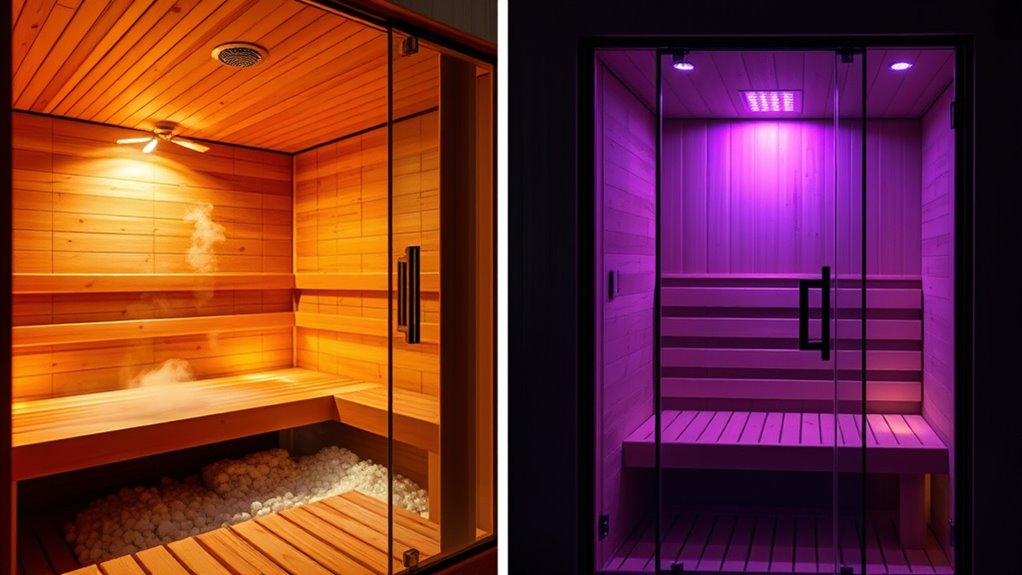
Infrared saunas and traditional saunas both offer health benefits but differ in heating methods and temperature ranges. Infrared saunas use radiant heat, penetrating deeper at lower temps, making sessions gentler and easier for longer durations. Traditional saunas heat the air quickly to higher temperatures, encouraging vigorous sweating and faster detoxification. Depending on your comfort and goals, one might suit you better. To discover how each option can enhance your well-being, explore the details further.
Key Takeaways
- Infrared saunas promote deeper tissue heating at lower temperatures, potentially enhancing detoxification with less heat stress.
- Traditional saunas operate at higher temperatures, inducing more vigorous sweating and rapid cardiovascular responses.
- Infrared sessions are longer and more tolerable, supporting relaxation, circulation, and muscle recovery.
- Traditional saunas provide immediate relaxation through intense heat, boosting circulation and heart rate quickly.
- Personal comfort and heat tolerance influence sauna choice, with both offering unique health benefits depending on individual needs.
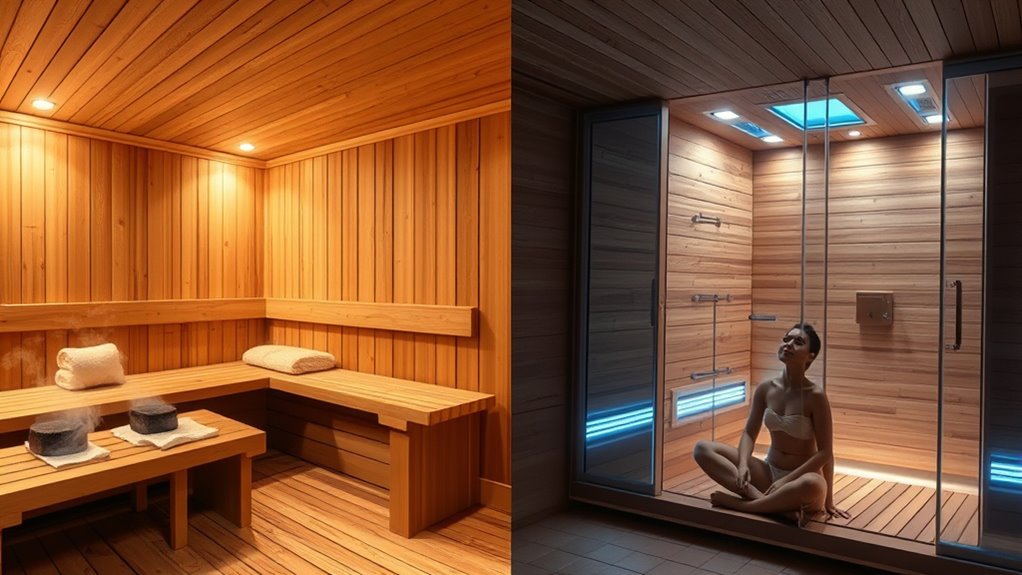
When choosing between infrared and traditional saunas, understanding their differences can help you decide which one best suits your needs. One key aspect to contemplate is the detox benefits each type offers. Infrared saunas are often praised for their ability to promote sweating at lower temperatures, typically between 120°F and 150°F, which can make detoxification more comfortable and accessible for many. Traditional saunas, on the other hand, operate at much higher temperatures, usually between 150°F and 195°F, leading to intense sweating that some believe aids in removing toxins more effectively. However, the actual detox benefits depend on individual responses, and sweating at different temperature ranges influences how your body releases impurities. Infrared heat penetrates deeper into the skin, potentially encouraging detoxification without the extreme heat stress that some experience in traditional saunas.
Temperature differences play a significant role in how you experience each sauna type. Infrared saunas use radiant heat that directly warms your body, which means you can stay in longer sessions at lower temperatures without feeling overwhelmed. This makes infrared options appealing if you’re sensitive to heat or prefer a gentler experience. Traditional saunas, by contrast, utilize heated air and sometimes steam, which can quickly raise your core temperature and induce more vigorous sweating. The higher heat levels can lead to a more intense experience and faster heating times. These temperature differences also impact how your body responds, including heart rate, blood flow, and perceived comfort, influencing how beneficial or enjoyable each session is for you.
Another aspect to contemplate is how these temperature variances affect health benefits beyond detoxification. Infrared saunas tend to be more tolerable for longer sessions, so you might find it easier to incorporate regular use into your routine. This can enhance relaxation, improve circulation, and even help with muscle recovery. Traditional saunas, with their intense heat, often provide a more immediate sense of relaxation and can boost cardiovascular health due to the rapid increase in heart rate caused by higher temperatures. Both types can offer health advantages, but your personal comfort, heat tolerance, and specific health goals will guide your choice.
Frequently Asked Questions
Are Infrared Saunas More Energy-Efficient Than Traditional Saunas?
Yes, infrared saunas are generally more energy-efficient than traditional saunas. They consume less energy because they operate at lower temperatures and heat your body directly, reducing overall energy consumption. This efficiency also means a smaller environmental impact, as they use less electricity and produce fewer emissions. So, by choosing an infrared sauna, you’re not only saving on energy costs but also helping lower your environmental footprint.
Can Infrared Saunas Help With Skin Conditions Better Than Traditional Saunas?
You might find that infrared saunas help with skin conditions better than traditional ones because they promote a deeper skin detox and boost collagen production. The gentle heat penetrates your skin more effectively, encouraging healing and reducing inflammation. Coincidentally, many users notice clearer, more elastic skin after regular sessions. If your goal is improved skin health, infrared saunas could be a more targeted option due to these benefits.
Do Infrared Saunas Pose Any Specific Health Risks Compared to Traditional Saunas?
Infrared saunas generally pose minimal health risks, but you should be aware of potential radiation risks and chemical exposure concerns. Infrared rays emit low levels of electromagnetic radiation, which might be a concern for some users. Additionally, make certain the sauna uses non-toxic materials to avoid chemical exposure. Always follow safety guidelines, stay hydrated, and consult a healthcare provider if you have underlying health conditions to minimize any risks.
How Do the Maintenance Costs Compare Between Infrared and Traditional Saunas?
Maintenance costs for infrared saunas are usually lower than traditional ones, like a smooth ride compared to a bumpy road. You’ll find cleaning routines simpler since infrared units have fewer parts to maintain. Replacement parts for infrared saunas tend to be less expensive and easier to find, saving you money over time. Overall, infrared saunas require less upkeep, making them a more budget-friendly choice for long-term use.
Are There Differences in the Longevity of Infrared Versus Traditional Sauna Units?
You’ll find that traditional saunas generally have a longer lifespan due to their durability concerns, with many lasting 20-30 years. Infrared units tend to have shorter longevity, often around 10-15 years, partly because of different heating elements. Warranty differences reflect this, with traditional saunas usually offering longer coverage, giving you peace of mind. Proper maintenance can extend both types’ lifespan, so follow manufacturer recommendations carefully.
Conclusion
So, when choosing between infrared and traditional saunas, consider what benefits matter most to you. Some believe infrared’s deeper heat penetrates muscles better, aiding recovery, while others prefer the classic sweat of traditional saunas for detox. Although scientific evidence varies, trying both might help you discover which suits your body best. Ultimately, whether you opt for the gentle warmth of infrared or the intense heat of traditional saunas, both can promote relaxation and wellness—so trust your experience.