For anyone interested in exploring the night sky with precision, a telescope with computerized GoTo capabilities offers incredible convenience and accuracy. The best overall pick is the Celestron NexStar 8SE for its powerful optics and reliable tracking, ideal for serious astronomers. The Celestron NexStar 6SE stands out as a versatile mid-range option, offering great value for its advanced features, while the Celestron NexStar 90SLT is perfect for those focused on planetary observation and portability. Choosing the right telescope involves balancing factors like aperture size, ease of use, and budget, as higher-end models tend to offer better optics but come at a steeper price. Continue reading for a detailed breakdown of each option and insights to help you make the best decision.

Get beauty and skincare favorites delivered free with Prime
- Fast, free delivery on millions of items
- Prime Video, Amazon Music and more included
- Member-only deals all year
Complete the kit


Key Takeaways
- Larger apertures generally provide better image clarity and more detailed planetary views, but often come with higher price tags and heavier weights.
- Ease of setup and user interface are critical for beginners; models with intuitive controls save time and frustration.
- Advanced features like Wi-Fi connectivity and database star mapping are available on premium models, but may be unnecessary for casual users.
- Portability varies significantly; lightweight models suit travel and field use, while heavier telescopes are more stable for fixed setups.
- Tradeoffs between optical quality and price are common; higher-end models tend to outperform budget options in clarity and tracking accuracy.
| Celestron NexStar 127SLT Maksutov-Cassegrain Computerized GoTo Telescope |  | Best for Portability and Versatile Learning | Aperture: 127mm | Optical Design: Maksutov-Cassegrain | Database of objects: 40,000+ stars, galaxies, nebulae | VIEW ON AMAZON | See Our Full Breakdown |
| Celestron NexStar 6SE Schmidt-Cassegrain Telescope | 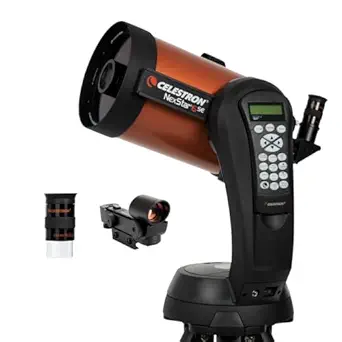 | Best for Intermediate Upgraders and Versatile Viewing | Aperture: 6 inches | Optics: Schmidt-Cassegrain | Mount: Automated GoTo with NexStar+ | VIEW ON AMAZON | See Our Full Breakdown |
| Celestron NexStar 8SE Computerized Telescope – Schmidt-Cassegrain |  | Best for Power Users and Serious Observers | Aperture: 8 inches | Optics: Schmidt-Cassegrain | Mount Type: Computerized GoTo | VIEW ON AMAZON | See Our Full Breakdown |
| Celestron NexStar 90SLT Maksutov-Cassegrain Portable Telescope for Planets |  | Best for Planetary and Lunar Observation on the Go | Optical Design: Maksutov-Cassegrain | Aperture: 90mm | Features: Computerized GoTo, SkyAlign, StarPointer | VIEW ON AMAZON | See Our Full Breakdown |
| Celestron NexStar 4SE Maksutov-Cassegrain GoTo Telescope |  | Best for Portability and Entry-Level Observation | Optics: Maksutov-Cassegrain | Aperture: 4 inches | Focal Length: 1325mm | VIEW ON AMAZON | See Our Full Breakdown |
| Celestron NexStar 5SE Schmidt-Cassegrain Computerized Telescope |  | Best Overall for Versatile Astronomy and Entry-Level Astrophotography | Aperture: 5 inches | Optics Type: Schmidt-Cassegrain | Mount: Computerized GoTo | VIEW ON AMAZON | See Our Full Breakdown |
| Celestron 114LCM Computerized Reflector Telescope for Beginners |  | Best for Novice Stargazers Seeking Easy Automated Object Finding | Type: Reflector Telescope | Mount: Computerized GoTo | Optics: All glass optics | VIEW ON AMAZON | See Our Full Breakdown |
| Celestron NexStar 102SLT Computerized Refractor Telescope |  | Best for Portable Observers Focused on Planetary and Lunar Viewing | Aperture: 102mm | Optical Design: Refractor | Technology: SkyAlign | VIEW ON AMAZON | See Our Full Breakdown |
| telescope computerized | Aperture | Warranty | Optics |
|---|---|---|---|
| Celestron NexStar 127SLT Maksu | 127mm | 2 years | — |
| Celestron NexStar 6SE Schmidt- | 6 inches | 2 years | Schmidt-Cassegrain |
| Celestron NexStar 8SE Computer | 8 inches | 2 years | Schmidt-Cassegrain |
| Celestron NexStar 90SLT Maksut | 90mm | — | — |
| Celestron NexStar 4SE Maksutov | 4 inches | 2 years | Maksutov-Cassegrain |
| Celestron NexStar 5SE Schmidt- | 5 inches | 2 years | — |
| Celestron 114LCM Computerized | — | 2-year US warranty | All glass optics |
| Celestron NexStar 102SLT Compu | 102mm | — | — |
More Details on Our Top Picks
Celestron NexStar 127SLT Maksutov-Cassegrain Computerized GoTo Telescope
This model stands out for its portability and user-friendly SkyAlign setup, making it an appealing choice for those who want a portable yet capable telescope. Compared to the larger NexStar 8SE, it sacrifices some light-gathering power but offers easier transport and quicker setup, ideal for beginners or casual astronomers. Its 127mm Maksutov-Cassegrain design excels at planetary and lunar detail, but it may challenge absolute novices without some guidance due to its optical complexity. The included astronomy software enhances the learning experience, though the scope’s limited astrophotography potential might deter advanced users seeking imaging capabilities.
Pros:- Lightweight and portable for easy travel and setup
- Simple SkyAlign system accelerates alignment process
- Large 127mm aperture delivers detailed planetary views
- Includes astronomy software for learning and planning
Cons:- Requires some familiarity with operation, not fully plug-and-play
- Limited to visual observation, no astrophotography options
- Challenging for complete beginners without guidance
Best for: Beginners or hobbyists seeking a lightweight, portable telescope for planetary and deep-sky viewing with ease of use.
Not ideal for: Experienced astrophotographers or users wanting high-resolution imaging, since it lacks camera compatibility and advanced tracking features.
- Aperture:127mm
- Optical Design:Maksutov-Cassegrain
- Database of objects:40,000+ stars, galaxies, nebulae
- Warranty:2 years
Our verdict“This pick is best for casual astronomers or beginners prioritizing portability and ease of use over deep-sky imaging.”
Celestron NexStar 6SE Schmidt-Cassegrain Telescope
The NexStar 6SE offers a significant step up in light-gathering with its 6-inch aperture, making it suitable for detailed lunar, planetary, and deep-sky observations. While it shares the same 40,000-object database as the NexStar 8SE, its smaller size makes it more manageable but also limits some deep-sky viewing potential. Its fully automated GoTo system and SkyAlign ease the setup process, yet the weight and need for power could be drawbacks for those seeking ultra-portability or quick setup in remote locations. This telescope appeals most to amateur astronomers looking for a balance between power and convenience.
Pros:- Automated GoTo system simplifies object locating
- 6-inch aperture provides detailed celestial views
- Quick SkyAlign setup reduces frustration
- Compatible with accessories for future upgrades
Cons:- May be complex for absolute beginners to operate smoothly
- Relatively heavy and less portable
- Requires power source for operation
Best for: Intermediate users ready to upgrade from basic scopes, seeking a portable yet powerful all-rounder.
Not ideal for: Total beginners or those who prioritize ultra-lightweight equipment for frequent travel, due to its weight and complexity.
- Aperture:6 inches
- Optics:Schmidt-Cassegrain
- Mount:Automated GoTo with NexStar+
- Object Database:40,000+ objects
- Warranty:2 years
Our verdict“Ideal for enthusiastic amateurs looking for a powerful, upgradeable telescope with manageable portability.”
Celestron NexStar 8SE Computerized Telescope – Schmidt-Cassegrain
The NexStar 8SE offers an 8-inch aperture that delivers impressive detail on lunar, planetary, and deep-sky objects, making it suitable for intermediate or advanced astronomers. Its fully automated GoTo system and SkyAlign technology make setup straightforward, but its larger size and weight compared to smaller models can be a hurdle for quick trips or casual use. The powerful optics justify its higher price, yet the complexity of initial alignment may challenge absolute beginners. This telescope makes the most sense for those who want serious viewing capabilities without sacrificing portability entirely.
Pros:- Powerful 8-inch aperture offers detailed celestial views
- Automated GoTo with SkyAlign simplifies operation
- Compact design for its size, suitable for transport
- Compatibility with various accessories for imaging and upgrades
Cons:- Requires initial setup and alignment, may be challenging for newcomers
- Higher cost may be prohibitive for beginners
- Size and weight less ideal for frequent portability
Best for: Intermediate to advanced astronomers seeking high-resolution views and upgrade potential in a portable package.
Not ideal for: Complete beginners or users with limited space, due to its size and initial setup complexity.
- Aperture:8 inches
- Optics:Schmidt-Cassegrain
- Mount Type:Computerized GoTo
- Object Database:40,000+ objects
- Warranty:2 years
Our verdict“Best suited for serious hobbyists who want high-quality imaging and viewing in a portable form factor.”
Celestron NexStar 90SLT Maksutov-Cassegrain Portable Telescope for Planets
The NexStar 90SLT excels at planetary and lunar views, thanks to its 90mm Maksutov-Cassegrain optics and high-precision computerized GoTo system. Its compact size makes it ideal for travel or dark-sky trips, with quick SkyAlign setup ensuring minimal fuss. While it provides crisp, color-corrected images of planets, its smaller aperture means less light for deep-sky objects, limiting its versatility for faint nebulae or galaxies. Compared with larger scopes like the NexStar 6SE, it sacrifices some light-gathering capability but gains in portability and quick setup—perfect for users focused on planetary detail.
Pros:- Compact and lightweight for easy transport
- Easy SkyAlign setup speeds up observations
- High-precision GoTo for accurate object tracking
- Color-corrected views of planets and Moon
Cons:- Limited aperture size reduces deep-sky capability
- Requires some familiarity with software for optimal use
- Less suitable for astrophotography of faint objects
Best for: Travelers and amateur astronomers focused on planetary and lunar observation with portability in mind.
Not ideal for: Deep-sky astrophotographers or those wanting a larger aperture for faint object viewing, due to its limited light gathering.
- Optical Design:Maksutov-Cassegrain
- Aperture:90mm
- Features:Computerized GoTo, SkyAlign, StarPointer
- Includes:Starry Night SE software
- Weight:Approximately 12 pounds
Our verdict“Perfect for planetary enthusiasts seeking a portable, easy-to-use telescope for quick, high-quality observations.”
Celestron NexStar 4SE Maksutov-Cassegrain GoTo Telescope
The NexStar 4SE provides a compact and lightweight solution with a 4-inch Maksutov-Cassegrain optical tube, making it ideal for beginners and casual users. Its fully automated GoTo and SkyAlign technology allow for quick, accurate object location, and its high-contrast optics deliver sharp views of the Moon and planets. While its smaller aperture limits deep-sky exploration and detailed imaging, it offers a manageable size for those new to astronomy or with limited storage space. Compared with larger models like the NexStar 8SE, it sacrifices some viewing power but gains in portability and ease of setup, appealing to those starting out or traveling frequently.
Pros:- Very portable and lightweight for easy transport
- Automated GoTo with SkyAlign simplifies setup
- Sharp, high-contrast views of Moon and planets
- Affordable entry point for new astronomers
Cons:- Limited aperture size reduces deep-sky observation potential
- Requires initial alignment for best performance
- Less suitable for serious astrophotography
Best for: Beginners or casual observers who want a portable, easy-to-use scope with good planetary views.
Not ideal for: Advanced users or astrophotographers seeking high-resolution deep-sky imaging, due to its limited aperture and features.
- Optics:Maksutov-Cassegrain
- Aperture:4 inches
- Focal Length:1325mm
- Focal Ratio:f/13
- Weight:21 pounds
- Warranty:2 years
Our verdict“An excellent starter telescope for those prioritizing portability and planetary viewing over deep-sky imaging.”
Celestron NexStar 5SE Schmidt-Cassegrain Computerized Telescope
The NexStar 5SE stands out for its combination of portability and powerful optics, making it a top choice for hobbyists who want a reliable, all-in-one system. Unlike the 114LCM, which is more beginner-focused and less suited for astrophotography, the 5SE offers a built-in wedge for astrophotography and a larger aperture for better planetary detail and deep-sky views. Its SkyAlign technology simplifies setup, but there is a learning curve for newcomers unfamiliar with computerized mounts. The higher price reflects its advanced features, but it also means more investment for those just starting out. Compared to the NexStar 102SLT, it offers better image quality and more astrophotography options, though it’s less portable. This telescope makes the most sense for dedicated hobbyists seeking versatility without sacrificing image quality, even if they are willing to learn the controls.
Pros:- Excellent optics for planetary and deep-sky viewing
- Built-in wedge enhances astrophotography potential
- Compact and portable for its size
- Easy to set up with SkyAlign technology
Cons:- Requires some learning for new users unfamiliar with GoTo systems
- Higher price point compared to manual telescopes
- Limited to entry-level astrophotography capabilities
Best for: Intermediate amateur astronomers interested in planetary, lunar, and deep-sky observing with occasional astrophotography.
Not ideal for: Beginners who prefer a simpler, more affordable manual telescope or those not ready for a learning curve.
- Aperture:5 inches
- Optics Type:Schmidt-Cassegrain
- Mount:Computerized GoTo
- Hand Control:NexStar+
- Object Database:40,000+ objects
- Wedge:Built-in for astrophotography
- Warranty:2 years
Our verdict“This model is ideal for serious hobbyists who want a versatile, portable telescope with astrophotography features without stepping into high-end equipment.”
Celestron 114LCM Computerized Reflector Telescope for Beginners
The 114LCM offers a straightforward entry into computerized astronomy, automating the process of locating over 4,000 celestial objects, making it a strong choice for newcomers. Compared with the NexStar 5SE, it lacks the larger aperture and advanced astrophotography features, focusing instead on ease of use and affordability. Its all-glass optics provide sharp images, but its reliance on electronics means calibration may sometimes be necessary for optimal performance. The included software, Starry Night, helps beginners learn the night sky, but the telescope’s limited capacity for deep-sky objects means it’s best for bright planets and the Moon. This pick is perfect for those who want a simple, reliable computerized scope for casual stargazing without a steep learning curve, though more advanced users might find it restrictive.
Pros:- Automatic object locating with computerized GoTo mount
- Includes multiple eyepieces and accessories
- Free starry night software for sky simulation
- Affordable for new hobbyists
Cons:- Limited to basic amateur stargazing, not for advanced astrophotography
- Electronics may require calibration and maintenance
- Lacks the larger aperture needed for faint deep-sky objects
Best for: Beginners eager to automate object locating and learn the night sky with minimal fuss.
Not ideal for: Experienced amateur astronomers or those seeking high-quality astrophotography or deep-sky imaging.
- Type:Reflector Telescope
- Mount:Computerized GoTo
- Optics:All glass optics
- Eyepieces:25mm & 9mm
- Included Software:Starry Night
- Warranty:2-year US warranty
Our verdict“This telescope is a solid choice for beginners wanting an easy-to-use computerized system for casual sky observation and learning.”
Celestron NexStar 102SLT Computerized Refractor Telescope
The NexStar 102SLT emphasizes portability and quick setup, making it ideal for those who want to carry their telescope to different locations. Its 102mm refractor design excels at viewing planets, the Moon, and brighter deep-sky objects, but it falls short for faint objects compared to larger apertures like the NexStar 5SE. The SkyAlign technology allows rapid setup, but assembly and alignment are necessary each time, which could be cumbersome for some users. The included Starry Night software boosts planning and sky awareness, yet the scope’s limited aperture means it’s less suitable for astrophotographers seeking detailed deep-sky imaging. This telescope makes the most sense for casual observers who prioritize convenience and planetary detail over deep-sky faint object viewing.
Pros:- Highly portable and lightweight for easy transport
- Quick setup with SkyAlign technology
- Includes free astronomy software for sky planning
- Good for planetary and lunar observation
Cons:- Limited aperture restricts deep-sky object viewing
- Requires assembly and alignment each session
- Less suitable for advanced astrophotography
Best for: Travelers and casual sky watchers who want quick setup and reliable planetary views.
Not ideal for: Advanced astrophotographers or users aiming for detailed deep-sky astrophotography with a small refractor.
- Aperture:102mm
- Optical Design:Refractor
- Technology:SkyAlign
- Included Software:Starry Night
Our verdict“This refractor is perfect for on-the-go sky watchers focusing on planets and the Moon who value portability and quick setup.”

How We Picked
In selecting these telescopes, I prioritized key factors that influence user experience and performance. Performance was assessed through aperture size, optical quality, and tracking accuracy, which directly impact image detail and ease of use. Usability considerations included setup complexity, control interfaces, and connectivity options, ensuring the models are accessible for beginners and advanced users alike. Build quality and maintenance requirements were also evaluated to ensure durability and long-term value. The final ranking balances these aspects against price, aiming to identify models that deliver the best combination of features and reliability for different types of stargazers.| telescope computerized | Optics |
|---|---|
| Celestron NexStar 127SLT Maksu | — |
| Celestron NexStar 6SE Schmidt- | Schmidt-Cassegrain |
| Celestron NexStar 8SE Computer | Schmidt-Cassegrain |
| Celestron NexStar 90SLT Maksut | — |
| Celestron NexStar 4SE Maksutov | Maksutov-Cassegrain |
| Celestron NexStar 5SE Schmidt- | — |
| Celestron 114LCM Computerized | All glass optics |
| Celestron NexStar 102SLT Compu | — |
Factors to Consider When Choosing Telescope Computerized
Choosing a computerized telescope involves several considerations that can significantly affect your observing experience. Understanding these factors helps you avoid common pitfalls, like overpaying for unnecessary features or selecting a model too heavy to handle comfortably. By examining key aspects such as optical quality, ease of use, portability, and connectivity, you can better match a telescope to your specific needs and skill level.Aperture Size and Optical Quality
The aperture determines how much light the telescope gathers, directly affecting image brightness and detail. Larger apertures reveal finer planetary features and fainter objects, but they also tend to be heavier and more expensive. Opt for a size that balances your observing goals with portability—compact models with smaller apertures are suitable for casual viewing, while larger ones are better for dedicated astronomy pursuits.
Ease of Use and Setup
Look for models with straightforward controls, clear interfaces, and simple setup procedures—especially if you’re new to astronomy. Some telescopes include built-in tutorials or guided setup features, reducing the learning curve. Overly complicated models can frustrate beginners, so consider a device with good reviews on user-friendliness and reliable software.
Portability and Weight
If you plan to take your telescope on trips or field observations, portability becomes a key factor. Lighter, compact models are easier to carry and set up, but may compromise on aperture or stability. Conversely, heavier telescopes often offer better stability and optical performance but require more effort to transport and assemble.
Connectivity and Smart Features
Features like Wi-Fi, app integration, and star databases enhance the user experience by simplifying object location and tracking. However, these features can add to the cost and complexity, so decide whether you need advanced connectivity or prefer a simpler, manual control system. Consider your comfort with technology and how much automation you want in your observing sessions.
Budget and Long-Term Value
While it’s tempting to opt for the most affordable model, investing in a higher-quality telescope can provide better optics, more reliable tracking, and greater durability. Balance your budget with your ambitions—an entry-level model might suffice for casual stargazing, but dedicated hobbyists often find value in spending more upfront for improved performance and longevity.
Frequently Asked Questions
Is a larger aperture always better for a computerized telescope?
Generally, a larger aperture allows for brighter and more detailed images, making it advantageous for serious astronomy. However, larger apertures also mean increased weight, cost, and setup complexity. For casual observers or those with limited space, a smaller aperture might be more practical, especially if portability and ease of use are priorities.
Do I need Wi-Fi or app control features in my telescope?
While Wi-Fi and app controls can simplify object locating and tracking, they are not essential for all users. Beginners may benefit from these features for quicker setup and easier navigation, but traditional manual controls can suffice if you’re comfortable with a more hands-on approach. Weigh the convenience against additional costs and potential technical issues.
Can I upgrade a computerized telescope later?
Many models offer software updates or compatibility with additional accessories, but upgrading hardware components like motors or optics can be limited. It’s best to choose a model that meets your current needs and has room for future software upgrades. This approach ensures your investment remains useful as your skills grow.
Are portable telescopes less powerful than larger ones?
Portable models often have smaller apertures, which can limit their ability to resolve faint objects or fine details. However, advances in optical design and stabilization technology mean some compact telescopes perform remarkably well. Consider your primary use—if portability is paramount, select a model that strikes a good balance between size and optical quality.
What should I prioritize: optical quality or automation features?
This depends on your experience level and observing goals. Beginners might prefer automation features to ease object finding, while experienced astronomers often prioritize optical quality for clearer, more detailed views. Ideally, choose a model that offers a balance—good optics with some smart features—so you can enjoy both quality and convenience.