To keep your Pilates reformer or home gym performing like new, regularly inspect and tighten bolts, screws, and connection points, and check for signs of wear on cables, springs, and pulleys. Clean surfaces with mild soap and water, sanitize mats, and store everything properly to prevent rust and damage. Lubricate moving parts, replace worn components promptly, and troubleshoot issues early. Continuing with a structured maintenance routine helps guarantee safe, smooth workouts and longer equipment lifespan.

Get beauty and skincare favorites delivered free with Prime
- Fast, free delivery on millions of items
- Prime Video, Amazon Music and more included
- Member-only deals all year
Key Takeaways
- Conduct regular inspections of pulleys, cables, springs, and frame for wear, damage, and looseness.
- Clean and sanitize surfaces after each use, and store equipment in a dry, well-ventilated area.
- Lubricate moving parts and pulleys every 3-6 months with manufacturer-approved lubricants.
- Tighten bolts, screws, and fittings routinely, especially joints and pulleys, following manufacturer torque specifications.
- Establish a maintenance schedule for routine checks, cleaning, lubrication, and professional repairs to ensure optimal performance.
Pilates reformer maintenance kit
As an affiliate, we earn on qualifying purchases.
As an affiliate, we earn on qualifying purchases.
Why Regular Maintenance Extends the Life of Your Pilates Equipment
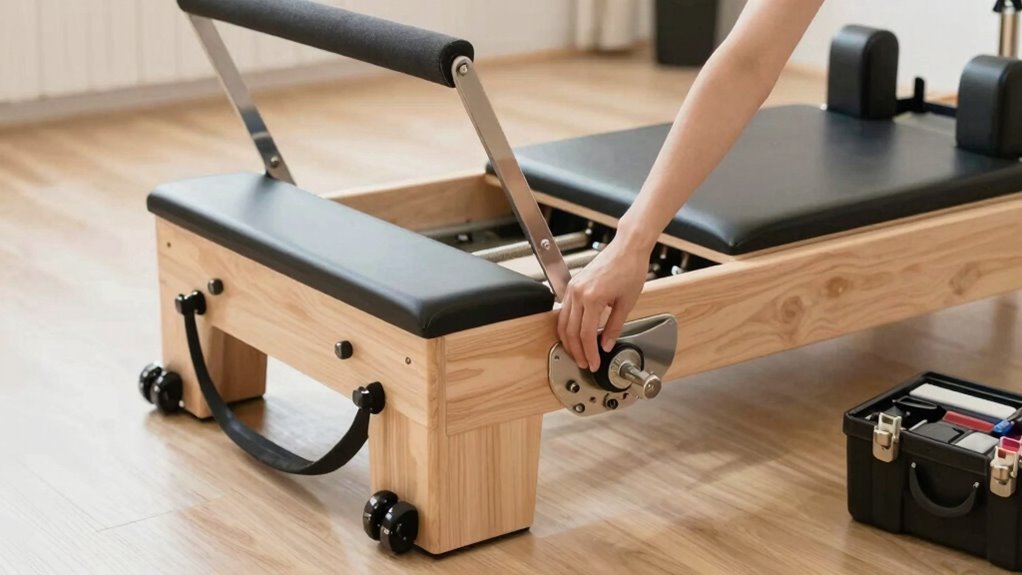
Regular maintenance is essential because it keeps your Pilates equipment functioning smoothly and prevents costly repairs. When you follow proper maintenance routines, you guarantee that design considerations, like sturdy frames and secure components, stay intact. This proactive approach directly impacts user safety, reducing the risk of accidents caused by worn or loose parts. By regularly inspecting and tightening bolts, lubricating moving parts, and checking for damage, you preserve the integrity of your equipment. Well-maintained Pilates reformers and home gyms last longer, saving you money and effort in the long run. Consistent upkeep also keeps your workouts safe and effective, allowing you to focus on your exercises rather than worrying about equipment failure. Additionally, implementing a routine inspection schedule ensures that potential issues are identified early before they lead to more significant problems. Regularly cleaning and maintaining mechanical components can also help prevent corrosion and wear that might compromise the equipment’s safety and performance. Incorporating preventive maintenance techniques based on manufacturer recommendations can further improve the durability of your equipment. Staying informed about wear and tear signs can help you address issues promptly, and understanding how sound vibrations influence equipment stability can be beneficial for maintaining optimal performance. Ultimately, regular maintenance is key to maximizing your equipment’s lifespan and performance.
As an affiliate, we earn on qualifying purchases.
How to Inspect Your Pilates Reformer for Wear and Tear

Inspecting your Pilates reformer regularly helps catch signs of wear and tear before they turn into serious problems. Start by examining the moving parts, such as pulleys, cables, and springs, for fraying, corrosion, or looseness. Check the frame for any cracks or dents that could compromise stability. Don’t forget to inspect your Pilates accessories, ensuring straps and handles are secure and undamaged. Pay attention to the condition of the carriage and footbar, making sure they slide smoothly without resistance. Regularly review your exercise routines to identify if certain movements cause unusual stress on specific parts. Performing routine equipment inspections helps maintain safety and performance, keeping your equipment in top shape for effective workouts. Incorporating sustainable textile care practices, such as choosing eco-friendly cleaning methods for your mats and accessories, also contributes to maintaining a healthy workout environment. Additionally, inspecting wear and tear on flexible components like belts and upholstery can extend the lifespan of your equipment. Regular checks can also help identify any potential safety hazards, ensuring a secure workout space. Moreover, understanding the color accuracy of your equipment and environment can improve visibility and safety during workouts.
Pilates reformer replacement parts
As an affiliate, we earn on qualifying purchases.
As an affiliate, we earn on qualifying purchases.
Cleaning Your Pilates Reformer Safely and Effectively
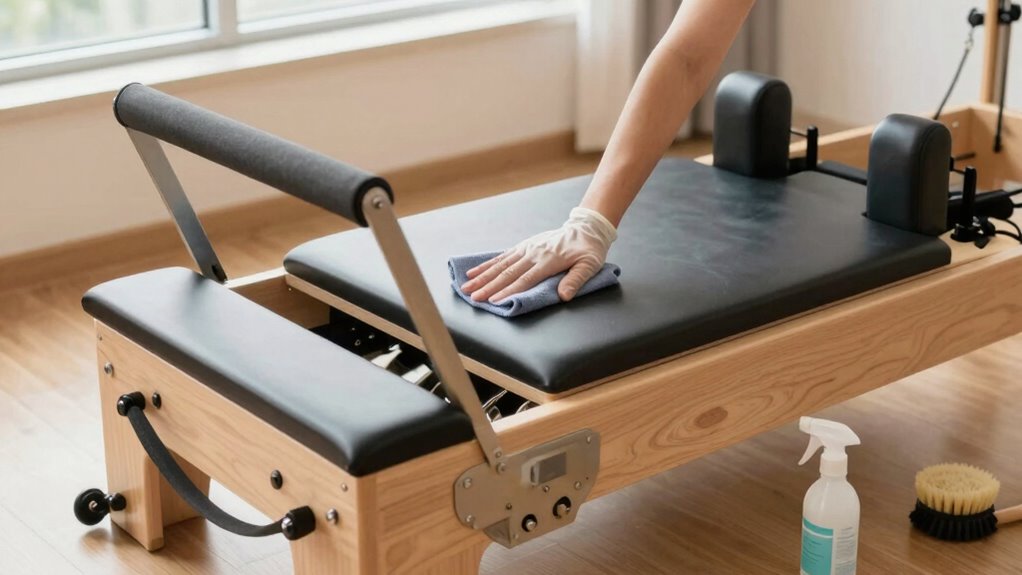
Keeping your Pilates reformer clean is essential for maintaining its longevity and guaranteeing safe, effective workouts. Regular cleaning helps prevent dirt and sweat buildup that can compromise the equipment’s functionality. Use a soft cloth dampened with mild soap and water to wipe down the frame, pulleys, and other touchpoints. Avoid harsh chemicals that could damage surfaces. Just as diet plans support your overall health, a consistent cleaning routine supports your reformer’s performance. Incorporate cleaning into your workout routines so it becomes a habit—clean before or after each session for best results. Keep the mats and padding sanitized to prevent germs. Proper maintenance ensures your equipment stays in top shape, allowing you to focus on your fitness goals without interruptions. For optimal performance, consider using specialized cleaning products designed for fitness equipment to maintain the integrity of your reformer.
exercise equipment cleaning supplies
As an affiliate, we earn on qualifying purchases.
As an affiliate, we earn on qualifying purchases.
Lubrication Tips for Smooth Moving Parts
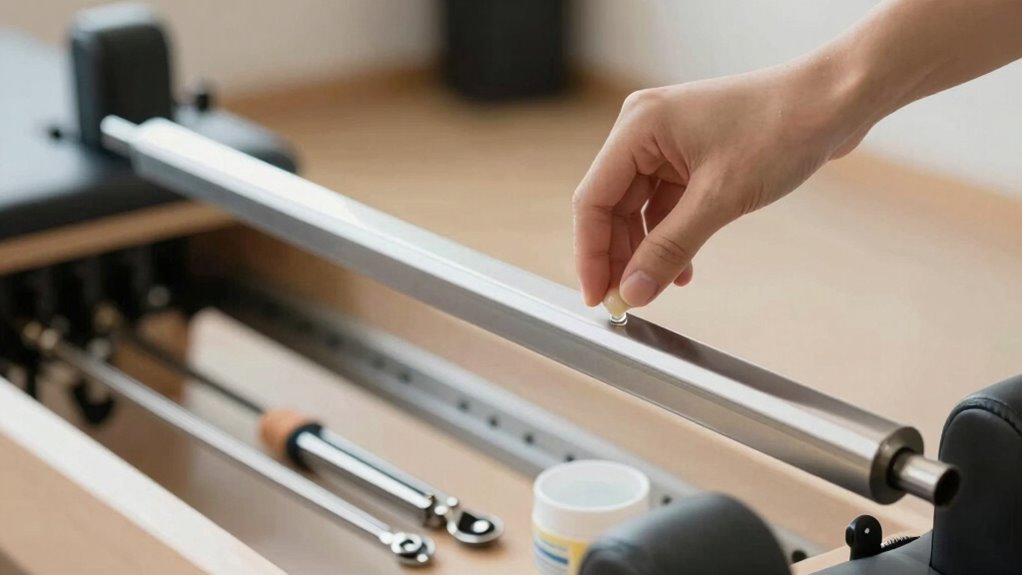
Choosing the right lubricant is essential to keep your Pilates reformer moving smoothly, so make certain you select a product compatible with your equipment. You should also establish a regular application schedule to prevent wear and guarantee peak performance. By staying consistent, you’ll extend the life of your machine and enjoy seamless workouts. Incorporating the latest wall art trends into your workout space can also create an inspiring environment that motivates regular maintenance and use. To further ensure optimal operation, understanding dream symbolism related to time and life can provide a calming perspective that encourages routine care and patience. Additionally, understanding the importance of proper maintenance techniques can help you identify potential issues before they become costly repairs. Regularly inspecting small wood stove components for signs of wear can also prevent unexpected breakdowns and ensure safe operation. Keeping a detailed maintenance log can help you track service intervals and identify patterns that may indicate underlying problems.
Choosing Proper Lubricant Types
Selecting the right lubricant is essential to guarantee your Pilates reformer or home gym operates smoothly and quietly. When choosing, consider whether a custom lubricant suits your equipment’s specific needs, or if a generic option will suffice. You’ll also want to weigh the benefits of synthetic vs. natural lubricants, as synthetic options often last longer and perform better under stress, while natural ones are eco-friendly and less likely to cause damage.
- Match lubricant type to your machine’s materials
- Use a custom lubricant designed for exercise equipment
- Prioritize synthetic lubricants for durability
- Opt for natural options if eco-consciousness is a priority
Regular Application Schedule
To guarantee your Pilates reformer or home gym remains in peak condition, establishing a regular lubrication schedule is essential. Consistently applying lubricant prevents squeaks, reduces wear, and extends equipment lifespan. You should lubricate moving parts every 3 to 6 months, depending on usage. Think of it as nutrition tips for your machine—just like a balanced diet keeps you energized, proper lubrication keeps your equipment functioning smoothly. Varying exercise routines can put different stress points on your gear, so regular maintenance ensures all parts stay in top shape. Use the table below to understand the importance of timing and application:
| Timing | Benefit |
|---|---|
| Every 3-6 months | Prevents squeaks and wear |
| After intense use | Maintains smooth operation |
| When parts feel stiff | Restores flexibility and performance |
| Regular check-ins | Saves costly repairs in the future |
Additionally, paying attention to proper maintenance practices can help you identify early signs of wear and address them proactively. Regular lubrication is an easy way to prevent damage and keep your equipment performing like new. Incorporating manufacturer recommendations ensures that you use the correct type of lubricant for your specific equipment.
How to Check and Replace Worn Cables and Springs

Regularly inspecting the cables and springs on your Pilates reformer or home gym is essential to guarantee safe and effective workouts. Look for signs of wear, such as fraying, rust, or loss of spring tension. Worn cables can snap unexpectedly, risking injury, so cable replacement should happen promptly. When checking springs, look for corrosion, cracks, or loss of elasticity, which indicate it’s time for a replacement. Adjust spring tension as needed to maintain proper resistance and workout quality. Incorporating cultural activities into maintenance routines can help prolong the lifespan of your equipment and keep it functioning smoothly. Additionally, understanding neural interfaces and future tech innovations can inspire modern upgrades or maintenance strategies for your fitness equipment. Regularly cleaning and lubricating moving parts can also help maintain optimal butter storage and prevent unnecessary wear. Staying informed about appliance safety practices can further ensure your equipment remains secure and reliable over time.
Tightening Bolts and Adjusting Components for Stability
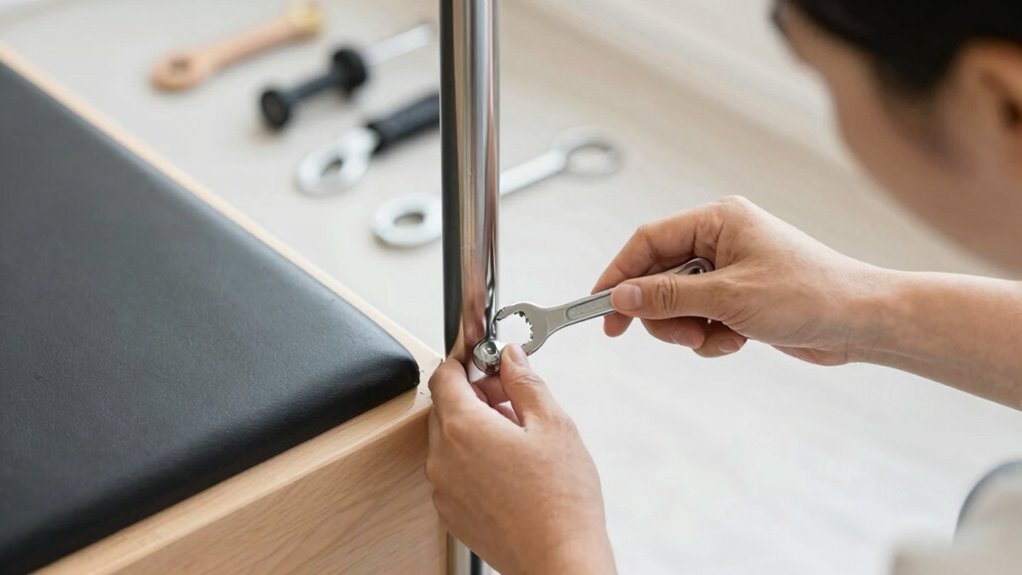
You should check your bolts regularly to guarantee everything stays secure. If you notice any loose fittings, tighten them promptly to maintain stability. Also, inspect for signs of wear and replace any components that show damage.
Check Bolts Regularly
Ensuring your Pilates reformer or home gym remains stable starts with checking the bolts often. Regularly inspecting and tightening them is vital for bolts safety and maintaining equipment stability. Loose bolts can lead to wobbly movements or even accidents, so don’t overlook this step. By staying vigilant, you prevent potential damage and extend your equipment’s lifespan. Incorporating analytical thinking into your maintenance routine helps you identify underlying issues before they become serious.
- Look for signs of wear or corrosion on bolts
- Use the correct tools to tighten bolts securely
- Check all connection points, especially joints and pulleys
- Follow manufacturer guidelines for torque specifications
Making bolt checks part of your routine keeps your workout safe and your equipment performing like new. Consistent maintenance guarantees your gym setup remains reliable and secure.
Tighten Loose Fittings
Loose fittings can compromise the stability of your Pilates reformer or home gym, so it’s important to tighten any loose bolts and adjust components promptly. Regularly checking and tightening fittings prevents accidents and guarantees smooth operation. When performing DIY repairs, always follow safety precautions, like unplugging equipment and wearing gloves if needed. Use the correct tools, such as a wrench or screwdriver, to avoid damaging parts. If a bolt feels loose, tighten it firmly but avoid overtightening, which can cause stripping or cracking. Keep an eye on moving parts and connection points after each workout. Staying proactive with these simple steps helps maintain stability, safety, and peak performance of your equipment for years to come.
Inspect for Wear
Have you checked your Pilates reformer or home gym for signs of wear lately? Regular inspection helps prevent accidents and keeps your equipment performing at its best. Look for issues like loose bolts that affect stability, and verify all components are tight. Pay close attention to the spring tension—if it feels uneven or weak, it might need adjustment or replacement. Check the upholstery for tears or fraying, which can worsen over time and compromise comfort or safety. Also, inspect moving parts for rust or corrosion. Addressing these issues early prevents further damage and extends your equipment’s lifespan. Remember, a quick, regular inspection keeps your workouts safe and effective, helping your equipment stay like new for years to come.
Ensuring Proper Alignment of Springs and Carriage
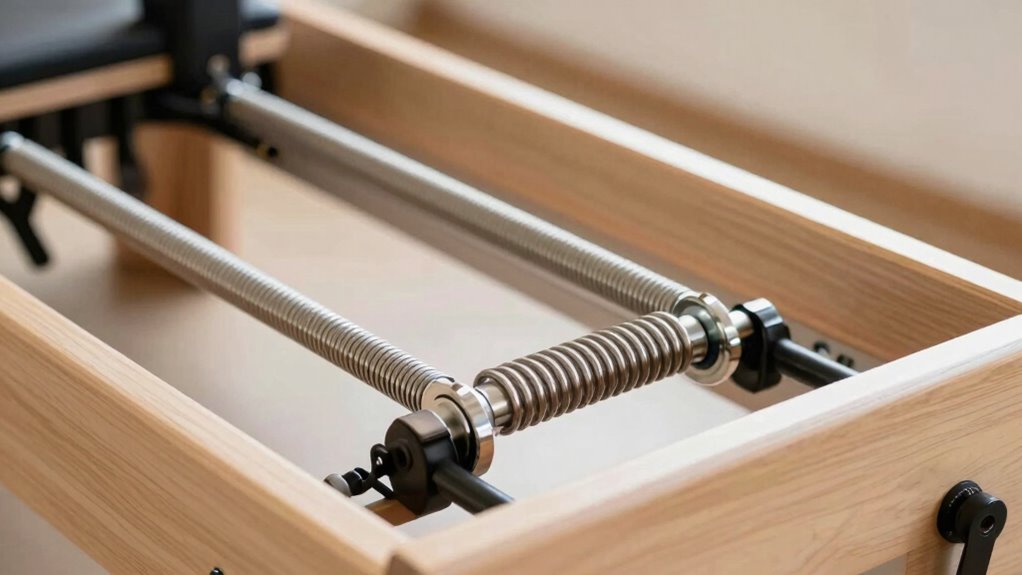
Proper alignment of springs and the carriage is crucial for safe and effective Pilates reformer workouts. Check that the spring tension feels balanced and smooth during movement. Uneven tension can cause misalignment, making exercises less effective and potentially unsafe. To guarantee proper carriage alignment, observe how the carriage moves; it should glide evenly without wobbling or sticking. If you notice uneven movement, adjust the spring tension or inspect the springs for wear or damage. Confirm that the springs are securely attached and seated correctly. Regularly maintaining spring tension and verifying carriage alignment help prevent unnecessary strain on your equipment and ensure a smooth, controlled workout every time. Properly aligned springs and carriage are essential for peak performance and safety.
Troubleshooting Common Pilates Equipment Problems

Even with regular maintenance, equipment issues can still arise during your Pilates practice. Addressing common problems quickly helps guarantee safety and keeps your workouts effective. Poor equipment storage can cause parts to misalign or wear prematurely, so always store your reformer or home gym properly. If you notice unusual noises or difficulty moving the carriage, check for tangled or worn springs. Loose bolts or damaged straps can compromise user safety, so tighten or replace them as needed. Additionally, inspect the pulleys and cables regularly for fraying or slipping. Staying vigilant about these issues prevents accidents and prolongs your equipment’s lifespan. Remember, consistent troubleshooting maintains peak performance and keeps your Pilates sessions safe and enjoyable.
Creating a Weekly Maintenance Routine for Your Home Gym
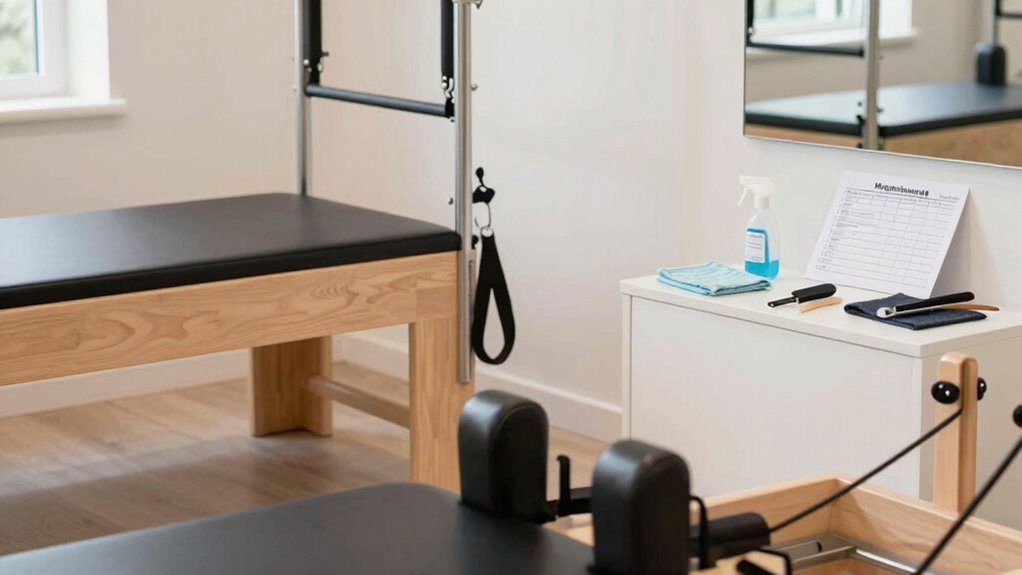
Establishing a weekly maintenance routine is essential to keep your home gym running smoothly and safely. Regular checks help prevent equipment failures and guarantee your workouts stay effective. Start by inspecting your Pilates reformer or home gym for loose bolts or worn parts, tightening or replacing as needed. Clean all surfaces, including mats and frames, to remove dust and sweat buildup. Incorporate nutrition tips into your routine by staying hydrated and fueling your body properly; this keeps your energy levels high and workout motivation strong. Set aside time each week to organize your space, making sure everything is in its place. A well-maintained gym not only boosts safety but also keeps you motivated to stick with your fitness goals.
When to Call a Professional for Repairs or Replacements
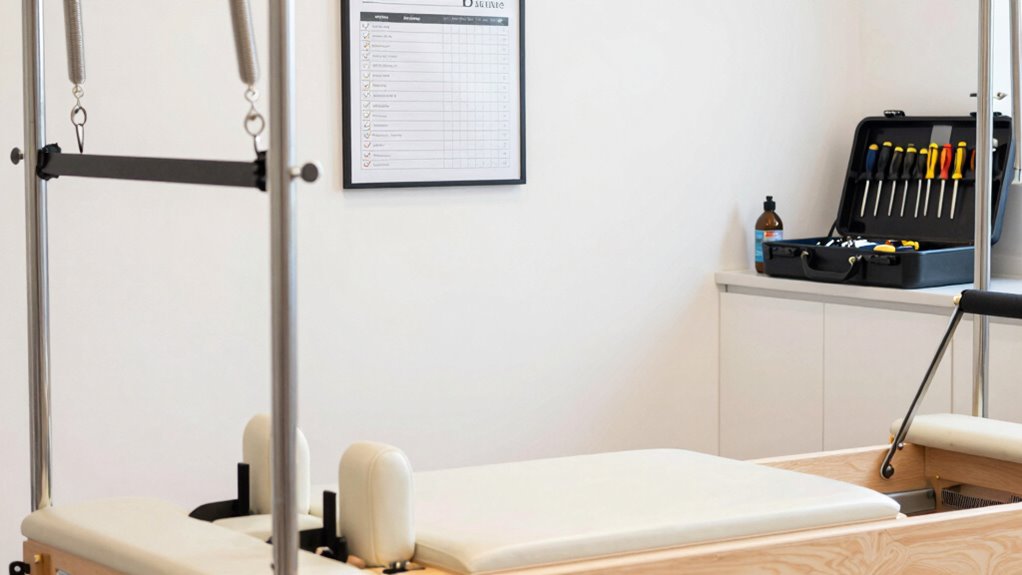
Knowing when to call a professional is essential to assure your Pilates reformer or home gym remains safe and effective. If you notice persistent issues like unusual noises, unstable components, or difficulty with smooth operation, it’s time to seek professional repairs. Ignoring these signs can compromise safety or cause further damage, potentially voiding equipment warranties. If repairs involve complex parts or electrical components, don’t attempt DIY fixes—trust trained technicians. Additionally, review your equipment warranties; some repairs or replacements may be covered, saving you money. When in doubt, consult the manufacturer’s guidelines or contact a certified repair specialist. Remember, timely professional repairs ensure your equipment stays in top shape, prolongs its lifespan, and guarantees safe workouts.
Frequently Asked Questions
How Often Should I Replace the Springs on My Pilates Reformer?
You should replace your Pilates reformer springs every 1 to 2 years, depending on spring tension and use frequency. Regularly inspect them for signs of wear, such as rust, loss of elasticity, or cracks, which indicate it’s time for replacement. Following a consistent replacement schedule guarantees your equipment stays safe and functions effectively, preventing accidents and maintaining the proper resistance during your workouts.
What Signs Indicate My Equipment Needs Professional Repair?
You should seek professional repair if you notice equipment calibration issues that affect your workout accuracy or if upholstery wear causes discomfort or tears. Additionally, persistent squeaks or loosened parts indicate a need for expert inspection. Addressing these signs promptly guarantees your equipment stays safe and functional, preventing further damage. Regular maintenance checks can help catch these issues early, keeping your Pilates reformer or home gym performing like new.
Can I Use Household Cleaning Products on My Pilates Machine?
Did you know that using improper cleaning agents can reduce your Pilates equipment’s lifespan by up to 30%? You should avoid household cleaning products on your reformer. Instead, opt for gentle, non-abrasive cleaners recommended by the manufacturer. Always follow safety precautions, like unplugging the machine and testing a small area first. This guarantees you clean effectively without damaging the equipment or risking injury.
How Do I Safely Store My Pilates Reformer When Not in Use?
To safely store your Pilates reformer, choose a dry, cool place away from direct sunlight and moisture. Use appropriate storage solutions like cover covers or padded mats to prevent dust and damage. Always follow safety precautions by unplugging and securing moving parts. Detach removable accessories if possible, and keep the machine on a flat surface to avoid tipping. Regularly inspect for wear and tear before storage to maintain its performance.
What Are Common Mistakes to Avoid During Maintenance?
Avoid common mistakes like neglecting proper lubrication techniques, which can cause parts to wear out faster. Don’t skip calibration tips; inaccurate settings affect your workout and machine longevity. Make sure you use the right lubricant and apply it evenly, avoiding over-lubrication. Regularly check and calibrate components to prevent uneven tension or slipping. Staying attentive to these details helps keep your reformer functioning smoothly and extends its lifespan.
Conclusion
Treat your Pilates reformer like a trusted companion on your fitness journey. With regular checkups and gentle care, you’ll keep it running smoothly—ready to support your strength and flexibility. Just as a well-tended garden blooms year after year, your equipment will serve you well through consistent maintenance. Embrace these simple habits, and your home gym will stay a reliable partner, helping you sculpt your best self, day after day.
Halloween Picks
halloween
As an affiliate, we earn on qualifying purchases.