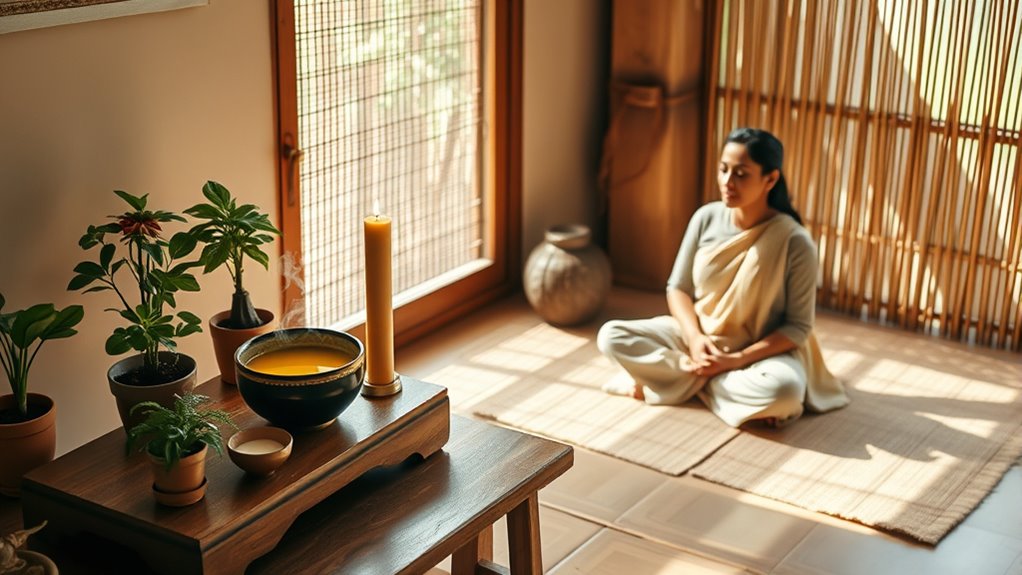

To achieve balance and harmony in Ayurveda, you should tailor daily routines to your unique dosha—Vata, Pitta, or Kapha. Incorporate grounding activities and warm foods for Vata, cooling practices for Pitta, and routines that promote stability for Kapha. Maintain regular sleep, meal, and activity schedules aligned with natural rhythms. Supporting your dosha with self-care and mindful habits helps restore inner harmony. Keep exploring these habits to discover the best ways to nurture your well-being.
Key Takeaways
- Establish consistent daily routines for waking, eating, and sleeping aligned with natural rhythms.
- Incorporate grounding activities and warm, nourishing foods tailored to your dosha type.
- Practice self-care rituals like oil massages and calming herbal teas to support mental and physical balance.
- Maintain mindfulness and flexibility, listening to your body’s signals for adjustments.
- Prioritize restful sleep and early rising to promote overall harmony and well-being.
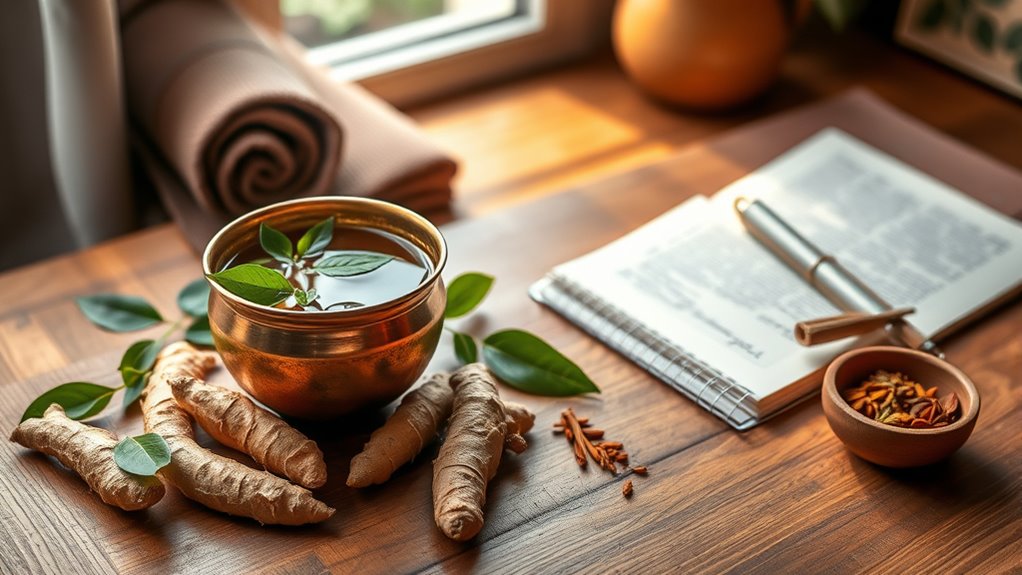
Ayurvedic lifestyle habits focus on balancing your mind, body, and spirit to promote overall well-being. One of the core principles is understanding your unique constitution, known as your dosha, which influences how your body functions and responds to different stimuli. Achieving dosha balancing is essential for maintaining health, reducing stress, and preventing illness. To do this effectively, your daily routines should be tailored to support your specific dosha type, whether Vata, Pitta, or Kapha. For example, if you have a Vata constitution, you might focus on grounding activities, warm foods, and routines that promote stability. Conversely, if Pitta dominates, cooling foods and calming practices help bring harmony. Recognizing these needs guides your daily routines, ensuring they serve your unique balance.
Creating consistent daily routines is key to maintaining your dosha balance. This involves setting regular times for waking, eating, working, and sleeping. When your routines align with your dosha, your body can operate more smoothly, and your mind feels more centered. For instance, rising early, ideally before sunrise, supports Vata and Kapha types, while Pitta individuals might prefer slightly later mornings. Incorporating mindful practices like meditation or gentle yoga into your mornings can set a calm tone for the day. Eating fresh, seasonal foods at consistent times helps stabilize digestion, which is crucial in Ayurveda. Avoiding irregular eating patterns prevents imbalance and supports ideal dosha functioning. Additionally, understanding the importance of routines in Ayurveda can enhance your overall health.
Establish regular routines for waking, eating, and sleeping to support your dosha balance and overall harmony.
Your daily routines also extend to self-care practices that nurture your spirit and enhance your mental clarity. Regular oil massages, or abhyanga, can soothe Vata and Kapha, while cooling herbal teas help Pitta types stay balanced. Sleep is another critical aspect; going to bed early and waking with the sunrise aligns with natural rhythms, promoting restorative rest. When your routines are aligned with your dosha, your energy levels become more stable, and you’re less prone to stress or fatigue. These routines aren’t rigid but adaptable, giving you flexibility while maintaining consistency.
Ultimately, integrating dosha balancing into your daily routines helps you cultivate a lifestyle rooted in harmony. It’s about listening to your body’s signals, adjusting your habits, and honoring your natural rhythms. With commitment, these habits become second nature, fostering a sense of balance that supports your physical health, mental clarity, and spiritual well-being. By prioritizing your daily routines and understanding your dosha, you set a foundation for lasting health and harmony that can transform your overall quality of life.

Ayurvedic Massage Oil enriched with Clove, Almond, Lemongrass & Lavender Oils & 6 Ancient Herbs. Relieves Muscle Tensions, Calms Nerves, Soothes. 100% Natural 300ml
RELAXATION: The relaxing qualities of lavender and lemongrass in our Ayurvedic massage oil assist to lower tension and…
As an affiliate, we earn on qualifying purchases.
As an affiliate, we earn on qualifying purchases.
Frequently Asked Questions
How Do I Determine My Ayurvedic Dosha?
To determine your dosha, start by observing your body constitution, including your physical features, energy levels, and digestion. Pay attention to your natural tendencies—are you more energetic or calm, hot or cold, oily or dry? You can also take a dosha quiz or consult an Ayurvedic practitioner for accurate dosha identification. Recognizing your dominant dosha helps you tailor lifestyle habits to maintain balance and harmony.
Can Ayurveda Adapt to Modern Urban Lifestyles?
Think of Ayurveda as a guiding star that adapts to your busy city life. It can easily address urban challenges by incorporating modern adaptations like mindful eating, stress management, and tailored routines. You can balance your mind and body amidst the chaos, embracing practices that fit your schedule. With a little creativity, Ayurveda becomes your personal map to harmony, even in the rush of modern urban living.
Are Ayurvedic Habits Suitable for Children and Seniors?
Yes, Ayurvedic habits are suitable for children and seniors. You can introduce child-friendly routines like gentle massages and simple herbal teas to promote health. For seniors, focus on senior wellness practices such as mindful eating, gentle yoga, and calming herbal infusions. These practices help enhance energy, balance, and overall well-being, making Ayurveda a versatile approach that adapts well to all ages, supporting health across the lifespan.
How Long Does It Take to See Results From Ayurvedic Routines?
Imagine starting an Ayurvedic routine and noticing changes in a few weeks—that’s common. Timing expectations vary because of individual variation, but generally, you might see results within 3 to 6 weeks. For example, someone with digestion issues may feel improvements sooner, while others may take longer. Consistency is key; patience and regular practice help your body adapt and respond effectively over time.
What Are Common Ayurvedic Remedies for Stress Relief?
You can find relief from stress by trying common Ayurvedic remedies like herbal teas such as chamomile or Ashwagandha, which calm your mind. Incorporate meditation techniques like deep breathing or mindfulness to reduce anxiety and promote relaxation. These practices, when used consistently, help balance your doshas, ease stress, and improve overall well-being. Make herbal teas part of your daily routine and dedicate time for meditation to see lasting results.

TEACURRY Pitta Dosha Tea – 30 Tea Bags, 1 Month Pack – Balance Pitta Dosha – All Natural Herbal TeaCaffeine Free
✅ Pitta Dosha Tea consists of pure rose petals of the Damask rose variety, from farmlands in Maharashtra,…
As an affiliate, we earn on qualifying purchases.
As an affiliate, we earn on qualifying purchases.
Conclusion
By embracing Ayurvedic habits, you invite balance into your life, like a gentle river flowing steadily through a lush landscape. While modern chaos may swirl around you, these mindful routines act as a calming breeze, restoring harmony within. Picture yourself rooted in nature’s rhythm, your body and mind in perfect sync. When you nurture yourself with these ancient practices, you create a sanctuary of peace amid life’s busy currents, grounding you in true wellness.

Mantra Planner 2026 Planner, Daily Journal & Gratitude Journal All-In-One with To Do List, Self Care Prompts & Habit Tracker – 5.8 x 8.3 – Black
✅ 2026 Planner and Journal: This 2026 planner is a daily planner, monthly planner, weekly planner, life planner,…
As an affiliate, we earn on qualifying purchases.
As an affiliate, we earn on qualifying purchases.

Ayurveda Lifestyle Wisdom
As an affiliate, we earn on qualifying purchases.
As an affiliate, we earn on qualifying purchases.