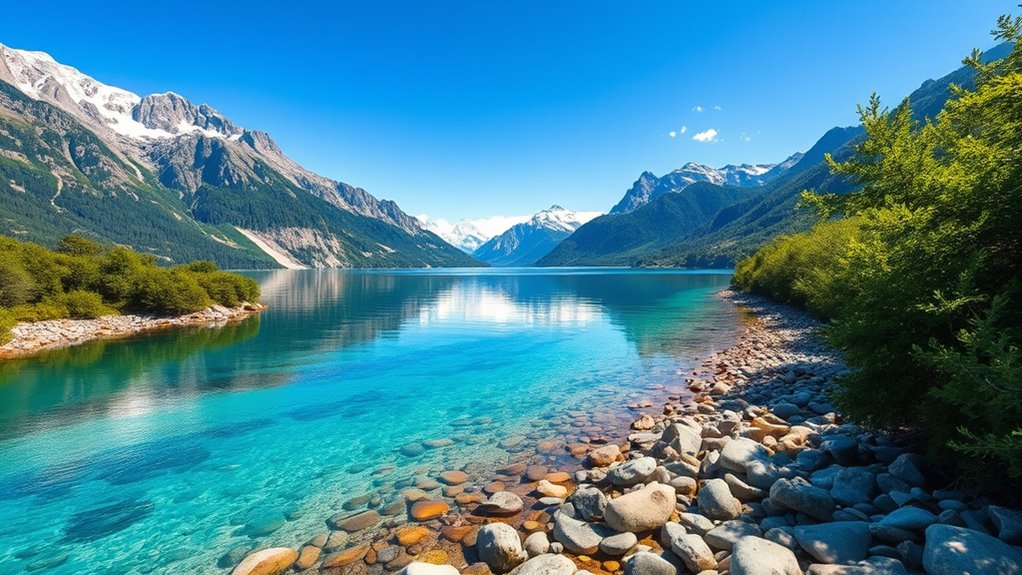

To enjoy cold-water immersion, visit scenic lakes like Lake Tahoe or the Great Salt Lake, where clear waters provide invigorating dips. Rivers such as the Salmon River or the Connecticut River offer exhilarating experiences with strong currents and natural beauty. Look for remote spots in national parks or wilderness areas for privacy and serenity. Keep safety in mind and explore more top destinations known for their pristine waters and unforgettable immersion experiences.
Key Takeaways
- Scenic lakes in national parks like Lake Tahoe and Crater Lake offer pristine, cold water for safe immersion.
- Remote wilderness rivers such as the Salmon River provide exhilarating, natural cold-water immersion experiences.
- Clear, freshwater lakes like Lake Placid are ideal for gradual acclimation and relaxing dips.
- Ensure water temperatures are suitable and check for hazards like submerged rocks or swift currents before immersion.
- Choose locations with natural beauty and safety measures to enhance mental clarity and physical recovery.

If you’re seeking a thrilling way to boost your health and challenge your limits, exploring cold-water immersion destinations is a great choice. Many lakes and rivers around the world offer pristine spots where you can submerge yourself in invigorating cold water, reaping both physical and mental benefits. Before diving in, it’s essential to understand the potential sauna benefits, as combining cold water plunges with sauna sessions can enhance recovery and circulation. Saunas warm your body, opening blood vessels and relaxing muscles, which prepares your body for a cold plunge. This contrast therapy not only boosts your immune system but also improves mental clarity and resilience. However, it’s vital to prioritize cold water safety—never underestimate the power of cold water, especially if you’re new to immersion. Always assess the water temperature and your own comfort level, and avoid pushing past your limits. Gradually acclimate yourself to colder waters, and never swim alone; having a buddy nearby can be a lifesaver in case of unexpected reactions or fatigue.
Many scenic lakes, such as those nestled within national parks or remote wilderness areas, provide perfect settings for cold-water immersion. These locations often feature clear, fresh water that’s ideal for plunging. Rivers, especially those with strong current or colder temperatures, can also be exhilarating spots if you’re cautious about safety. Always check local conditions and be aware of potential hazards like submerged rocks or swift currents. Remember, cold water safety includes wearing appropriate gear, such as wetsuits if necessary, and listening to your body’s signals. Cold water can cause shock or hypothermia if you’re not prepared, so start with brief immersions and build up your tolerance gradually.
Beyond safety, immersing yourself in natural waters can be deeply invigorating and transformative. The crisp chill of the water awakens your senses and provides a stark contrast to the warm comfort of a sauna, amplifying the overall health benefits. Many enthusiasts find that regular cold-water plunges help reduce inflammation, improve circulation, and increase mental alertness. The key is consistency and respecting your limits. Incorporating cold-water immersion into your routine, with proper knowledge of sauna benefits and cold water safety, can lead to significant improvements in your physical and mental wellbeing. Whether it’s a secluded mountain lake or a swift river, these destinations offer more than just a dip—they’re gateways to a healthier, more resilient you.
Frequently Asked Questions
What Safety Precautions Should I Take Before Cold-Water Immersion?
Before cold-water immersion, you should prioritize hypothermia awareness and emergency preparedness. Always check water temperatures and limit your time in the water to prevent hypothermia. Never go alone—have a buddy or supervision nearby. Wear appropriate gear, like wetsuits, and carry a waterproof phone or signaling device. Know basic rescue techniques and have a plan for emergencies. Staying alert and prepared helps guarantee your safety during cold-water adventures.
How Long Should I Stay in Cold Water for Health Benefits?
Did you know that even just 2 to 5 minutes in cold water can boost your immune system? For health benefits, follow duration guidelines of 5 to 10 minutes and listen to your body. Staying too long can cause hypothermia, so start with shorter sessions and gradually increase. Always prioritize safety and avoid overexposure to maximize benefits without risking your well-being.
Are There Age Restrictions for Cold-Water Immersion Activities?
You should check specific age restrictions before trying cold-water immersion, as they vary by location and activity. Generally, children under 12 should avoid cold water, while teenagers and adults can participate with proper supervision. Follow water temperature guidelines closely—ideally, no colder than 50°F (10°C) for safety. Always listen to your body and consult a healthcare professional if you’re unsure about your suitability for cold-water immersion.
What Gear Is Recommended for Cold-Water Immersion?
You should wear essential gear like neoprene gloves and thermal hats to stay warm during cold-water immersion. A wetsuit or drysuit helps insulate your body, while neoprene gloves protect your hands from cold, and thermal hats keep your head warm, which is vital for maintaining core temperature. Consider also wearing insulated boots and a waterproof jacket for added protection and comfort in chilly waters.
How Can I Prevent Hypothermia During Cold-Water Activities?
To prevent hypothermia during cold-water activities, you should immediately prioritize thermal protection and be aware of cold shock. Wear a proper wetsuit or drysuit to retain body heat and minimize heat loss. Move slowly into the water to reduce cold shock, and limit your exposure time. Always have a buddy nearby, and carry emergency gear like thermal blankets. Recognizing early signs of hypothermia helps you respond quickly and stay safe.
Conclusion
So, next time you crave a thrill, skip the tropical beaches and plunge into icy lakes or rushing rivers. Who knew cold water could be your ultimate adventure? Just remember, while you’re shivering and gasping, the warm sun and sandy shores will seem oh-so-inviting—until you realize they’re just a splash away. Embrace the chill, because sometimes, the coolest spots are the ones that make you question your sanity. Happy plunging!