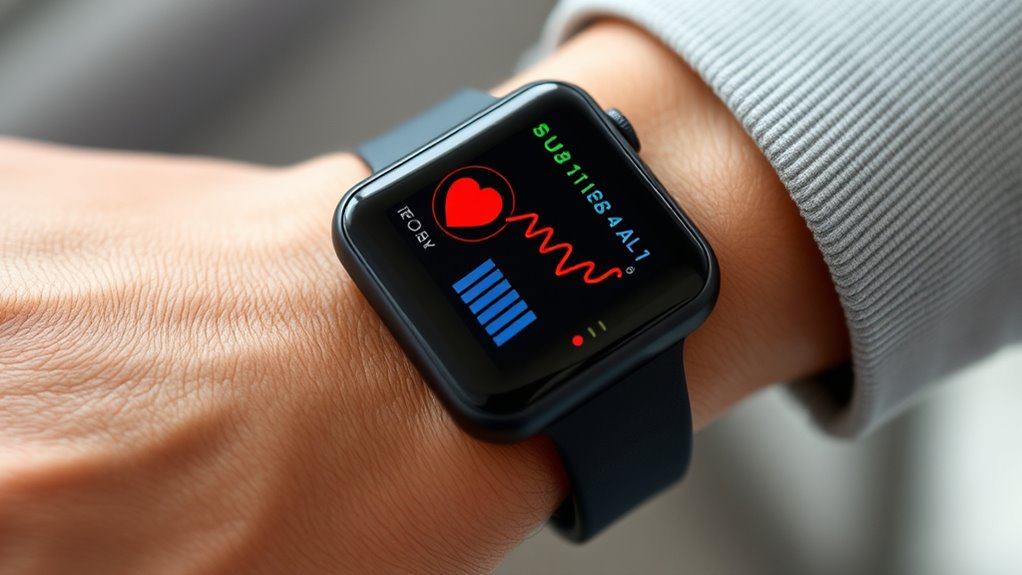

Wearable health trackers help you monitor your fitness, sleep, and heart rate in real time, providing useful insights to stay healthier and motivated. They offer features like goal setting, customizable data privacy, and advanced sensors for accurate measurements. However, they may have drawbacks such as limited battery life or privacy concerns. If you want to understand how to choose the best device, there’s more to explore on key features and safety tips.
Key Takeaways
- Wearable health trackers offer real-time insights into physical activity, heart rate, and sleep patterns to motivate health improvements.
- They incorporate advanced sensors for accurate data collection, but sensor quality can affect measurement reliability.
- Devices vary in battery life, influencing continuous monitoring capabilities and user convenience.
- Privacy features, like encryption and data sharing controls, are essential for safeguarding sensitive health information.
- Regulatory standards impact device safety, reliability, and data security, ensuring trustworthy health tracking.

Wearable health trackers have revolutionized the way you monitor your well-being by providing real-time insights into your physical activity, heart rate, sleep patterns, and more. These devices are designed to help you stay motivated, set goals, and track progress over time. However, as you rely more on these gadgets, it’s important to consider some key factors that influence your experience. Data privacy is one of the most critical concerns. Since these trackers collect sensitive health data, you need to ensure your information is secure. Look for devices with strong encryption and transparent privacy policies to prevent unauthorized access or misuse of your data. Some brands offer options to control what data is shared and with whom, giving you peace of mind that your personal health information remains private.
Another important aspect is battery longevity. The convenience of wearing a health tracker depends heavily on how long the device can operate without needing a recharge. Most devices are designed to last anywhere from a day to a week on a single charge, but this varies widely based on features and usage. If you’re someone who wants constant monitoring, a device with longer battery life might be more suitable, so you don’t have to take it off frequently for charging. Conversely, if you prefer detailed, continuous tracking, you may need to recharge more often, which can be inconvenient. Checking the battery life specifications before buying helps you choose a device that fits your lifestyle. Additionally, understanding the regulatory environment surrounding these devices can help ensure you’re making a safe and informed choice.
Beyond privacy and battery life, you should also think about the accuracy of data collection. A good health tracker provides reliable metrics that you can trust for making health decisions. This includes consistent heart rate readings, accurate sleep tracking, and meaningful activity measurement. Some devices use advanced sensors to improve precision, but they may also consume more battery. Balancing these factors is vital to get the most value from your device.
Top picks for "wearable health tracker"
Open Amazon search results for this keyword.
As an affiliate, we earn on qualifying purchases.
Frequently Asked Questions
How Accurate Are Wearable Health Trackers Compared to Medical Devices?
You’ll find that wearable health trackers offer decent sensor accuracy, but they’re not as precise as medical devices. Their data reliability can vary depending on the brand and how well you wear them. While they’re great for monitoring trends and staying motivated, don’t rely solely on them for medical decisions. Always consult healthcare professionals for accurate diagnoses, as wearable trackers provide helpful but approximate insights.
Can These Devices Replace Regular Health Check-Ups?
While wearable health trackers offer valuable insights, they can’t replace regular health check-ups. Device limitations, like accuracy issues and missing detailed diagnostics, mean you still need professional assessments. However, high user engagement with these devices can help you monitor trends and catch potential problems early. But don’t rely solely on them; always consult healthcare professionals for complete evaluations and personalized advice.
Are Wearable Trackers Suitable for Children or Seniors?
Wearable trackers can be suitable for children and seniors, especially for child safety and senior health monitoring. You can use them to keep an eye on vital signs, location, and activity levels. Just make certain the device is age-appropriate, comfortable, and easy to operate. For children, prioritize safety features like GPS tracking. For seniors, look for devices with simple interfaces and health alerts to help you monitor their well-being effectively.
How Is User Privacy Protected With Health Data?
You can trust that your health data is protected through data encryption, which secures your information from unauthorized access. Plus, companies have privacy policies that outline how your data is used, stored, and shared, giving you transparency and control. Always review these policies to understand your rights. By staying informed and choosing devices with strong security measures, you help make sure your personal health information remains private and safe.
What Are the Latest Technological Advancements in Wearable Health Trackers?
Smart sensors, sophisticated sensors, and seamless AI integration are shaping the latest advancements in wearable health trackers. You’ll find sensor innovations that enhance accuracy and provide richer data, while AI integration offers personalized insights and predictive health alerts. These technological breakthroughs boost your device’s efficiency, enabling real-time health monitoring and smarter health decisions. Embrace these innovations to stay connected, proactive, and better informed about your well-being.
Conclusion
While wearable health trackers offer valuable insights and motivate healthier habits, they can also lead to anxiety or false reassurance. You might feel empowered by tracking every step or heartbeat, yet overwhelmed by constant data or inaccuracies. It’s a powerful tool that can enhance your well-being, but only if you use it wisely. Remember, technology supports your health journey—don’t let it replace your intuition or professional advice. Balance is key to truly benefiting from these devices.