
When choosing a plant-based protein powder, focus on options with complete amino acid profiles like peas, rice, or hemp, and check for minimal additives and artificial ingredients. Opt for organic and minimally processed formulas to maximize nutritional benefits and sustainability. Consider brands committed to eco-friendly practices, as this supports your health and the planet. Keep an eye on the ingredient list and nutritional info—continuing will help you find the best fit for your lifestyle and values.
Key Takeaways
- Assess the protein source (peas, rice, hemp) for complete amino acid profiles and nutritional needs.
- Prioritize organic, minimally processed powders with minimal additives and added sugars.
- Check the brand’s sustainability practices and eco-friendly certifications for environmental impact.
- Consider allergen sensitivities and choose products less likely to cause allergies or sensitivities.
- Balance nutritional content with environmental benefits to support both personal health and sustainability goals.
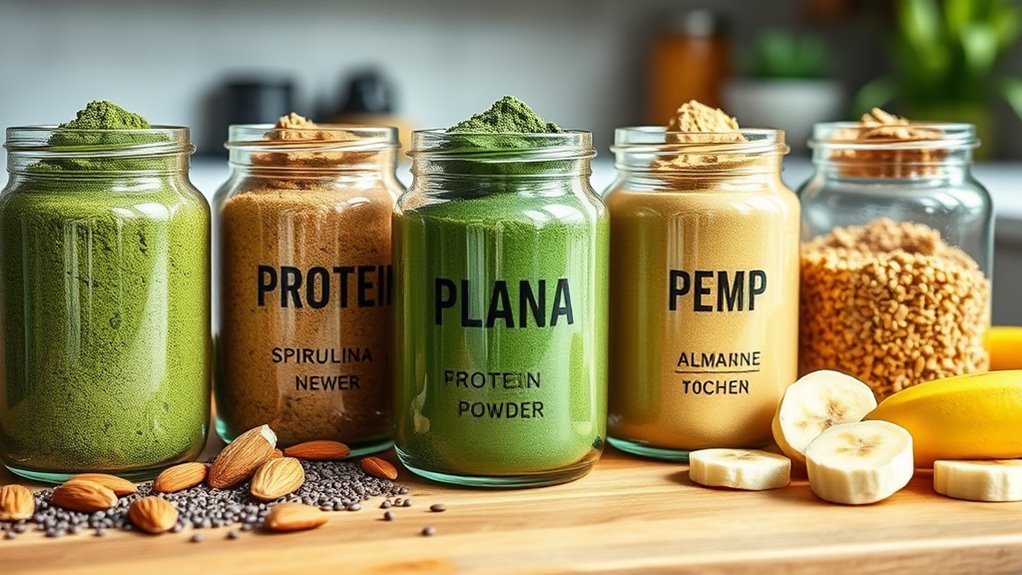
Plant-based protein powders have become a popular choice for those looking to boost their nutrition without relying on animal products. When you choose these powders, you’re not just making a health-conscious decision; you’re also impacting the environment positively. One of the main reasons people turn to plant-based options is their impressive nutritional benefits. They typically contain high levels of essential amino acids, fiber, vitamins, and minerals, making them a well-rounded supplement to your diet. Unlike some animal-based proteins, plant proteins are often easier to digest and less likely to cause allergies or sensitivities. Plus, many plant-based powders are low in saturated fat and cholesterol, supporting heart health and overall wellness. You can find options derived from peas, rice, hemp, chia, and other plants, each offering unique nutrient profiles that can cater to your specific dietary needs.
Beyond personal health, you might also consider the environmental impact when selecting a protein powder. Plant-based proteins generally have a smaller carbon footprint compared to animal-based sources. They require less land, water, and energy to produce, which means you’re helping reduce greenhouse gas emissions and conserve natural resources. If sustainability matters to you, choosing plant-based powders aligns your dietary choices with eco-friendly principles. You’ll often find that these products are produced with fewer chemicals and less processing, further minimizing their environmental footprint. This sustainable aspect is especially important if you’re committed to reducing your overall ecological impact, as it supports global efforts to combat climate change and preserve biodiversity.
As you evaluate different plant-based protein powders, consider their nutritional profile and the company’s sustainability practices. Look for products that provide a complete amino acid profile or combine different plant sources to achieve this. Check the ingredient list for added sugars, artificial flavors, or preservatives, and opt for organic or minimally processed options when possible. Remember, the best choice balances your nutritional needs with environmental consciousness. Incorporating vetted products from reputable brands ensures you receive high-quality, safe, and effective supplements. By opting for plant-based protein powders, you’re making a positive impact on both your health and the planet. This dual benefit makes them an increasingly attractive addition to your diet, whether you’re a vegan, vegetarian, or simply looking to diversify your protein sources. Ultimately, selecting the right plant-based protein powder is about aligning your dietary goals with sustainable practices, ensuring you feel good about what you’re putting into your body and how it affects the world around you.
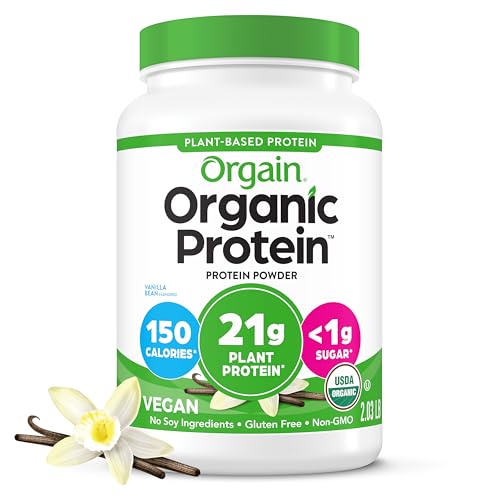
Orgain Organic Vegan Protein Powder, Vanilla Bean – 21g Plant Protein, 6g Prebiotic Fiber, No Lactose Ingredients, No Added Sugar, Non-GMO, For Shakes & Smoothies, 2.03 lb (Packaging May Vary)
CLEANER INGREDIENTS: 21g of Organic plant based protein and 1g sugar. Our protein blend contains Organic peas, brown…
As an affiliate, we earn on qualifying purchases.
As an affiliate, we earn on qualifying purchases.
Frequently Asked Questions
Are Plant-Based Proteins Complete Proteins?
Yes, some plant-based proteins are complete proteins, meaning they provide all essential amino acids your body needs. However, many have an incomplete amino acid profile, so you might need to combine different sources like beans and grains to guarantee protein completeness. When choosing a plant-based protein powder, check its amino acid profile to ensure it offers a balanced, complete protein, supporting your muscle growth and overall health.
How Do Plant Proteins Compare to Animal Proteins?
Think plant proteins are inferior? Think again! When comparing soy vs pea, you’ll find both offer solid options, but soy shines with higher protein digestibility. While animal proteins often score higher for complete amino acids, plants can still pack a punch—just mix and match for balance. You get fiber, antioxidants, and fewer fats. Ultimately, your choice depends on your goals, but don’t dismiss plant proteins—they’re pretty impressive contenders!
Can Plant Protein Powders Help With Muscle Gain?
Yes, plant protein powders can help with muscle gain when you choose the right one. Look for options rich in vegan amino acids, which support muscle repair and growth. Additionally, consider plant protein absorption; some sources are easier for your body to digest and utilize. Combining different plant proteins can improve amino acid profiles, maximizing muscle gains, so you get the most benefit from your plant-based supplement.
Are There Allergen Concerns With Plant-Based Powders?
Yes, there can be allergen concerns with plant-based protein powders. If you have gluten sensitivity, check labels for gluten-containing ingredients like wheat or barley. For nut allergies, avoid powders with nuts or cross-contamination risks. Always read ingredient lists carefully, and opt for brands that clearly label allergen information. This way, you can enjoy plant protein powders safely without risking allergic reactions.
How Should I Store Plant Protein Powders?
Imagine your plant protein powder sitting quietly in a cool, dark pantry, safe from sunlight and moisture. To maintain its freshness and maximize shelf life, store it in an airtight container, away from heat sources. Proper storage methods prevent clumping and spoilage, ensuring you get the most out of every scoop. Keep it sealed tightly, and you’ll enjoy your plant-based protein powder at its best for months to come.

THORNE – Plant Protein – 22 Grams of Vegan Protein Powder – Pea, Rice & Chia Seed Protein with Complete Amino Acid Profile – NSF Certified for Sport – Chocolate – Gluten-Free – About 20 Servings
Muscle Support: Each serving delivers 22 g of high-quality protein from plant sources, with all 9 essential amino…
As an affiliate, we earn on qualifying purchases.
As an affiliate, we earn on qualifying purchases.
Conclusion
Choosing the right plant-based protein powder is like finding a hidden gem—you’ll feel confident knowing it aligns with your health goals and values. Consider your dietary needs, taste preferences, and ingredient quality to make the best choice. With so many options available, you’re sure to find one that suits you perfectly. Embrace the journey toward a healthier lifestyle, knowing each scoop fuels your body like a well-tuned engine, propelling you forward with energy and purpose.

Orgain Organic Vegan Protein Powder, Natural Unsweetened – 21g of Unflavored Plant Protein, 4g Prebiotic Fiber, Low Net Carbs, No Added Sugar, Non-GMO, For Shakes & Recipes, 1.59 lb
CLEANER INGREDIENTS: 21g of Organic plant based protein and 0g sugar. Our protein blend contains Organic peas, brown…
As an affiliate, we earn on qualifying purchases.
As an affiliate, we earn on qualifying purchases.
Orgain Organic Vegan Protein Powder, Natural Unsweetened – 21g of Unflavored Plant Protein, 4g Prebiotic Fiber, Low Net Carbs, No Added Sugar, Non-GMO, For Shakes & Recipes, 1.59 lb
CLEANER INGREDIENTS: 21g of Organic plant based protein and 0g sugar. Our protein blend contains Organic peas, brown…
As an affiliate, we earn on qualifying purchases.
As an affiliate, we earn on qualifying purchases.