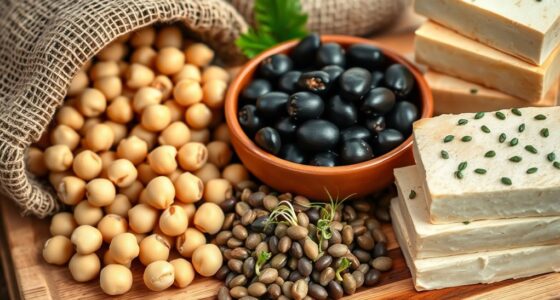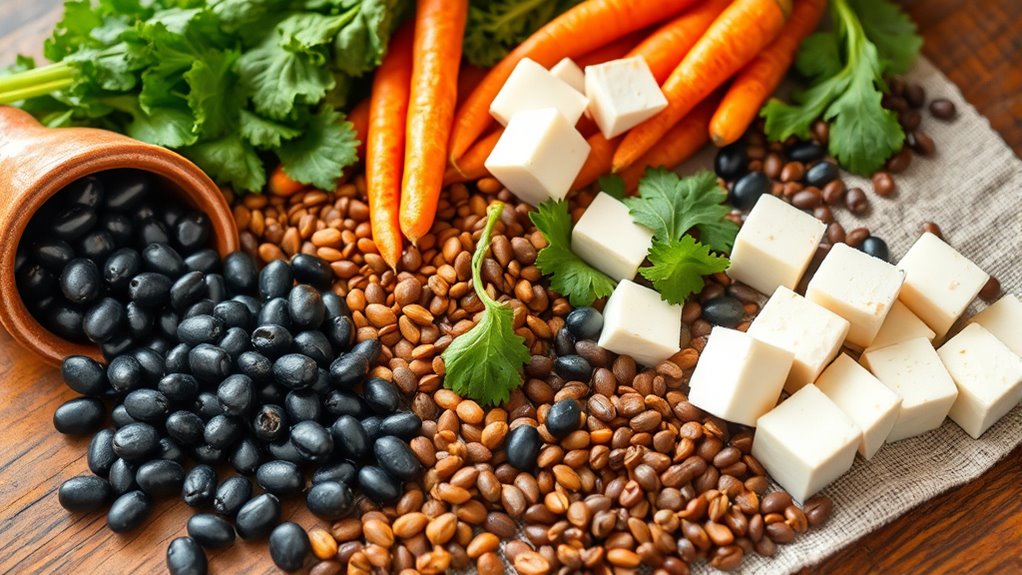

For a high-protein plant-based diet, focus on ingredients like beans, lentils, and tofu. Beans and lentils are versatile, providing around 15 grams of protein per cooked cup and fitting into soups, salads, and burgers. Tofu offers about 10 grams of protein per 3-ounce serving and adapts well to many flavors and textures. Exploring these ingredients can help you create nutritious, sustainable, and exciting meals. Keep exploring to discover even more ways to boost your plant-based protein intake.
Key Takeaways
- Beans, lentils, and tofu are rich sources of plant-based protein, supporting muscle growth and overall nutrition.
- Beans and lentils provide approximately 15g of protein per cooked cup, ideal for hearty meals.
- Tofu offers around 10g of protein per 3-ounce serving and adapts to various culinary styles.
- These ingredients are sustainable, environmentally friendly, and versatile for diverse recipes.
- Incorporating these plant-based proteins enhances meal variety, nutrition, and supports a sustainable diet.
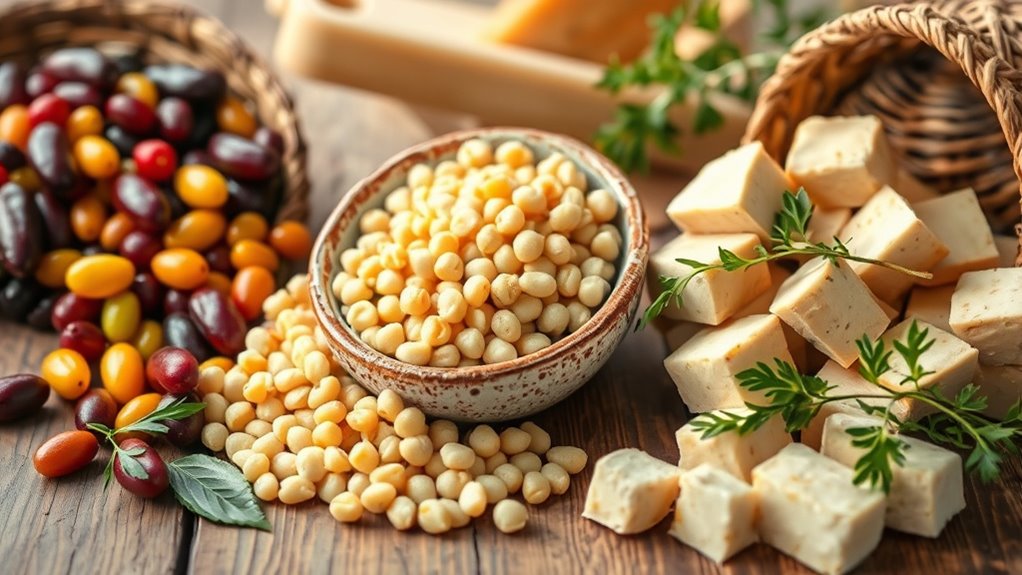
Plant-based high-protein ingredients are gaining popularity as more people seek nutritious and sustainable alternatives to animal products. If you’re exploring new ways to boost your protein intake while reducing your environmental footprint, incorporating beans, lentils, and tofu into your meals is a smart move. These ingredients are incredibly versatile, making them perfect for meal planning and adding variety to your diet.
Plant-based proteins like beans, lentils, and tofu enhance nutrition and sustainability in your meals.
When you start thinking about meal planning, these plant-based proteins become invaluable. Beans and lentils are staples that can be prepared in countless ways, from hearty stews to salads. Since they’re budget-friendly and shelf-stable, you can keep a variety of dried or canned options on hand. This means you can whip up a protein-packed chili or a lentil soup on short notice, ensuring you get the nutrients you need without hassle. Tofu, on the other hand, offers culinary versatility that allows you to mimic many textures and flavors. Whether you prefer it scrambled like eggs, grilled for sandwiches, or stir-fried with vegetables, tofu adapts easily to different cuisines and cooking styles.
In your meal planning, it’s helpful to think beyond traditional dishes. Beans and lentils can serve as the main ingredient in veggie burgers, dips, or even pasta sauces, giving you a nutritious boost without relying on meat. Tofu’s neutral flavor makes it an ideal canvas for marinating and seasoning, allowing you to experiment with flavors from around the world. This flexibility means you can keep your meals exciting and varied, helping you stick to your healthy eating goals.
Culinary versatility is one of the biggest advantages of these ingredients. Beans and lentils can be incorporated into soups, salads, wraps, and even breakfast dishes like breakfast burritos or hearty oatmeal toppings. Tofu can be baked, pan-fried, or blended into smoothies, offering endless possibilities. The ability to prepare these ingredients in many different ways means you’re less likely to get bored with your plant-based meals. Additionally, understanding nutritional content helps you optimize your diet for maximum health benefits.
Plus, these ingredients pack a powerful punch of protein—beans and lentils typically contain around 15 grams per cooked cup, while tofu offers about 10 grams per 3-ounce serving. This makes them excellent choices for fueling your body, especially if you’re active or trying to build muscle. By integrating beans, lentils, and tofu into your meal planning, you not only enhance your nutritional intake but also embrace a more sustainable and creative approach to cooking. Their versatility ensures you can keep meals interesting while meeting your dietary needs, making plant-based eating both practical and enjoyable.
Top picks for "high protein plant"
Open Amazon search results for this keyword.
As an affiliate, we earn on qualifying purchases.
Frequently Asked Questions
Are Plant-Based Proteins Complete Proteins?
Plant-based proteins are often not complete on their own because of their amino acid profiles, which can have limitations compared to animal proteins. However, you can easily overcome this by combining different plant sources, like beans and grains, to guarantee you get all essential amino acids. This way, you make sure your diet includes complete proteins, supporting your muscle health and overall well-being.
How Do Cooking Methods Affect Protein Content?
Cooking techniques influence protein retention, but they don’t diminish your ingredients’ overall value. When you steam, boil, or sauté, you preserve more protein compared to overcooking or frying, which can cause nutrient loss. Think of it like a delicate balance: gentle methods maintain the integrity of your plant-based proteins, ensuring you get maximum benefit. So, choose your cooking methods wisely to keep your meals nutritious and protein-rich.
Can These Ingredients Help With Muscle Building?
Yes, these ingredients can help with muscle building. They provide essential protein that supports muscle repair and growth. When you consume beans, lentils, or tofu, your body absorbs the protein efficiently, aiding in recovery after exercise. Incorporating them into your diet guarantees you get a steady supply of amino acids, which are vital for maintaining and building muscle mass. They’re a nutritious, plant-based way to support your fitness goals.
Are There Any Allergen Concerns With Soy or Beans?
You’re right to ask—these ingredients can be a double-edged sword. If you have soy allergies or bean sensitivities, you definitely need to steer clear, as they can trigger allergic reactions. Always check labels and consult with your doctor if you’re unsure. While soy and beans are nutritious, they might cause issues for some. Better safe than sorry, so listen to your body!
How Do Plant Proteins Compare Nutritionally to Animal Proteins?
Plant proteins generally have lower digestibility differences compared to animal proteins, but they still offer essential plant amino acids. While animal proteins are complete, plant-based sources may lack some amino acids, so combining different plant foods helps. You get fiber, antioxidants, and other nutrients from plants, which benefit your health. Though animal proteins are often more bioavailable, plant proteins are a good, sustainable alternative, especially when you diversify your sources.
Conclusion
Embracing beans, lentils, and tofu transforms your plate into a vibrant tapestry of nourishment. These plant-based powerhouses are like hidden gems, quietly fueling your body with rich, high-quality protein. By weaving them into your meals, you’re planting seeds of vitality and growth, nurturing a sustainable future one bite at a time. Let these ingredients be the steady rhythm to your health symphony, turning everyday dishes into a nourishing masterpiece that sings with life.