To boost your intake of high-protein plant foods, focus on staples like lentils, chickpeas, quinoa, and edamame, which are rich sources of essential amino acids. Combine grains with legumes, such as rice and beans, to create complete proteins and maximize nutrition. Incorporate nuts and seeds into snacks or meals for added variety. By exploring tasty recipes that mix these ingredients, you’ll discover delicious ways to meet your protein needs while supporting health and sustainability.
Key Takeaways
- Legumes like lentils, chickpeas, and beans are rich, versatile high-protein plant sources suitable for various recipes.
- Quinoa and amaranth are complete plant proteins providing all nine essential amino acids.
- Combining grains with legumes enhances protein quality and nutrient absorption in meals.
- Nuts and seeds, such as almonds, chia, and hemp seeds, offer concentrated plant protein and healthy fats.
- Incorporate a variety of colorful vegetables, grains, nuts, and seeds to maximize nutrient diversity and protein intake.
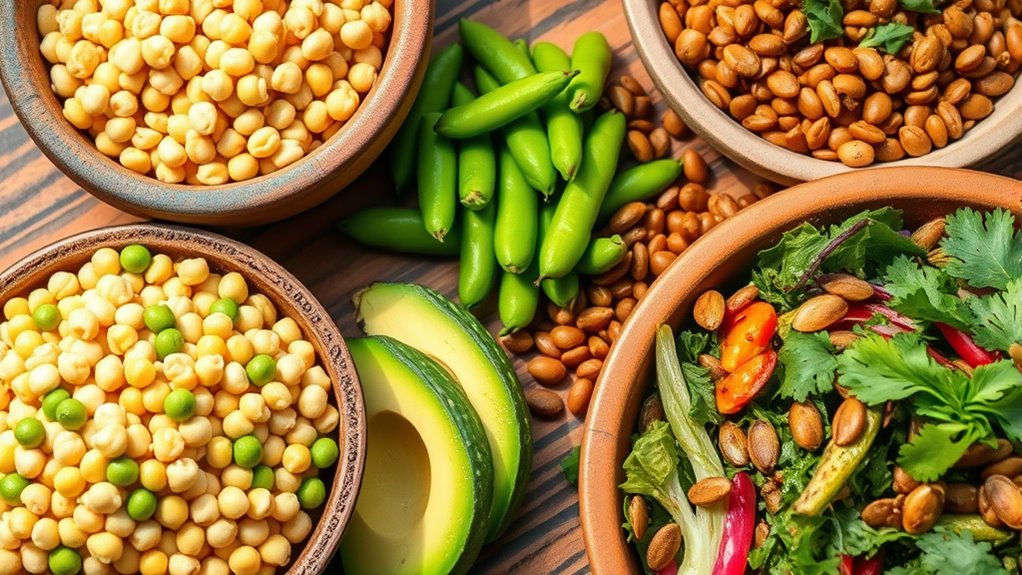
For those seeking nutritious and sustainable sources of protein, plant-based high-protein foods offer an excellent option. Not only do they support your health, but they also contribute to a more environmentally friendly diet. One of the key benefits of including plant proteins is their ability to provide a diverse range of amino acids, thanks to plant protein diversity. Unlike some single-source animal proteins, plant-based options often contain a variety of protein sources, each with its unique nutrient profile. This diversity enhances your overall intake of essential amino acids, helping your body perform at its best.
When considering plant proteins, it’s important to understand how your body absorbs and utilizes these nutrients. Protein absorption can vary depending on the source, but many plant-based foods are rich in fiber and phytochemicals that aid digestion and improve bioavailability. Legumes, such as lentils and chickpeas, are packed with protein and are easily digestible when prepared properly. Quinoa and amaranth are complete plant proteins, meaning they contain all nine essential amino acids, which makes them especially valuable in plant-based diets. Incorporating a variety of these foods ensures you’re not only getting enough protein but also maximizing absorption. Additionally, selecting high-quality plant proteins can further support optimal nutrient intake.
To maximize protein intake from plant sources, combining different foods can be highly effective. For example, pairing rice with beans creates a complete protein profile, compensating for any lacking amino acids in each. Many plant-based foods also contain helpful enzymes and nutrients that support digestion, which can enhance protein absorption. Eating a colorful array of vegetables, grains, nuts, and seeds also ensures you’re benefiting from a broad spectrum of nutrients, which work synergistically to improve your overall health.
Frequently Asked Questions
How Do Plant Protein Sources Compare to Animal Proteins in Quality?
Plant protein sources often have lower protein digestibility compared to animal proteins, meaning your body may absorb less from plants. However, they usually have a more balanced amino acid profile, especially when combined with other plant foods. While animal proteins are complete, plant sources can still provide high-quality protein if you eat a variety. So, your choice depends on balancing digestibility and amino acid profiles to meet your dietary needs.
Can Plant-Based Proteins Meet All Essential Amino Acid Requirements?
Yes, plant-based proteins can meet all essential amino acid requirements if you include a variety of sources. By focusing on plant protein diversity, you guarantee amino acid completeness, which means you get all the essential amino acids your body needs. Combining foods like beans, grains, nuts, and seeds throughout the day helps you achieve a balanced amino acid profile, making plant-based diets fully nutritious and complete.
Are There Any Risks Associated With High Consumption of Plant Proteins?
Yes, consuming a lot of plant proteins can pose risks like allergen concerns and nutrient imbalances. You might develop allergic reactions to certain sources like soy or nuts. Additionally, relying heavily on plant proteins could lead to deficiencies in nutrients like vitamin B12, iron, or zinc if your diet isn’t well-rounded. To stay safe, diversify your plant-based foods and consider supplements if necessary.
How Can I Incorporate More Plant-Based Proteins Into a Vegetarian Diet?
You can incorporate more plant-based proteins into your vegetarian diet by exploring tofu versatility in stir-fries or scrambles, adding it to salads or sandwiches. Include hearty lentil soup for a protein-rich, comforting meal. Snack on roasted chickpeas or add beans to pasta dishes. These options boost your protein intake naturally and keep your meals diverse and satisfying, making it easy to meet your nutritional goals.
What Are the Best Plant Proteins for Athletes and Active Individuals?
Imagine fueling your body like a well-oiled machine; soy benefits shine as a top choice, offering complete protein and essential amino acids. Legume varieties like lentils, chickpeas, and black beans act as sturdy building blocks, providing sustained energy. These plant proteins support muscle repair and endurance, making them ideal for athletes and active individuals. Incorporate them into salads, stews, or smoothies to power your workouts and recovery.
Conclusion
Now that you know the top plant-based high-protein foods, you can fuel your body with powerful, wholesome options—no need to rely on old-school meat or dairy. Think of it like discovering a secret scroll from the Renaissance—unlocking a new era of healthy eating. Embrace these foods, experiment with recipes, and watch your energy soar. The future of nutrition is in your hands—so go ahead, be a pioneer on this delicious, plant-powered journey.