
TL;DR

Get beauty and skincare favorites delivered free with Prime
- Fast, free delivery on millions of items
- Prime Video, Amazon Music and more included
- Member-only deals all year
A Marie Claire report on Resort 2027 collections identifies seven directions for Winter 2026 dressing: ornate fabrics, sculptural silhouettes, relaxed workwear, oversized accessories, primary colors, animal prints and sheer separates. These are editorial trend observations, not evidence that shoppers or the wider fashion industry have adopted them.
Marie Claire’s Winter 2026 trend report, drawing on the Resort 2027 collections, identifies seven ways designers are making cold-weather dressing more expressive, from jewel-covered fabrics and exaggerated silhouettes to vivid colors and animal prints. The selections offer a snapshot of runway proposals rather than proof of a broad shift in what consumers are buying or wearing.
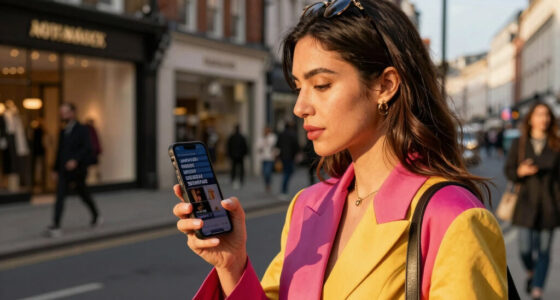
The report highlights ornate fabrics as one of the season’s central ideas. It points to Valentino’s feather-trimmed, jewel-covered dress and to brocade, sequins and embellishment in collections including those from Kallmeyer, Ulla Johnson, Self-Portrait, Anna Sui and Erdem. The emphasis is on texture and decoration rather than restrained winter basics.
A second group of looks plays with sculptural volume: Khaite showed balloon trousers and puff-sleeve jackets, while other examples included funnel-neck outerwear, peplum dresses and cocoon-shaped trousers. The report also describes reworked workwear, with oversized suiting, shaped jackets and flowing blouses from labels including Balenciaga, Chanel and Self-Portrait.
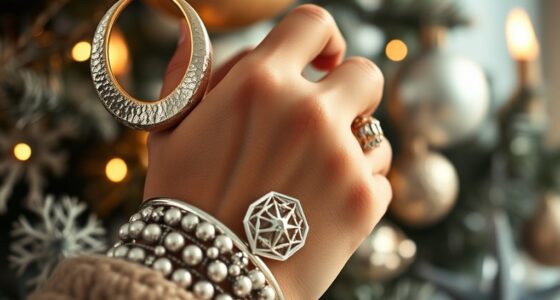
Other directions include oversized accessories such as faux-fur hats, feather-trimmed shoes, chunky gold jewelry, brooches and statement bags; saturated red, yellow and blue; and animal prints ranging from zebra stripes to leopard spots. Sheer separates round out the report’s list, with Ferragamo among the designers it cites for using transparent fabrics. The article also presents suggested retail pieces at different price points, but it does not provide sales data or consumer research.
A More Expressive Winter Wardrobe
The report matters as a fashion-season signal: it shows how designers are proposing alternatives to the dark, neutral layers often associated with winter. Its examples suggest that visual interest can come from a single detail—a bright bag, a textured skirt or a sculptural jacket—rather than a fully coordinated, head-to-toe look.
For readers, the ideas are practical as well as directional. The report frames trends as choices that can be adapted to personal taste and budget, from adding one saturated accessory to trying a more relaxed suit. That is editorial guidance, not a guarantee that every item will suit every wearer or become widely popular.
Products Worth Considering

Philips Sonicare 5950 Rechargeable Electric Toothbrush with 2 Brush Heads, Pink

Hyperice Hypervolt Go 3 Portable Percussion Massage Gun with Carry Case

Levoit Core 300S-P Smart WiFi Air Purifier
As an affiliate, we earn on qualifying purchases.
Runway Looks Behind the Report
The source is a Marie Claire fashion report focused on Winter 2026 trends and illustrated with looks from Resort 2027 collections. Its examples span luxury labels such as Valentino, Ferragamo, Khaite and Carolina Herrera, alongside more accessible shopping suggestions. The runway references and shopping recommendations are distinct: a designer look signals a creative direction, while a product listing gives readers potential ways to try a similar idea.
The report’s frame is seasonal and editorial. It groups individual collection choices into seven themes—embellishment, volume, workwear, accessories, color, animal print and sheerness—but does not claim that the themes are based on a measured industry-wide trend analysis. Nor does it establish how retailers will stock them or how shoppers will respond.
How Widely Will Trends Catch On?
The source offers runway examples and editorial interpretation, not sales figures, consumer surveys or forecasts from retailers. It is not yet clear which looks will be produced in quantity, how broadly they will appear in stores, or whether shoppers will adopt them during Winter 2026. The report also does not specify a complete set of details for every trend; its supplied description of sheer separates ends after naming the category and several designers.
Accordingly, phrases such as “expect” should be read as fashion-editorial predictions, not confirmed outcomes. The collections establish that designers presented these ideas; their eventual reach beyond the runway remains unknown.
Retail Adoption Will Be the Test
The next indication will come as Winter 2026 merchandise reaches retailers and shoppers. Availability, price, and the range of versions offered will show whether the runway themes translate into accessible clothing and accessories. Later sales or consumer data would be needed to assess which trends gained traction.
Until then, the report’s suggestions are best read as options for personal styling, not a checklist. A reader could try one element—such as a vivid color, an embellished piece or a bold accessory—without adopting every runway direction.
Key Questions
Which Winter 2026 trends does the report identify?
It highlights ornate fabrics, sculptural silhouettes, reworked workwear, bold accessories, primary colors, animal prints and sheer separates, based on examples from Resort 2027 collections.
Are these trends confirmed to be popular with shoppers?
No. The report documents designer collections and editorial trend analysis; it does not include sales figures or consumer research showing how widely shoppers will adopt the looks.
Do the trends require a full wardrobe change?
No. The report suggests trying individual elements, such as a colorful handbag or a statement accessory, as well as more extensive looks. Those are styling suggestions, not requirements.
What does the report say about winter workwear?
It describes a more expressive approach that keeps tailoring but adds oversized suits, sculptural jackets and flowing blouses, with Balenciaga, Chanel and Self-Portrait among its examples.
Source: marieclaire.com