
In response to social justice concerns, the fashion industry is adopting ethical labor practices like fair wages, safe working conditions, and transparency. Brands are partnering with certifying organizations, integrating fair trade principles, and promoting worker rights to build trust with conscious consumers. These efforts help reduce risks and boost reputations. If you want to see how these initiatives shape the future of fashion, you’ll find more insights ahead.
Key Takeaways
- Fashion brands adopt fair trade principles to ensure safe working conditions and fair wages for workers.
- Ethical fashion emphasizes transparency and accountability in supply chains to promote social justice.
- Certification programs verify compliance with labor rights, encouraging responsible sourcing in the fashion industry.
- Supporting ethical practices enhances brand reputation and appeals to socially conscious consumers.
- Integrating social justice into fashion practices mitigates risks and demonstrates corporate responsibility.
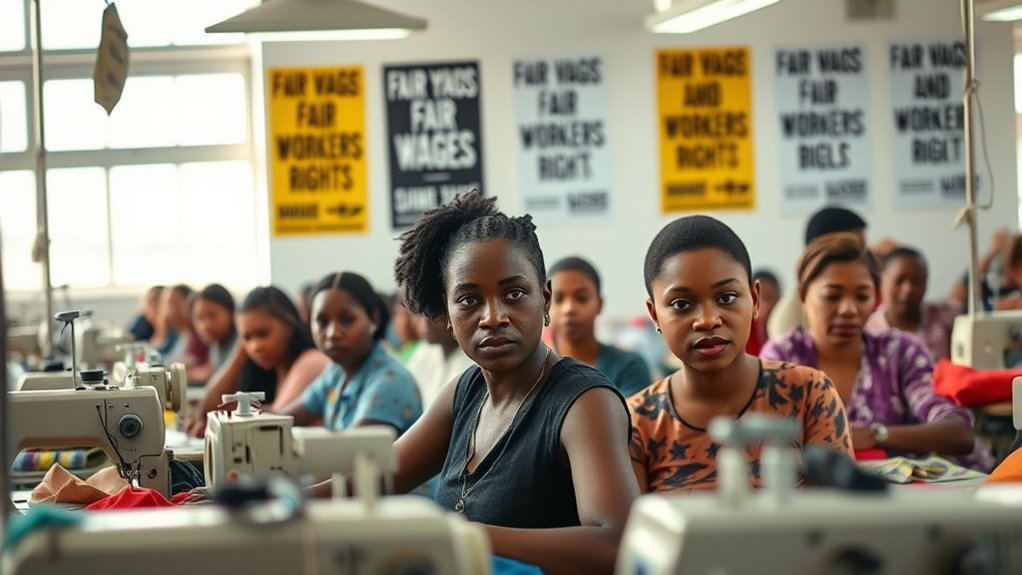
In today’s global economy, adopting ethical labor practices isn’t just a moral choice—it’s a strategic one that can enhance your company’s reputation and sustainability. Consumers are increasingly aware of how their products are made, and they want transparency and integrity behind every purchase. By prioritizing fair trade principles, you guarantee that your supply chain supports equitable trading conditions, fair wages, and sustainable development. Fair Trade isn’t just about paying higher prices; it’s about fostering a system where workers are valued and respected. When you commit to fair trade, you actively promote worker rights, emphasizing safe working environments, reasonable hours, and the freedom to organize. This commitment helps build trust with your customers, who are more inclined to support brands that stand for social justice and ethical treatment of laborers.
Focusing on worker rights means you’re not just complying with legal standards but going beyond them to uphold dignity and fairness. You recognize that behind every product is a person whose livelihood depends on your choices. It’s about ensuring that workers earn a living wage, have access to proper safety measures, and work in environments free from exploitation or discrimination. You also understand the importance of giving workers a voice—allowing them to negotiate better conditions and advocate for their needs without fear of retaliation. By integrating these principles into your business, you create a more resilient, ethical supply chain that aligns with global movements advocating for social justice. Additionally, understanding the divorce laws in various regions can help companies navigate legal differences and ensure compliance throughout their international supply chain.
Implementing fair trade and respecting worker rights also helps mitigate risks associated with supply chain disruptions, negative publicity, and consumer backlash. When you proactively address these issues, you demonstrate corporate responsibility and leadership. Ethical labor practices can be seamlessly woven into your sourcing policies, supplier audits, and employee training programs. You can partner with certifications and organizations that verify fair trade standards, making it easier to maintain accountability and transparency. Furthermore, fostering a culture of ethical awareness within your organization encourages innovation and strengthens your brand identity. Customers today not only buy products—they buy into a story of social responsibility. Your dedication to fair trade and worker rights positions your company as a leader in ethical fashion, setting a standard that competitors will find hard to ignore.
Frequently Asked Questions
How Do Brands Verify Ethical Labor Standards Across Global Factories?
You can verify ethical labor standards across global factories by checking for supply chain transparency through certifications like Fair Trade or SA8000. Brands often conduct on-site audits and partner with labor rights advocacy groups to guarantee workers’ rights are protected. You should also review public reports, supplier disclosures, and third-party assessments to confirm that factories adhere to fair wages, safe conditions, and ethical practices.
What Are the Biggest Challenges in Enforcing Ethical Labor Practices?
You face challenges enforcing ethical labor practices because factories often prioritize cost-cutting over labor rights and fair wages. Corruption, lack of transparency, and inconsistent regulations make it hard to guarantee compliance. While brands want to uphold standards, they struggle with monitoring global supply chains and addressing violations swiftly. This disconnect hampers efforts to guarantee that workers’ rights are protected and wages remain fair across all factories.
How Do Consumers Influence Ethical Labor Reforms in Fashion?
You influence ethical labor reforms through consumer activism by choosing brands committed to ethical sourcing. When you support companies that prioritize fair wages and safe working conditions, you send a powerful message to the industry. Your purchasing decisions encourage brands to adopt transparent supply chains and improve labor practices. By advocating for ethical sourcing, you help push the fashion industry toward greater accountability and social justice, making a real difference.
Are There Certifications That Guarantee Ethical Labor Conditions?
Yes, there are certifications like Fair Trade and Labor Certification that guarantee ethical labor conditions. When you look for these labels on clothing, you’re supporting brands committed to fair wages, safe working environments, and workers’ rights. These certifications guarantee that the products you buy meet strict ethical standards. By choosing items with Fair Trade or Labor Certification, you actively promote social justice and hold companies accountable for their labor practices.
How Can Small Brands Implement Better Labor Practices Sustainably?
You can implement better labor practices sustainably by prioritizing supply chain transparency and establishing fair wage policies. Start by auditing your suppliers and demanding clear, detailed information about their labor conditions. Build strong relationships with ethical manufacturers, and set standards that promote fair wages and safe working environments. Regularly monitor compliance and educate your team on social justice issues, ensuring sustainable, ethical practices become a core part of your brand’s values.
Conclusion
As you walk through a bustling market, imagine fabrics flowing like gentle rivers, each thread woven with care and fairness. When you choose brands committed to ethical labor, you’re helping to build a world where workers’ voices rise like a sunrise over hope. Your choices can transform factories into blooming gardens of dignity. Together, we can paint a future where fashion isn’t just about style, but about justice and respect shining brightly in every stitch.