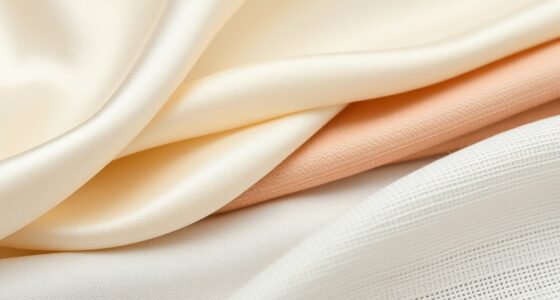

To build a sustainable work wardrobe, focus on eco-friendly, durable staples like tailored blazers, classic trousers, and crisp shirts made from ethical fabrics such as organic cotton, hemp, Tencel, or recycled materials. Choose timeless designs that won’t quickly go out of style and prioritize quality over quantity. Support transparent brands committed to sustainability and ethical practices. Continue exploring to discover how to create a versatile, eco-conscious wardrobe that balances style, function, and social responsibility.
Key Takeaways
- Invest in timeless staples like tailored blazers, trousers, and shirts made from sustainable fabrics such as organic cotton or Tencel.
- Prioritize high-quality, durable pieces that can be mixed and matched for versatile professional looks.
- Support ethical brands with transparent supply chains committed to eco-friendly practices and fair labor conditions.
- Incorporate recycled materials and second-hand garments to reduce waste and extend wardrobe longevity.
- Focus on thoughtful, minimalistic wardrobe building with versatile, long-lasting pieces to promote sustainability and reduce excess.
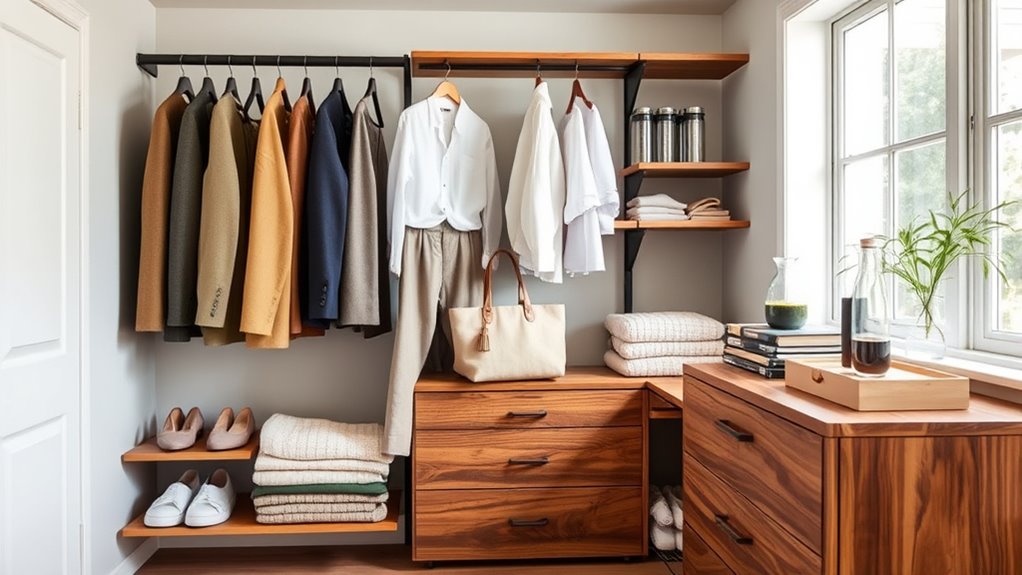
Creating a sustainable work wardrobe isn’t just a trend—it’s a smart choice for both the environment and your budget. When you focus on sustainable fabric choices, you’re making a conscious decision to reduce your carbon footprint while investing in high-quality pieces that last. Look for fabrics like organic cotton, hemp, Tencel, or recycled materials, which are produced with less water, fewer chemicals, and lower emissions. These fabrics often feel just as luxurious as conventional options, but they’re better for the planet and often more durable, meaning your wardrobe will stay fresh longer. By prioritizing sustainable fabric choices, you also support brands that are committed to ethical production methods, ensuring fair wages and safe working conditions.
Choosing sustainable fabrics like organic cotton, hemp, and Tencel supports eco-friendly fashion and long-lasting wardrobe pieces.
Choosing an ethical brand isn’t just about the label; it’s about aligning your shopping habits with your values. When selecting brands, do a little research to see if they are transparent about their sourcing and manufacturing practices. Ethical brand selection means supporting companies that prioritize sustainability, fair labor practices, and eco-friendly packaging. Many brands now provide detailed stories about their supply chain and environmental initiatives, giving you confidence that your purchase aligns with your commitment to sustainability. This approach helps you build a wardrobe that’s not only stylish and functional but also ethically responsible.
Start with versatile staples like tailored blazers, classic trousers, and crisp shirts made from sustainable fabrics. These pieces form the backbone of your work wardrobe and can be mixed and matched for various professional settings. When shopping, opt for timeless designs that won’t go out of style quickly, reducing the need for frequent replacements. Investing in quality over quantity ensures your wardrobe is both eco-friendly and cost-effective in the long run.
Additionally, consider shopping second-hand or at thrift stores for high-quality pieces from ethical brands. This reduces waste and gives pre-loved garments a second life. When you choose sustainable fabric options and support ethical brands, you’re making a statement that style doesn’t have to come at the expense of the planet or social responsibility. Building a sustainable work wardrobe isn’t about sacrifice; it’s about making smarter, more thoughtful choices that serve you and the environment well into the future.
Top picks for "build sustainable work"
Open Amazon search results for this keyword.
As an affiliate, we earn on qualifying purchases.
Frequently Asked Questions
How Do I Identify Truly Sustainable Clothing Brands?
You can identify truly sustainable clothing brands by checking for ethical certifications like Fair Trade, GOTS, or B Corp. These labels guarantee responsible practices. Also, look for brand transparency—if they openly share info about their sourcing, manufacturing, and environmental impact, it’s a good sign. Do your research, visit their websites, and read reviews to confirm they prioritize sustainability and ethical standards in every step.
What Are the Best Fabrics for Durability and Eco-Friendliness?
Choosing fabrics like organic cotton, hemp, and Tencel is like picking sturdy, eco-friendly trees for your wardrobe. These materials, often made from fabric blends, are durable and gentle on the planet. Look for brands that use eco-friendly dyes, which reduce environmental impact and keep your clothes vibrant longer. These fabrics balance durability with eco-friendliness, helping you build a sustainable work wardrobe that lasts and supports your values.
How Can I Update My Wardrobe Without Buying New Items?
You can update your wardrobe without buying new items by exploring thrift shopping and clothing swaps. These options let you find unique pieces and refresh your style sustainably. Visit thrift stores for pre-loved clothing or organize clothing swaps with friends to exchange items you no longer wear. This approach reduces waste, saves money, and helps you stay current with fashion trends without contributing to overconsumption.
What Maintenance Practices Extend Clothing Lifespan?
To extend your clothing’s lifespan, focus on fabric care and storage tips. Always follow care labels, wash clothes in cold water, and avoid harsh detergents. Air-dry when possible to prevent damage from dryers. Store garments properly—use padded hangers for delicate items and fold heavy pieces to avoid stretching. Regularly inspect and mend minor damages promptly. These practices help keep your wardrobe pieces looking fresh and lasting longer.
How Do I Balance Style With Sustainability Standards?
Balancing style with sustainability standards starts with conscious choices. Commit to creating a closet of carefully curated, chic, and eco-friendly pieces sourced ethically and produced under fair labor practices. Look for brands that prioritize transparency and sustainable materials. By blending bold, beautiful fashion with responsible sourcing, you’ll build a work wardrobe that’s both stylish and socially conscious, proving that eco-elegance and ethical excellence can coexist effortlessly.
Conclusion
Building a sustainable work wardrobe is about choosing versatile, high-quality pieces that last. Imagine opting for a classic blazer made from eco-friendly materials—it can elevate your outfits for years. For example, Sarah revamped her wardrobe with just five sustainable staples, reducing waste and saving money. By making mindful choices, you not only look professional but also contribute to a healthier planet. Start small, stay consistent, and watch your wardrobe—and the environment—thrive.