
Talking with a fashion anthropologist, you’ll discover that clothing is a powerful way to express cultural identity beyond mere fashion. It encodes community beliefs, history, and social values, often serving as a visual storytelling tool. Traditional attire honors heritage and signals regional or social roles, while contemporary choices can celebrate pride or resistance. If you’re curious about how garments act as symbols connecting people to their history and community, you’ll find plenty more insightful details ahead.
Key Takeaways
- Clothing embodies cultural identity, serving as a visual language that communicates community values, history, and social status.
- Traditional attire functions as a form of cultural storytelling, reflecting heritage, symbolism, and regional or social distinctions.
- Fashion choices, including blending traditional and modern styles, demonstrate cultural pride and acts of resistance amid globalization.
- Symbols, patterns, and colors in traditional garments encode layered meanings and historical significance, deepening cultural understanding.
- Clothing acts as a living reflection of culture, evolving yet preserving core symbolism, connecting individuals to their heritage and community.
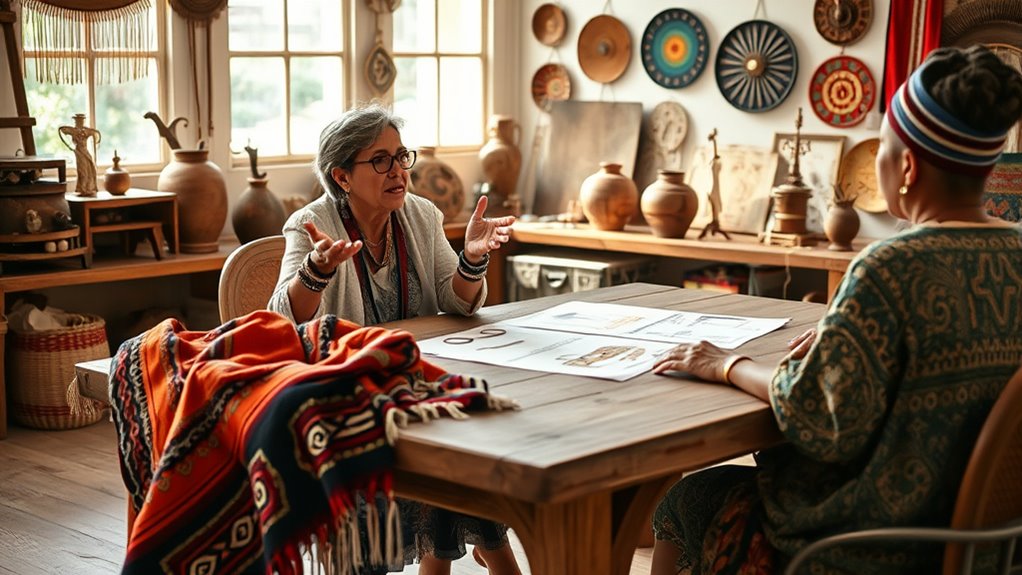
Have you ever wondered how clothing reflects who we are and where we come from? When you think about the clothes people wear, it’s more than just fabric and style; it’s a language that communicates cultural identity. Fashion symbolism plays an indispensable role here, as certain garments and accessories carry meanings passed down through generations. Traditional attire, for instance, isn’t just about aesthetics — it’s a visual story of history, values, and social status. As a fashion anthropologist might tell you, these garments are like symbols that encode a community’s identity, beliefs, and even resistance.
Clothing as a visual language of cultural identity and historical storytelling.
When you see someone donning a specific traditional attire, you’re witnessing a form of cultural expression that goes beyond personal taste. It’s a way of honoring ancestors, celebrating heritage, or signaling membership within a group. These clothing choices often have layered meanings: colors, patterns, and materials can indicate regional origins, social rank, or rites of passage. For example, a kimono in Japan isn’t just a beautiful garment; it’s a reflection of cultural rituals and social roles. Similarly, African textiles like Kente cloth serve as symbols of history, status, and spiritual beliefs. As you observe these traditional attires, you’re fundamentally deciphering a cultural code embedded in fabric.
Fashion symbolism also highlights how communities maintain their identity amidst globalization. You might see young people blending traditional attire with modern fashion, creating a dialogue between past and present. This fusion often challenges notions of cultural authenticity, yet it also demonstrates resilience. Wearing traditional attire in contemporary settings can be a statement of pride, a refusal to forget roots, or a way to challenge cultural stereotypes. A fashion anthropologist would emphasize that these choices are active acts of cultural expression, not mere fashion statements. They’re deliberate, meaningful, and rooted in history.
Understanding the significance of traditional attire broadens your perspective on fashion as more than just trends. It becomes a living, breathing reflection of cultural identity that evolves but still retains its core symbolism. Recognizing that traditional garments often incorporate symbolic designs helps deepen appreciation for their layered meanings and historical context. When you recognize the depth behind these garments, you start to see fashion as a form of storytelling — a visual language that connects individuals to their heritage. Whether it’s a ceremonial dress or everyday wear inspired by tradition, clothing becomes a powerful tool for expressing who you are and where you come from. It’s a silent, powerful conversation between past and present, community and individual, tradition and innovation.

SOMSOC 6 Pcs Women African Attire Printed Skirt Shirt Dashiki Traditional Costume Head Wrap Earrings Necklace Bracelet
Complete 6 PCS Set: This set includes an Ankara print high-waisted skirt, classic black short sleeve top, large…
As an affiliate, we earn on qualifying purchases.
As an affiliate, we earn on qualifying purchases.
Frequently Asked Questions
How Do Fashion Choices Influence Societal Perceptions of Identity?
Your fashion choices influence societal perceptions of your identity through fashion symbolism and personal expression. When you select certain styles, colors, or accessories, you communicate aspects of who you are, your culture, or your values. These visual cues shape how others perceive you, making your fashion a powerful tool for expressing your individuality and aligning with specific social groups or cultural norms. Your wardrobe becomes a language that speaks about your identity.
Can Clothing Serve as a Form of Cultural Resistance?
Absolutely, clothing can serve as a powerful form of cultural resistance. By using fashion as activism, you express your identity and challenge societal norms. Incorporating cultural symbolism into your attire highlights your heritage and asserts your stance against cultural erasure or discrimination. Wearing specific garments or styles becomes a statement, making your cultural narrative visible and empowering you to resist marginalization through meaningful, deliberate fashion choices.
How Does Globalization Impact Traditional Dress Practices?
Imagine street vendors blending traditional textiles into urban outfits, showing how globalization influences dress. You see how urban adaptation allows you to incorporate textile symbolism from your culture into modern fashion, making it relevant worldwide. While some traditions fade, others evolve, showing resilience. Globalization can dilute or amplify cultural identity, but your choices in clothing reflect a dynamic interplay between preserving heritage and embracing change, shaping your unique cultural expression.
What Role Does Fashion Play in Preserving Cultural Heritage?
Fashion plays a essential role in preserving cultural heritage by showcasing cultural symbolism and textile craftsmanship. When you wear traditional garments, you actively celebrate your roots and keep cultural stories alive. You help sustain unique techniques and motifs, passing them down through generations. By embracing these practices, you reinforce your cultural identity and promote appreciation for your heritage in a modern world, ensuring these traditions remain vibrant and meaningful.
How Are Gender Identities Expressed Through Fashion Across Cultures?
You might think fashion neatly boxes gender, but it actually celebrates fluidity and symbolism across cultures. Through textile symbolism, you see how gender identities are expressed beyond binaries—think of sarees or kilted garments that defy modern stereotypes. Fashion becomes a canvas for gender fluidity, allowing individuals to challenge norms and reveal personal truths, proving that clothing is more than fabric—it’s an art of cultural and gender expression.

African Kente Print #4 Fabric (1 Yard), Cotton, 44" Wide, Multicolor Geometric Pattern, Head Wrap, Scarf, Choir, Dance
AUTHENTIC AFRICAN DESIGN: Traditional Kente print fabric featuring vibrant geometric patterns in gold, green, red, and black colors…
As an affiliate, we earn on qualifying purchases.
As an affiliate, we earn on qualifying purchases.
Conclusion
As you explore the intricate dance between fashion and culture, remember that clothing is like a mirror reflecting your deepest roots. It’s a vibrant tapestry woven with stories, traditions, and beliefs that shape who you are. By embracing these styles, you’re not just dressing up—you’re carrying a piece of history forward. So, let your wardrobe be a living canvas, telling the world your story, one thread at a time.

CRFASIBE Kimonos for Women Japanese Dress Yukata Geisha Costume Fancy Robe Anime Cosplay Maid Outfit Mask Hand Fan Socks 5pcs(Blue)
Comprehensive Package:Dive into tradition with this complete set that includes 1 kimono robe,1 folding fan,1 hairclip,1 mask,and 1…
As an affiliate, we earn on qualifying purchases.
As an affiliate, we earn on qualifying purchases.

Embroidered Identities: Ornately Decorated Textiles and Accessories of Chinese Ethnic Minorities
As an affiliate, we earn on qualifying purchases.
As an affiliate, we earn on qualifying purchases.