
Traditional embroidery influences modern runway designs by inspiring fresh creativity, blending age-old techniques with innovative craftsmanship. You’ll notice designers drawing on cultural patterns, vivid stitches, and intricate details to craft contemporary pieces that honor heritage while exploring new textiles. These designs often merge tradition with cutting-edge methods like digital embroidery and unconventional materials. If you keep exploring, you’ll uncover how this rich history continues to shape the future of fashion in exciting ways.
Key Takeaways
- Designers incorporate intricate traditional patterns into contemporary garments, creating culturally rich and visually striking runway pieces.
- Modern fashion merges age-old embroidery techniques with innovative methods like digital embroidery and laser-cut textiles.
- Traditional embroidery influences bold, vibrant styles that celebrate cultural heritage while pushing textile boundaries.
- Embroidery as a storytelling tool helps communicate cultural identities and preserves heritage within modern designs.
- The fusion of tradition and innovation fosters sustainable practices and supports artisans, ensuring embroidery’s relevance on the runway.
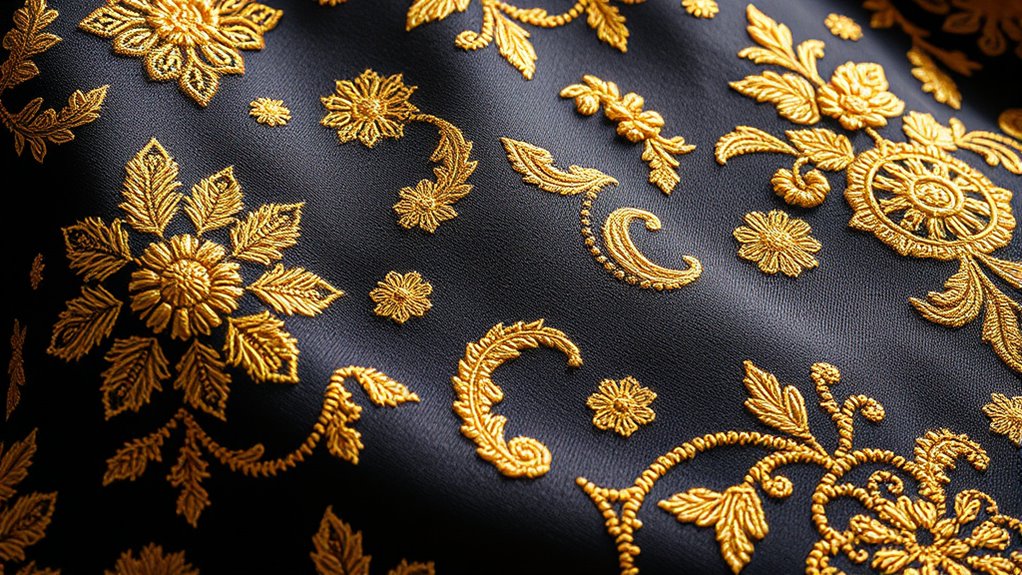
Traditional embroidery, with its intricate patterns and vibrant craftsmanship, continues to influence modern runway designs in exciting ways. When you look at contemporary fashion, you’ll notice how designers draw from cultural heritage, transforming age-old techniques into fresh, innovative statements. This blend of tradition and innovation isn’t accidental; it’s a deliberate effort to preserve stories while pushing the boundaries of textile innovation. Your favorite runway shows might feature garments that seem rooted in history but are crafted with cutting-edge methods, blurring the line between past and present.
Traditional embroidery inspires innovative runway fashion, blending history with cutting-edge techniques for a vibrant, culturally rich style.
As you observe these designs, you’ll see how traditional embroidery acts as a visual language, communicating cultural identities through detailed stitches and motifs. Designers often incorporate elements from diverse regions, respecting the symbolism embedded in each pattern. This not only celebrates cultural heritage but also creates a dialogue between different communities, showcasing a shared appreciation for craftsmanship. It’s like carrying a piece of history onto the runway, making each piece more than just clothing—it’s a story woven into fabric.
Textile innovation plays a significant role in this creative process. You might notice that what looks like classic embroidery is sometimes achieved through modern techniques such as digital embroidery or laser-cut textiles. These advancements allow designers to replicate traditional designs with precision and efficiency, opening new possibilities for experimentation. You could also see the use of unconventional materials or mixed media, which add texture and depth to embroidered pieces, elevating them from traditional crafts to avant-garde fashion statements.
The influence of traditional embroidery extends beyond aesthetics. It inspires sustainable practices by encouraging the use of handcrafted techniques and natural dyes, emphasizing the importance of cultural preservation through modern methods. This approach appeals to a conscious consumer who values authenticity and craftsmanship. When you attend a runway show, you’re witnessing more than just fashion; you’re experiencing a dialogue between history and innovation, where each embroidered detail reflects a deep respect for cultural heritage and a dedication to textile innovation. Additionally, the integration of traditional techniques supports Indigenous artisans, fostering economic empowerment and the continued sharing of cultural knowledge.
In essence, traditional embroidery’s influence on modern fashion is a tribute to the enduring power of craftsmanship. It reminds you that the past can be a source of inspiration, not just nostalgia, but a foundation for future creativity. By merging cultural heritage with textile innovation, designers craft runway pieces that honor tradition while boldly exploring new artistic territories. This ongoing dialogue ensures that embroidery remains vibrant and relevant, inspiring future generations to appreciate the beauty of history woven into contemporary fashion.
Frequently Asked Questions
How Do Designers Choose Which Traditional Embroidery Techniques to Incorporate?
You choose embroidery techniques based on embroidery symbolism and fabric compatibility. You consider the cultural meaning behind each embroidery style to align with your design story. Additionally, you evaluate the fabric’s texture and weight to guarantee the embroidery complements and holds well. By balancing symbolism and fabric compatibility, you create runway pieces that are both meaningful and visually stunning, seamlessly blending tradition with modern fashion.
What Are the Challenges of Integrating Traditional Embroidery Into Modern Fabrics?
Did you know that over 60% of traditional embroidery techniques face challenges when integrated into modern fabrics? You often struggle with maintaining cultural preservation and artisanal craftsmanship, as traditional stitches can be difficult to adapt without compromising fabric integrity. The delicate craftsmanship may get lost or damaged, making it hard to balance authenticity with durability. This challenge requires careful planning to honor tradition while creating innovative, wearable designs.
How Does Cultural Significance Influence Contemporary Embroidery-Inspired Designs?
You see that cultural symbolism and historical context deeply influence your embroidery-inspired designs. They give your work meaning, connecting modern fashion to rich traditions and stories. By incorporating symbols and motifs rooted in specific cultures, you create pieces that honor heritage while resonating with contemporary audiences. This blend of tradition and innovation helps your designs stand out, fostering appreciation and understanding of diverse histories through your creative expression.
Are There Sustainability Benefits to Using Traditional Embroidery Methods?
Yes, using traditional embroidery methods offers sustainability benefits. You support eco-friendly craftsmanship by preserving age-old techniques that often require fewer synthetic materials and less energy compared to industrial processes. Incorporating sustainable practices, like using natural dyes and locally sourced materials, reduces environmental impact. This approach not only minimizes waste but also encourages cultural preservation, making your designs more environmentally responsible and meaningful.
How Do Designers Ensure Authenticity While Modernizing Traditional Embroidery?
Ever wonder how designers keep traditional embroidery authentic while giving it a modern twist? They do this by respecting embroidery symbolism and cultural preservation, blending old techniques with new aesthetics. They collaborate with artisans, study historical patterns, and incorporate meaningful motifs that honor cultural roots. By doing so, they guarantee authenticity isn’t lost, creating innovative designs that celebrate heritage while appealing to contemporary fashion.
Conclusion
As you step into the world of modern fashion, you can see how traditional embroidery weaves its intricate stories into every stitch of runway designs. Imagine vibrant threads dancing across sleek fabrics, echoing centuries of craftsmanship beneath shimmering lights. This fusion invites you to appreciate the rich tapestry of history woven into contemporary styles, turning each garment into a wearable masterpiece. Embrace the artistry that bridges past and present, and let these timeless patterns inspire your own creative journey.