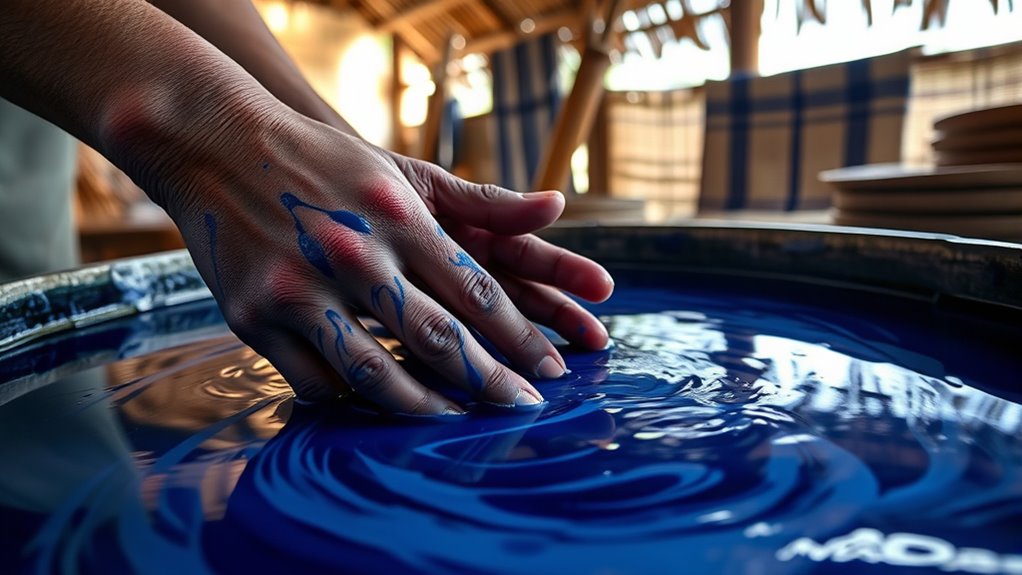

To understand the cultural roots of sustainable dyeing techniques, you should explore how traditional practices rely on natural materials like plants, minerals, and eco-friendly mordants. These methods, passed down through generations, embody community identity and respect for nature. They promote ecosystem health by harvesting responsibly and minimizing waste, ensuring resources remain available. By embracing these time-honored techniques, you can see how culture and ecology intertwine. Continuing your journey will reveal even more about their rich, sustainable legacy.
Key Takeaways
- Traditional dyeing relies on locally sourced natural pigments, reducing environmental impact and supporting ecosystem conservation.
- Indigenous communities preserve unique techniques that embody cultural identity and pass sustainable practices through generations.
- Use of eco-friendly mordants and minimal waste aligns traditional methods with environmental safety and biodegradability.
- Sustainable harvesting practices ensure resource renewal and ecological balance within local ecosystems.
- Cultural significance of natural dyeing fosters cultural diversity, community cohesion, and respect for nature.

Many traditional dyeing methods can harm the environment, but sustainable dyeing techniques offer eco-friendly alternatives that reduce water consumption and minimize pollution. One essential aspect of these methods is natural pigment sourcing. Instead of synthetic dyes, artisans and communities turn to plants, minerals, and other natural materials for vibrant colors. You might find that roots, leaves, flowers, and bark are carefully harvested to extract pigments without damaging ecosystems. This approach not only decreases chemical runoff but also encourages the conservation of local flora, keeping the environment healthy and resilient. By sourcing pigments sustainably, you help guarantee that these natural resources can continue to be used for generations.
This focus on natural pigment sourcing is often tied to the preservation of traditional craft techniques. Many indigenous and local cultures have developed unique dyeing practices over centuries, using locally available materials. When you embrace these methods, you’re supporting the continuation of age-old skills that might otherwise fade away under modern industrial pressures. These traditional crafts are more than just a way to produce color—they embody cultural identity, history, and community values. By valuing natural dyes derived through time-honored processes, you help keep these crafts alive, fostering cultural diversity and resilience.
Moreover, traditional craft preservation plays an indispensable role in maintaining sustainable practices. Many artisans use methods passed down through generations, which often involve minimal waste and environmentally friendly techniques. You may observe that natural dyeing often employs mordants like alum or tannins, which are safer and biodegradable compared to synthetic chemicals. These practices demonstrate a deep respect for nature, emphasizing harmony rather than exploitation. Supporting traditional craft preservation means encouraging communities to continue their sustainable routines, ensuring that their knowledge and skills don’t disappear.
In addition, many communities that rely on natural pigment sourcing have developed integrated systems, such as harvesting plant materials at specific times to guarantee regeneration. This careful planning ensures that dyeing remains sustainable and that ecosystems remain balanced. Sustainable harvesting techniques are crucial for maintaining ecological balance and ensuring resource renewal over time. When you choose to support these traditional practices, you’re contributing to a broader movement that values ecological stewardship and cultural heritage simultaneously. Your choices can help maintain these time-tested techniques, safeguarding both the environment and cultural diversity.
Ultimately, embracing traditional craft preservation through natural pigment sourcing isn’t just about colors; it’s about fostering a respectful relationship with nature and honoring cultural legacies. These sustainable dyeing methods demonstrate that eco-conscious innovation can coexist with cultural expression, giving you the chance to participate in a meaningful, environmentally responsible tradition.
Frequently Asked Questions
How Do Traditional Dyeing Methods Influence Modern Sustainability Practices?
Traditional dyeing methods influence modern sustainability practices by emphasizing natural pigment sources and eco-friendly processes. You can adopt techniques rooted in cultural preservation, such as using plant-based dyes that reduce chemical waste and energy consumption. These methods encourage you to embrace eco-conscious choices, maintaining cultural heritage while supporting environmental health. By integrating traditional knowledge, you help promote sustainable fashion that honors history and minimizes ecological impact.
Which Cultures Have the Oldest Sustainable Dyeing Traditions?
Imagine you’re stepping into ancient Egypt, where natural pigments like indigo and henna shaped vibrant textiles. These cultures, including India and West Africa, hold some of the oldest sustainable dyeing traditions. They use eco-friendly methods that preserve their cultural heritage while protecting the environment. By embracing these practices today, you help sustain cultural preservation and promote natural dyeing techniques rooted in centuries-old wisdom.
How Do Indigenous Communities Preserve Their Dyeing Techniques?
You can see indigenous communities preserve their dyeing techniques through active preservation methods like passing knowledge orally and through hands-on training. They often rely on cultural transmission, where elders teach younger generations, ensuring traditions stay alive. Community workshops and storytelling also play crucial roles in maintaining these practices. By valuing their cultural heritage, they keep sustainable dyeing methods vibrant, ensuring that these environmentally friendly techniques endure for future generations.
What Role Do Local Ecosystems Play in Traditional Dyeing Practices?
Your local ecosystems are the beating heart of traditional dyeing practices, providing essential resources like plants and minerals that sustain eco-friendly methods. These ecosystems, teeming with biodiversity, enable communities to harvest dyes sustainably, ensuring biodiversity conservation. By maintaining a harmonious relationship with nature, you help preserve these vibrant ecosystems, preventing ecological collapse. This balance allows traditional techniques to thrive, demonstrating the profound connection between environment and cultural heritage in sustainable dyeing.
Can Traditional Dyes Meet Contemporary Fashion Industry Standards?
Yes, traditional dyes can meet contemporary fashion industry standards when you prioritize natural pigments and ethical sourcing. By carefully selecting sustainable materials and employing time-tested techniques, you guarantee vibrant colors that align with modern quality expectations. You can also promote eco-friendly practices, reduce chemical use, and support local communities, making traditional dyeing not only beautiful but also ethically responsible and suitable for today’s fashion demands.
Conclusion
By embracing these ancient dyeing traditions, you’re not just coloring fabrics—you’re weaving stories into every thread, connecting past and present like a vibrant tapestry. These techniques are the roots that ground modern sustainability in rich cultural soil, reminding you that true beauty blooms when you honor tradition. So, let your choices ripple outward, transforming your passion into a legacy, as each dye bath whispers the wisdom of generations gone by, coloring the world with purpose and soul.