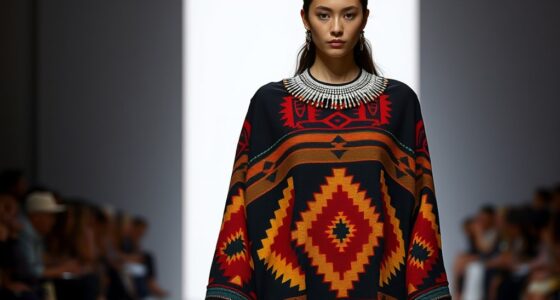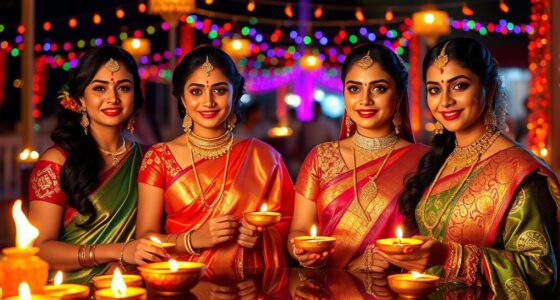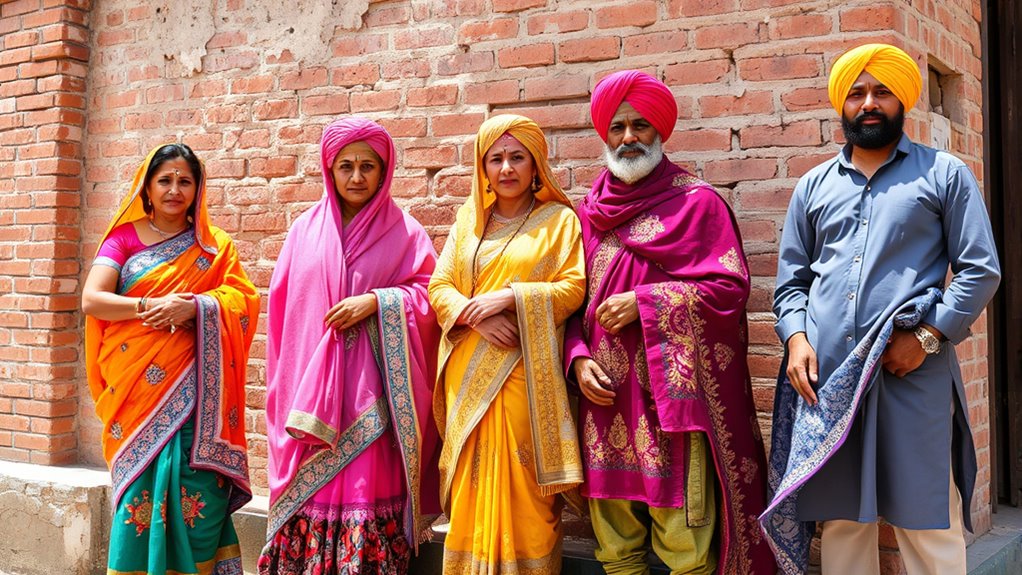

Fashion plays a essential role in expressing your cultural identity by allowing you to showcase heritage, traditions, and personal stories through clothing choices. Traditional attire like kimonos or saris serve as visual symbols of your roots and history, while modern styles blend these elements for everyday wear. This fusion celebrates cultural uniqueness and resilience, connecting past and present. To discover how fashion shapes cultural pride and evolution, explore further into this inspiring topic.
Key Takeaways
- Traditional attire visually symbolizes cultural heritage, conveying stories, rituals, and symbols passed down through generations.
- Fashion integrates traditional fabrics and motifs, blending cultural identity with modern styles for everyday expression.
- Wearing cultural clothing honors ancestors and reinforces community bonds, maintaining cultural resilience amid globalization.
- Fashion acts as a bridge connecting historical roots to contemporary trends, showcasing cultural evolution and personal identity.
- Incorporating traditional elements counters cultural erasure, allowing individuals to express pride, diversity, and cultural uniqueness.
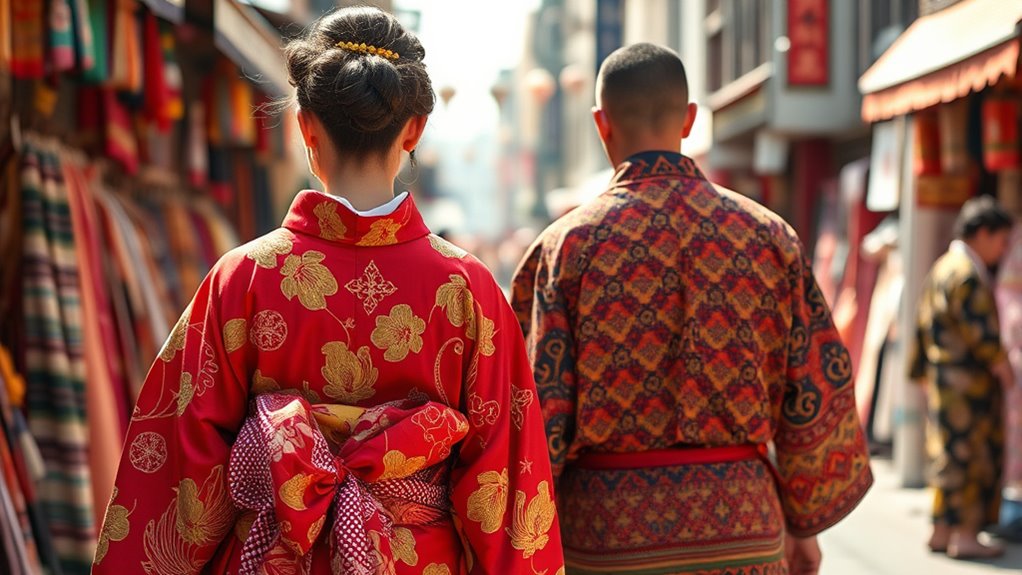
Have you ever noticed how the clothes people wear can reveal their cultural roots and personal identity? Clothing is more than just something to keep you warm or stylish; it’s a powerful form of self-expression that connects you to your history, community, and values. Traditional attire plays a significant role in this, serving as a visual symbol of cultural heritage. When you see someone donning garments like a kimono, sari, or dashiki, you immediately recognize the cultural significance behind those choices. These traditional outfits often carry stories, rituals, and symbols passed down through generations, anchoring individuals to their roots. They’re a way of honoring ancestors and celebrating cultural uniqueness in a world that’s increasingly interconnected.
Clothing reveals cultural roots and personal identity through traditional attire and meaningful symbols.
At the same time, modern influences continuously reshape how cultural identity is expressed through fashion. You might notice that traditional attire isn’t worn solely during festivals or special occasions anymore; it’s blending with contemporary styles, creating a dynamic fusion. For example, designers incorporate traditional fabrics or motifs into everyday wear, making cultural symbols accessible and relevant in today’s fashion scene. This blending allows you to showcase your heritage in more subtle, versatile ways, whether through accessories, patterns, or silhouettes inspired by traditional attire but adapted for modern tastes. It’s a way of asserting your identity while staying current and connected to global fashion trends.
This synthesis of traditional and modern influences isn’t just about aesthetics; it’s a statement of cultural resilience. When you choose to incorporate elements of traditional attire into your wardrobe, you participate in a dialogue about your identity and history. It becomes a form of resistance against cultural erasure and a celebration of diversity. You can express pride in your background while embracing innovation, showing that cultural identity isn’t static but evolving. Whether wearing a contemporary outfit with subtle cultural details or opting for a full traditional look, you’re actively shaping how your culture is perceived and remembered.
Ultimately, fashion serves as a bridge—linking past and present, individual and community. It helps you communicate who you are without words, making cultural expression accessible and personal. As traditional attire meets modern influences, your style becomes a living testament—testament to your heritage, your values, and your journey. So next time you choose what to wear, think about the stories your clothes can tell and how they reflect your unique cultural identity in a constantly changing world.
Frequently Asked Questions
How Does Fashion Influence Cultural Perceptions Internationally?
Fashion influences cultural perceptions internationally by showcasing cultural authenticity through clothing choices, which helps others understand and appreciate diverse traditions. Your style can act as a form of global fashion influence, spreading cultural values and aesthetics across borders. When you embrace authentic cultural elements, you promote respect and understanding, shaping perceptions positively. This exchange encourages a richer, more interconnected world where fashion bridges gaps and celebrates cultural uniqueness worldwide.
What Role Does Technology Play in Evolving Cultural Fashion?
Technology acts like a bridge, turning cultural fashion into a vibrant mosaic of digital innovation and virtual fashion. You can now explore and showcase traditional styles through augmented reality or create custom designs online that transcend borders. This digital evolution fuels cultural exchange, making fashion more accessible and dynamic. As you embrace virtual fashion, you become part of a global tapestry where innovation and tradition weave seamlessly into your personal style.
Can Fashion Help Preserve Endangered Cultural Traditions?
Yes, fashion can help preserve endangered cultural traditions by highlighting cultural authenticity and showcasing traditional craftsmanship. When you wear or promote traditional clothing, you support artisans and keep their craftsmanship alive. You also raise awareness about cultural heritage, encouraging others to value and learn about these unique practices. By integrating traditional elements into contemporary fashion, you help guarantee these traditions remain relevant and appreciated for generations to come.
How Do Fashion Designers Incorporate Cultural Symbols Respectfully?
You should prioritize understanding cultural symbolism deeply before incorporating it into your designs. Respectfully using cultural symbols involves collaborating with community members, seeking permission, and honoring their traditions. Upholding designer ethics means avoiding cultural appropriation and ensuring authenticity. By doing so, you show respect and appreciation, creating meaningful fashion that celebrates diversity without misrepresentation or harm. This approach fosters genuine cross-cultural exchange and preserves the integrity of cultural symbols.
What Are the Challenges of Blending Multiple Cultural Styles?
You might worry about cultural appropriation when blending multiple styles, but it’s possible to celebrate diversity through respectful fusion. The challenge lies in ensuring authentic representation and avoiding stereotypes, which can lead to cultural dilution. By understanding the significance of each style, you foster identity fusion without offending. This approach helps create innovative fashion that honors cultures, rather than appropriating them, making your designs more meaningful and inclusive.
Conclusion
You now understand how fashion reflects and shapes cultural identity, allowing you to express your unique heritage and values. Did you know that over 60% of people worldwide use clothing choices to communicate their cultural background? By embracing your style, you’re actively participating in a global dialogue of tradition and innovation. So, next time you pick an outfit, remember—you’re not just dressing up, you’re telling your story.