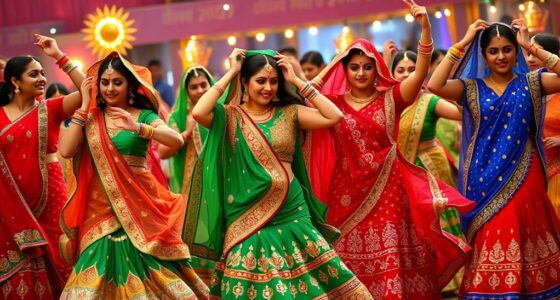
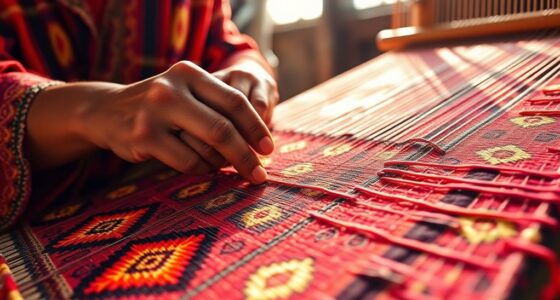
Block printing in South Asian fashion is a vibrant expression of regional identity and cultural heritage. It tells stories through intricate motifs that symbolize local beliefs, history, and daily life. Techniques vary across regions, reflecting distinct traditions and craftsmanship passed down through generations. These designs connect communities and preserve centuries-old artistry. If you explore further, you’ll discover how these patterns continue to celebrate and sustain the rich cultural narratives of South Asia.

Get beauty and skincare favorites delivered free with Prime
- Fast, free delivery on millions of items
- Prime Video, Amazon Music and more included
- Member-only deals all year
Key Takeaways
- Traditional block printing embodies regional cultural identity through motifs that tell local stories and convey symbolic meanings.
- Techniques vary regionally, reflecting unique artistic styles and contributing to regional distinctions in South Asian fashion.
- The craft fosters community bonds, with artisans passing down methods and maintaining cultural heritage across generations.
- Motifs and patterns serve as symbols of cultural values, spiritual beliefs, and local histories, connecting individuals to their heritage.
- Preserving these traditional techniques sustains cultural continuity and enriches modern fashion with historical and artistic significance.

Block printing holds a deep cultural significance in South Asian fashion, serving as a vibrant expression of regional identity and artistic heritage. When you explore this craft, you’ll notice how traditional motifs are central to its design, each pattern telling a story rooted in local history, beliefs, and daily life. These motifs are more than decorative elements; they carry symbolic meanings, conveying messages or blessings that have been passed down through generations. From intricate florals and geometric shapes to mythological symbols, these patterns reflect the diverse cultural landscapes across South Asia. As you observe the craftsmanship, you’ll see how artisans use regional techniques, each with its unique methods and tools, to create distinctive prints. Whether it’s the bold, symmetrical blocks of Rajasthan or the delicate, flowing patterns from Bengal, regional techniques influence not only the appearance but also the significance of the finished fabric. Additionally, the craftsmanship involved is often a communal activity, fostering social bonds and cultural continuity within communities. Understanding the regional techniques used in block printing deepens your appreciation for the skill involved. In some areas, artisans employ hand-carved wooden blocks, meticulously designed to produce consistent, repeatable patterns. These blocks are dipped into natural dyes and pressed onto fabric with precision, allowing for detailed motifs to come alive. In other regions, block printing involves multiple steps, including preparing the fabric, applying resist agents, and carefully aligning blocks to ensure perfect symmetry. These techniques are often passed down within families or communities, maintaining traditional methods that have persisted over centuries. When you see these patterns on sarees, turbans, or home textiles, you’re witnessing a blend of artistic expression and cultural continuity. The significance of traditional motifs and regional techniques extends beyond aesthetics. They serve as a cultural language, linking communities through shared symbols and craftsmanship. In many cases, the motifs are specific to particular regions, making each piece a marker of local identity. Wearing or using these fabrics connects you to a broader cultural narrative, celebrating regional artistry and history. The process of block printing is a tribute to South Asia’s rich heritage, where craftsmanship is treasured and passed down through generations. It reminds you that these textiles are not just fashion statements but carriers of cultural stories and traditions that define the region’s aesthetic and spiritual identity. By appreciating traditional motifs and regional techniques, you recognize the importance of preserving this ancient craft amid modern influences, ensuring that its vibrant heritage continues to thrive.
Frequently Asked Questions
How Has Block Printing Evolved Over Centuries in South Asia?
You’ve seen how block printing has evolved over centuries in South Asia by blending traditional techniques with modern designs. Historical techniques like hand-carved wooden blocks are still used, preserving cultural heritage. Today, artisans innovate while maintaining authenticity, ensuring cultural preservation. This evolution allows you to appreciate the rich history while embracing contemporary fashion, making block printing a vibrant, living tradition that bridges the past and present seamlessly.
Are There Specific Regional Styles Within South Asian Block Printing?
You’ll discover that South Asia’s block printing features distinct regional styles, each with unique motifs and techniques. For example, Gujarat’s intricate patterns contrast with Rajasthan’s vibrant colors and bold designs, revealing local stories and traditions. These regional techniques preserve cultural identities and add depth to the craft. As you explore, you’ll see how these styles continue to influence contemporary fashion, making every piece a story of its origin.
What Are the Traditional Materials Used in South Asian Block Printing?
You’ll find that traditional South Asian block printing uses natural dyes and wooden blocks. The natural dyes, derived from plants, indigo, and minerals, give vibrant, eco-friendly colors. Wooden blocks, carefully carved, are pressed onto fabric like cotton or silk to create intricate patterns. This process is labor-intensive but results in beautiful, culturally rich textiles that have been treasured for generations, reflecting regional artistry and heritage in every print.
How Does Block Printing Influence Contemporary South Asian Fashion Trends?
They say, “Fashion is the mirror of society,” and block printing reflects this beautifully. You see it influence contemporary South Asian fashion trends by blending traditional techniques with modern motifs and digital fabric designs. This fusion creates unique, culturally rich styles that appeal to today’s global audience. As a result, you can embrace heritage while staying fashionable, making traditional block printing a essential part of modern South Asian fashion’s evolution.
Are There Any Environmental Impacts Associated With Traditional Block Printing?
Yes, traditional block printing can impact the environment. You should be aware that it often involves high water consumption during dyeing and printing processes. Additionally, chemicals used in some dyes can cause chemical runoff, polluting nearby water sources. These practices can harm ecosystems and pose health risks. To reduce this impact, consider supporting eco-friendly techniques or using natural dyes in your fashion choices.
Conclusion
You now hold the key to understanding how block printing isn’t just fabric decoration—it’s the heartbeat of South Asian culture. Every pattern, every color, carries centuries of history, tradition, and identity. When you wear or admire these textiles, you’re immersing yourself in a legacy so rich, it could fill entire worlds. So next time you see a block-printed piece, remember, you’re witnessing a cultural phenomenon that’s more alive and powerful than you ever imagined.
Halloween Picks
halloween
As an affiliate, we earn on qualifying purchases.