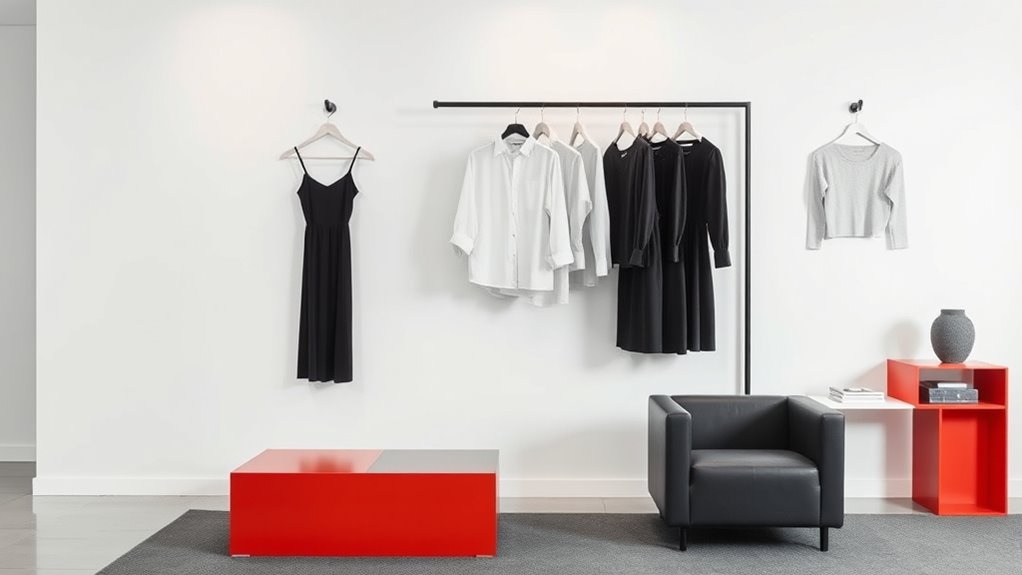

From Bauhaus to Minimalism, cultural movements have profoundly shaped fashion by emphasizing function, simplicity, and clean lines. Bauhaus introduced geometric forms and art-inspired designs that focused on practicality, while Minimalism pushed forward streamlined, uncluttered aesthetics reflecting a desire for clarity and efficiency. These movements challenge traditional styles and highlight societal shifts toward innovation and understated elegance. Exploring these movements offers insight into how art influences personal expression and the evolution of modern fashion.
Key Takeaways
- Bauhaus emphasized functional, simple designs with geometric forms, influencing modernist fashion aesthetics.
- Minimalism in fashion prioritizes clean lines, neutral palettes, and pared-down silhouettes inspired by early 20th-century movements.
- Both Bauhaus and Minimalism reflect societal shifts towards practicality, efficiency, and the beauty of simplicity.
- These movements promote the use of innovative materials and craftsmanship that influence contemporary fashion design.
- Their emphasis on form and function continues to shape fashion trends emphasizing understated elegance and versatility.

Have you ever wondered how cultural movements influence the way we dress? It’s fascinating to see how art, politics, and societal shifts shape fashion trends over time. Take the early 20th century, for example. Movements like Art Deco and Surrealism didn’t just stay confined to galleries—they made their mark on what people wore. Art Deco, emerging in the 1920s, emphasized sleek lines, geometric shapes, and luxurious materials. When you look at fashion from that era, you’ll notice the emphasis on glamour and modernity, with dresses and accessories echoing those symmetrical patterns and shiny finishes. It was a celebration of progress, and that spirit showed up in the clothing styles that became popular—think of the elegant flapper dresses, cloche hats, and Art Deco-inspired jewelry. These elements weren’t just about aesthetics; they reflected a cultural desire for sophistication, innovation, and a break from traditional styles.
Surrealism, on the other hand, challenged perceptions and embraced the bizarre, dreamlike aspects of the subconscious. When it influenced fashion, it led to clothing that defied logic and traditional form. Surrealist-inspired designs incorporated unexpected shapes, playful contrasts, and whimsical details—like dresses that looked like melting clocks or accessories that seemed to float or morph. As a person who’s exploring fashion history, you’d notice how designers drew inspiration from Surrealist art, translating the movement’s fascination with the subconscious into fabric and form. This influence pushed boundaries, encouraging more experimental and avant-garde styles that broke away from conventional beauty standards. Surrealism’s impact on fashion wasn’t just about aesthetics; it was about challenging perceptions and celebrating creativity without limits. Furthermore, fashion trends often reflect the broader cultural influences, showing how movements like Art Deco and Surrealism serve as a mirror of their time.
Both Art Deco and Surrealism show how cultural movements serve as a mirror of their time, shaping what people wear to express their values and aspirations. These movements weren’t just visual trends; they were cultural statements. When you dress today, elements of those movements might subtly influence your choices—geometric patterns, bold accessories, or playful, unconventional details. Understanding how these cultural shifts influenced fashion gives you a deeper appreciation for what you wear and how clothing can be a reflection of broader societal ideas. Fashion isn’t created in a vacuum; it’s an ongoing dialogue between art, culture, and individual expression. By exploring movements like Art Deco and Surrealism, you see how deeply interconnected our styles are with the cultural currents that define each era.
Top picks for "bauhau minimalism cultural"
Open Amazon search results for this keyword.
As an affiliate, we earn on qualifying purchases.
Frequently Asked Questions
How Did Bauhaus Influence Contemporary Fashion Design?
You can see Bauhaus’s influence in contemporary fashion through its emphasis on functional aesthetics and innovative use of color theory. Designers prioritize simplicity, clean lines, and practicality, echoing Bauhaus principles. Colors are chosen thoughtfully to enhance form and function, creating versatile pieces. This movement encourages merging art and utility, inspiring modern fashion to be both stylish and purposeful, making Bauhaus a lasting foundation for minimalist and functional design trends today.
What Are the Key Differences Between Bauhaus and Minimalism?
You’ll notice that Bauhaus emphasizes functional aesthetics, blending art and practicality, while minimalism focuses on artistic simplicity, stripping designs to their essential elements. Bauhaus often combines form and function creatively, whereas minimalism seeks clean lines and understated elegance. The key difference is that Bauhaus is more experimental with materials and shapes, while minimalism prioritizes simplicity and clarity, creating timeless, uncluttered designs.
Which Designers Are Most Inspired by These Movements Today?
You’ll notice avant-garde designers like Rick Owens and Haider Ackermann draw from Bauhaus’s experimental spirit, pushing boundaries with innovative shapes and materials. Eco-conscious innovators such as Stella McCartney and Telfar Clemens incorporate minimalism’s simplicity, focusing on sustainability and clean lines. These designers blend movement-inspired aesthetics with modern values, creating fashion that’s both forward-thinking and environmentally aware, reflecting the enduring influence of Bauhaus and minimalism in today’s industry.
How Do Cultural Movements Impact Sustainable Fashion Trends?
Cultural movements influence sustainable fashion trends by encouraging eco-conscious fabrics and ethical production. You’ll notice designers adopting minimalist aesthetics, reducing waste, and prioritizing sustainable materials inspired by movements like Bauhaus. These movements push you to choose brands that focus on transparency, fair labor, and eco-friendly practices. As a result, fashion becomes more responsible, aligning your style choices with values that support environmental health and social fairness.
Can Minimalism Be Considered a Global Cultural Movement?
It’s no coincidence that minimalism has become a global cultural movement, driven by cultural globalization and a desire for aesthetic uniformity. You see it in fashion everywhere—stripping down to essentials, embracing simplicity across diverse cultures. This movement unites people through shared values of clarity and functionality, transcending borders. So yes, minimalism can definitely be considered a global cultural movement because it resonates universally, shaping how you and others express style worldwide.
Conclusion
You might think fashion just follows trends, but cultural movements like Bauhaus and minimalism actually shape what we wear. Some argue minimalism’s rise is a response to the chaos of modern life, offering clarity and simplicity. While this theory holds weight, it’s also about the desire for authenticity and timeless style. So, next time you pick out an outfit, remember—you’re part of a larger story driven by history, art, and society’s evolving values.