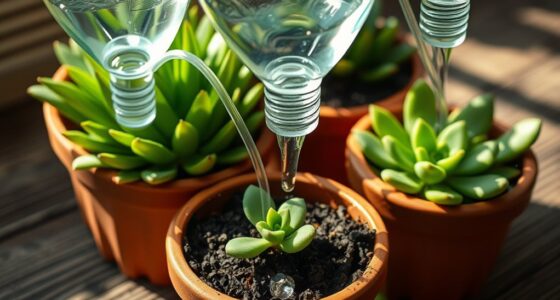
Transforming pallets into a vertical garden is a great eco-friendly project that maximizes small spaces while reducing waste. Start by choosing sturdy, untreated pallets and cleaning them thoroughly. Sand surfaces for safety and consider applying natural finishes. Attach landscape fabric or plant containers to create pockets for soil, then fill with lightweight soil suited for your plants like herbs or flowers. Mount the pallet securely against a wall or fence, water regularly, and enjoy your sustainable garden feature—learn more about making it happen step by step.
Key Takeaways
- Select sturdy, untreated pallets and clean them thoroughly before starting your vertical garden project.
- Attach landscape fabric or plant liners to create individual planting pockets within the pallet.
- Mount pallets vertically against walls or fences, securing firmly for stability and safety.
- Choose suitable plants like herbs, leafy greens, or succulents that thrive in confined spaces.
- Maintain proper watering and drainage to ensure healthy growth and longevity of your pallet garden.

If you’re looking to add greenery to limited space or want an eco-friendly project, transforming old pallets into a vertical garden is a smart solution. Not only does this approach make good use of recycling materials, but it also offers a rewarding DIY gardening experience. Using recycled pallets allows you to repurpose what might otherwise be discarded, turning it into a functional and attractive garden feature. This method promotes sustainability and reduces waste, aligning perfectly with eco-conscious values.
Getting started is simple. Begin by selecting sturdy pallets that are in good condition, preferably untreated to avoid chemicals that could harm your plants. Once you’ve chosen your pallets, clean them thoroughly to remove dirt, debris, and any old nails or staples. Sanding the surfaces helps prevent splinters and creates a smoother base for planting. You can customize your vertical garden by painting or staining the pallets, but keep in mind that natural finishes often work best for plant health.
Next, plan your layout. Decide how many tiers or sections you want and consider the types of plants you’ll grow. Leafy greens, herbs, flowers, or succulents all thrive in vertical setups. To create planting pockets, attach landscape fabric or plastic liners to the pallet slats, ensuring the soil stays in place while allowing excess water to drain. You can also use small pots or containers attached securely to the slats if preferred. When planting, use lightweight soil mixes suitable for container gardening and ensure each plant has enough space to grow.
Installation is straightforward. Mount your pallet against a wall, fence, or stand it upright on a sturdy surface. Make sure it’s securely anchored to prevent tipping. Water your plants regularly, paying attention to drainage to avoid waterlogged roots. Vertical gardens are especially useful in small spaces like balconies, patios, or even indoor areas with sufficient light. Incorporating sustainable gardening practices can further enhance the environmental benefits of your project.
Throughout the process, you’re engaging in DIY gardening that emphasizes recycling materials, making your project both cost-effective and environmentally friendly. You’ll also enjoy the satisfaction of creating something beautiful with your own hands. Over time, your pallet garden will flourish, providing fresh herbs, colorful flowers, or nutritious greens right at your fingertips. Plus, the effort you put into repurposing pallets and nurturing your plants offers a sense of accomplishment and a unique touch to your outdoor or indoor space.
Transforming pallets into a vertical garden isn’t just about beautifying your surroundings; it’s about making sustainable choices and embracing DIY gardening’s rewarding nature. It’s a practical, creative way to bring greenery into tight spots while making a positive impact on the environment.
Top picks for "transform pallet vertical"
Open Amazon search results for this keyword.
As an affiliate, we earn on qualifying purchases.
Frequently Asked Questions
What Types of Plants Thrive Best in Pallet Gardens?
You should choose plants that thrive in container or vertical garden settings, like herbs, lettuce, strawberries, and succulents. Consider plant selection carefully, focusing on their light, water, and space needs. Make sure your soil requirements match the plants; use well-draining soil with nutrients suitable for your chosen plants. With proper plant selection and soil, your pallet garden will flourish and add vibrant greenery to your space.
How Do I Prevent Pests in a Pallet Vertical Garden?
Think of your garden as a fortress; you guard it with natural pest control. To prevent pests, choose pest-resistant plants like marigolds or basil, and regularly inspect your garden. Use organic methods such as neem oil or introducing beneficial insects—ladybugs work wonders. Keeping your pallet garden clean and well-maintained also discourages pests, just like a tidy home keeps unwanted guests out. You’re actively protecting your lush, thriving vertical oasis.
Can I Customize the Size of My Pallet Garden?
Yes, you can customize the size of your pallet garden easily. Use a modular design approach to add or remove sections, adjusting the overall size to fit your space. To give it a polished look, consider pallet staining before assembly, which also helps protect the wood. This flexibility allows you to tailor your vertical garden to your specific needs, whether small or large, making it a perfect fit for any spot.
What Safety Precautions Are Needed When Assembling the Garden?
When assembling your vertical garden, you should wear safety gear like gloves and goggles to protect yourself. Handle tools carefully, following instructions for proper use to avoid injuries. Keep your workspace organized to prevent accidents, and be cautious around sharp edges or nails in the pallet. Taking these safety precautions guarantees a smooth assembly process and keeps you safe while creating your beautiful garden.
How Often Should I Water My Pallet Vertical Garden?
Your pallet vertical garden needs love like a superstar, so watering is key. Check your soil moisture daily, especially during hot, sunny days. Typically, you should water every 1-2 days, but adjust based on weather and plant type. If the soil feels dry an inch below the surface, it’s time for a drink. Regular watering keeps your garden thriving and lush, transforming your space into a green paradise.
Conclusion
By turning pallets into a vertical garden, you’re planting seeds of creativity and sustainability right in your own space. It’s like giving old wood a new life, transforming it from discarded to delightful. As your plants grow and flourish, they’ll become a living proof to your resourcefulness. So, embrace this project, and watch your garden reach new heights—evidence that with a little effort, you can turn the ordinary into something truly extraordinary.