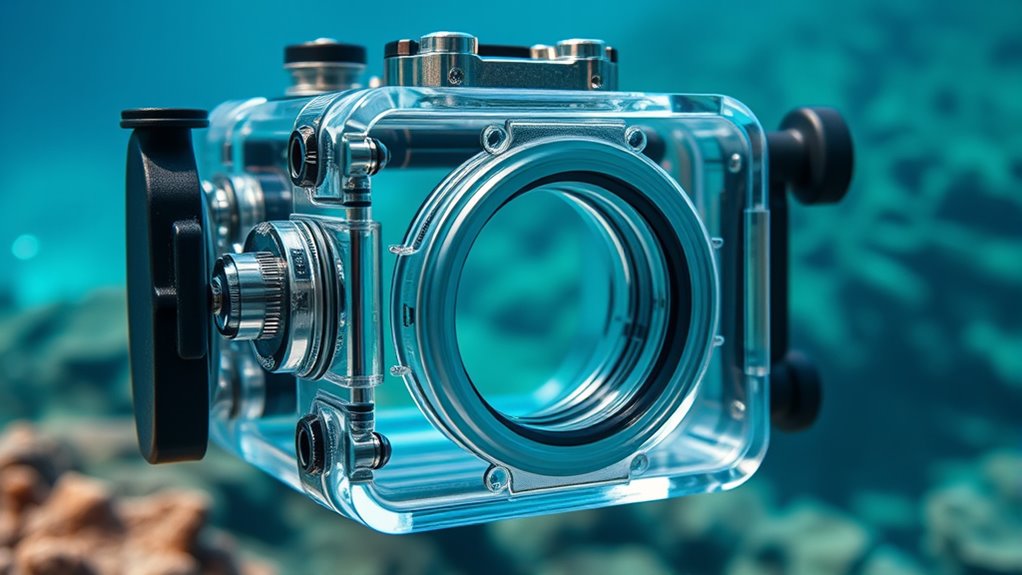

To create underwater photography housing for your camera, start by choosing durable, waterproof materials like acrylic or PVC to build a secure enclosure. Make sure the housing seals tightly with high-quality O-rings to prevent leaks and withstand pressure at your desired depth. Design easy access to all camera controls and consider using clear, anti-reflective lenses for sharp images. If you keep exploring, you’ll uncover more tips to perfect your underwater setup.
Key Takeaways
- Choose a durable, waterproof material and design a sealed enclosure that fits your camera’s dimensions and controls.
- Incorporate high-quality O-rings and seals to prevent water leakage and ensure pressure resistance at various depths.
- Ensure easy access to all camera functions with strategically placed ports, buttons, and controls.
- Test the housing thoroughly in shallow water or a controlled environment before deep dives to check for leaks.
- Consider adding external lighting mounts or ports for strobes to enhance underwater image quality.

An underwater camera housing is indispensable for capturing clear, high-quality images beneath the surface. Without the right housing, your camera is vulnerable to water damage, and your shots can turn out murky or blurry. To guarantee you get the best results, you need to pay close attention to your lighting techniques and camera lens selection. These elements dramatically influence the quality of your underwater photos, especially since natural light diminishes quickly as you go deeper. Proper lighting techniques help you illuminate your subject evenly and reduce shadows, which are common underwater. Using external strobes or underwater flash units can make a significant difference, allowing you to bring out vibrant colors and details that would otherwise be lost. When planning your shots, consider how light behaves underwater; it scatters and absorbs, so adjusting your technique—like angling your lights or using diffusers—can prevent harsh reflections and backscatter. Understanding light behavior underwater is essential for achieving optimal results in your photography. Your choice of camera lens is equally indispensable. Wide-angle lenses are popular for underwater photography because they allow you to get close to your subject, minimizing the amount of water between you and your target, which reduces distortion and haze. A macro lens, on the other hand, is perfect for capturing tiny details of marine life or textures of underwater objects. When selecting your lens, think about the subjects you want to shoot and the environment you’ll be exploring. Keep in mind that some lenses are better suited for specific depths or conditions, so compatibility with your camera housing is essential. Investing in a quality lens that complements your photography style will lead to sharper images with accurate color reproduction.
In addition to lighting techniques and lens choices, guarantee your underwater housing provides easy access to camera controls so you can make quick adjustments as needed. Sealed compartments must prevent leaks and withstand pressure at various depths. When setting up your housing, double-check all seals and O-rings to avoid mishaps during your dive. By combining thoughtful lighting techniques, appropriate camera lens selection, and a sturdy, well-designed housing, you equip yourself to capture stunning underwater scenes. Remember, the key is preparation—understanding how light interacts underwater and choosing the right gear will help you produce vibrant, crisp images that truly reflect the beauty beneath the waves.
Frequently Asked Questions
How Do I Prevent Fogging Inside the Housing?
To prevent fogging inside your underwater housing, you should use desiccant packs to absorb moisture and place them in strategic spots. Applying anti-fog coatings to your housing’s interior surfaces also helps keep fog at bay. Make sure to pre-dry your housing before sealing it and avoid sudden temperature changes. Regular maintenance and careful sealing will ensure clear, fog-free shots every time.
What Materials Are Best for DIY Underwater Housings?
Did you know DIY underwater housings can last over five years with proper care? For materials, opt for acrylic or PVC because of their excellent durability and transparency. These materials handle pressure well and allow clear shots. Make sure to apply a high-quality sealant to prevent leaks, and check the sealant regularly. Proper sealant application guarantees your housing remains watertight, protecting your camera during dives.
How Do I Ensure the Housing Is Watertight?
To guarantee your housing is watertight, you need to focus on seal integrity and pressure testing. Check all seals thoroughly for any gaps or damage before use. After sealing, perform pressure testing by submerging the housing in water and gradually increasing pressure to identify leaks. This proactive approach helps prevent water ingress, ensuring your camera stays dry and protected during underwater shoots.
Can I Use the Same Housing for Different Camera Models?
You can’t usually use the same housing for different camera models because of varying camera compatibility. Each housing is designed for specific dimensions and controls, ensuring proper fit and function. However, if you want versatility, look into material customization options or adjustable housings. These allow you to adapt to different camera sizes or models, but always verify compatibility first to avoid damage or leaks.
What Maintenance Is Required After Each Dive?
After each dive, you should clean the seals and check the O-rings to make certain they’re free of debris and salt buildup. Gently rinse the housing with fresh water, paying special attention to the seals, and dry everything thoroughly. Inspect the O-rings for cracks or damage, and apply silicone grease if needed. Proper maintenance like this keeps your underwater housing watertight and ready for your next dive.
Conclusion
Now that you know how to create your own underwater housing, you’re ready to explore the depths and capture stunning underwater scenes. Will you let the ocean’s mysteries remain unseen, or will you seize the chance to document its beauty? With a little effort and creativity, you can open a whole new world of photography. Dive in with confidence—your underwater adventure awaits, and only you can bring it to life through your lens.