To set up a home darkroom for film development, you’ll need a light-tight space with blackout curtains or coverings, along with essential equipment like an enlarger, trays, and tanks. Prioritize safety by wearing gloves, eye protection, and ensuring proper ventilation when handling chemicals like developer, stop bath, and fixer. Keep everything labeled and stored correctly to prevent hazards. If you’re interested in creating a safe, efficient workspace, there’s more to explore on the steps and best practices involved.
Key Takeaways
- Choose a light-tight space with blackout curtains to prevent light leaks during film development.
- Set up essential equipment such as enlargers, trays, tanks, and a timer in a well-ventilated area.
- Use safe chemical handling practices: wear gloves, label containers, and follow manufacturer instructions.
- Ensure proper ventilation to avoid fume buildup and maintain a safe working environment.
- Follow safety protocols for chemical disposal and keep all materials away from children and pets.
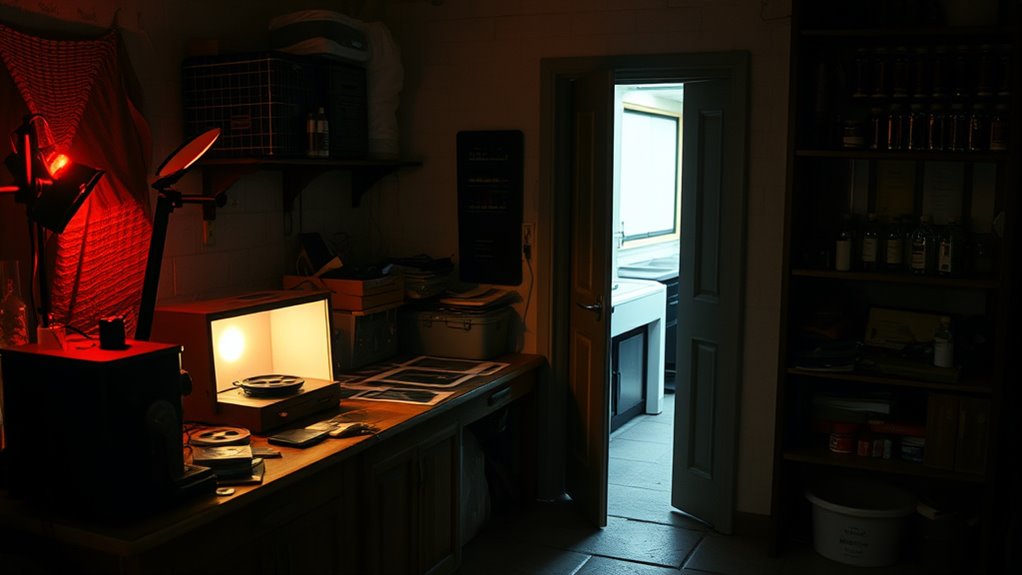
Creating a darkroom at home allows you to develop film with greater control and convenience. When you set up your own space, you can work at your own pace, experiment with different techniques, and enjoy the process without rushing to a commercial lab. The key to a successful home darkroom is understanding the essentials, especially safe handling of film chemistry and maintaining a safe environment.
First, you need to gather the right equipment. You’ll require a light-tight space, a enlarger or contact printing setup, trays or tanks for chemicals, a thermometer, timer, and proper ventilation. Once your room is fully blacked out or covered with light-proof curtains, you’re ready to focus on the chemistry aspect. Handling film chemistry properly is vital—not only for achieving quality results but also for your safety. Always read the chemical labels carefully, follow the manufacturer’s instructions, and keep everything clearly labeled. Use gloves and eye protection when mixing or handling chemicals, as some solutions can be hazardous if they come into contact with your skin or eyes.
Safety precautions extend beyond personal protection. Ensure your workspace is well-ventilated to avoid inhaling fumes, especially during chemical mixing or agitation. Keep chemicals away from children and pets, and never pour unused chemicals down the drain unless you’re certain it’s environmentally safe to do so. Store chemicals in clearly labeled, sealed containers, and dispose of waste responsibly, following local regulations. Being vigilant about safety not only protects your health but also helps preserve your equipment and environment.
Developing film at home might involve working with chemicals like developer, stop bath, fixer, and sometimes a hypo clearing agent. Each has specific safety considerations, so take the time to understand their properties. For example, some developers contain potent reducing agents, and fixer solutions often include silver salts, which can be harmful if mishandled. Always work in a well-ventilated area, and avoid inhaling fumes by opening windows or using exhaust fans. When mixing chemicals, add acids to water slowly and carefully to prevent splashing or reactions. Keep a spill kit nearby in case of accidents, and always clean up thoroughly after your session.
Additionally, understanding chemical safety is crucial for preventing accidents and ensuring a safe working environment. Creating your own darkroom is rewarding, but it demands respect for the chemicals involved. Proper safety precautions guarantee that your film development process remains safe, enjoyable, and effective. With attention to detail and proper handling of film chemistry, you can produce beautiful, professional-quality prints right from your own home.
Top picks for "darkroom home film"
Open Amazon search results for this keyword.
As an affiliate, we earn on qualifying purchases.
Frequently Asked Questions
What Are the Legal Considerations for Building a Home Darkroom?
You need to guarantee legal compliance by checking local zoning regulations before building your home darkroom. Zoning laws may restrict space, ventilation, or chemical storage, so contact your local authorities or planning department. Also, consider safety regulations for handling chemicals and electrical setups. Following these rules helps prevent fines or legal issues, and ensures your darkroom is safe and compliant with all necessary permits and codes.
How Much Space Is Needed to Set up a Functional Darkroom?
You’ll need about 10 to 15 square feet for a basic darkroom, but more space allows better layout optimization. Make sure you have enough room for enlargers, trays, and storage while leaving enough clearance to work comfortably. Prioritize good ventilation and easy access to water. Efficiently arranging your equipment minimizes clutter, making your workflow smoother. Adjust the space based on your specific setup and the scale of your film processing needs.
Can I Develop Color Film in a Home Darkroom?
Can you develop color film in a home darkroom? Absolutely, but you need to guarantee chemical compatibility and proper equipment. Color film requires specific chemicals and precise temperature control, making the process more complex than black-and-white. Do you have enough space and ventilation? If so, you can set up a dedicated area for color development, but be prepared for extra care, accuracy, and safety measures to achieve quality results.
What Safety Precautions Are Essential in a Home Darkroom?
You need to prioritize chemical safety by wearing gloves and eye protection to avoid skin and eye irritation. Make certain proper ventilation by installing exhaust fans or opening windows to disperse fumes effectively. Keep chemicals stored in labeled, sealed containers away from children and pets. Always work in a well-ventilated space, and follow manufacturer instructions carefully to minimize risks. These precautions protect your health and create a safer darkroom environment.
How Do I Prevent Dust and Light Leaks in My Darkroom?
Did you know that dust particles are often over 10 microns, easily settling on your film? To prevent dust and light leaks, you should seal gaps around doors and windows with weatherstripping or blackout curtains. Keep ventilation issues and humidity control in check by using a dedicated exhaust fan and a dehumidifier, which help reduce dust and moisture buildup. Regularly clean your workspace to keep dust from settling and compromising your film.
Conclusion
Setting up a darkroom at home is like building your own secret laboratory, where each step transforms your passion into beautiful, tangible images. I remember my first successful photo print—seeing that image emerge in the developer felt like uncovering a hidden treasure. With patience and care, you’ll discover that creating film photos at home isn’t just a process; it’s a rewarding journey. Embrace the darkroom, and watch your artistry come to life.