To craft color gels for your flash photography, start with inexpensive, heat-resistant materials like colored plastic or acetate. Cut them into snug strips that fit your flash head, then secure with rubber bands or residue-free tape. Experiment with different colors and layering to achieve your desired effect. Adjust the size and placement to control how the light falls. If you want to explore more creative techniques, there’s plenty to discover to enhance your images.
Key Takeaways
- Use heat-resistant materials like colored acetate or plastic to create durable, safe gels for flash modification.
- Cut the materials into snug-fitting strips designed to cover the flash’s front or filter the light effectively.
- Experiment with different colors and layer multiple gels to achieve desired warming, cooling, or artistic effects.
- Secure gels with rubber bands or residue-free tape to prevent movement and ensure consistent light modification.
- Test and observe how homemade gels influence light quality and interact with camera settings for optimal results.
Color gels are essential tools for photographers looking to creatively modify their flash lighting. They allow you to alter the color temperature of your light source, giving you control over the mood and tone of your images. When you use gels, you can warm up or cool down your flash to match ambient lighting or create specific visual effects. This flexibility is crucial for achieving consistent color balance, especially in mixed lighting conditions, or for adding a creative punch to your photos. By adjusting the color temperature with gels, you can evoke different emotions or highlight particular elements in your composition, making your images more engaging and dynamic.
Color gels let photographers creatively control their flash’s mood and tone.
Understanding how color gels influence creative lighting starts with knowing their impact on your shot’s overall feel. For instance, a warming gel can simulate the golden glow of sunrise or sunset, infusing your scene with warmth and intimacy. Conversely, a cooling gel can produce a stark, clinical look or mimic overcast daylight, adding a sense of cool detachment or modernity. These subtle shifts in color temperature help you craft the atmosphere you envision, giving your images a polished, professional appearance. Furthermore, by blending gels or layering them, you can fine-tune the color effects to match your creative intent precisely, opening up endless possibilities for artistic expression. Proper understanding of sound design principles can also enhance your ability to plan lighting setups aligned with mood and atmosphere.
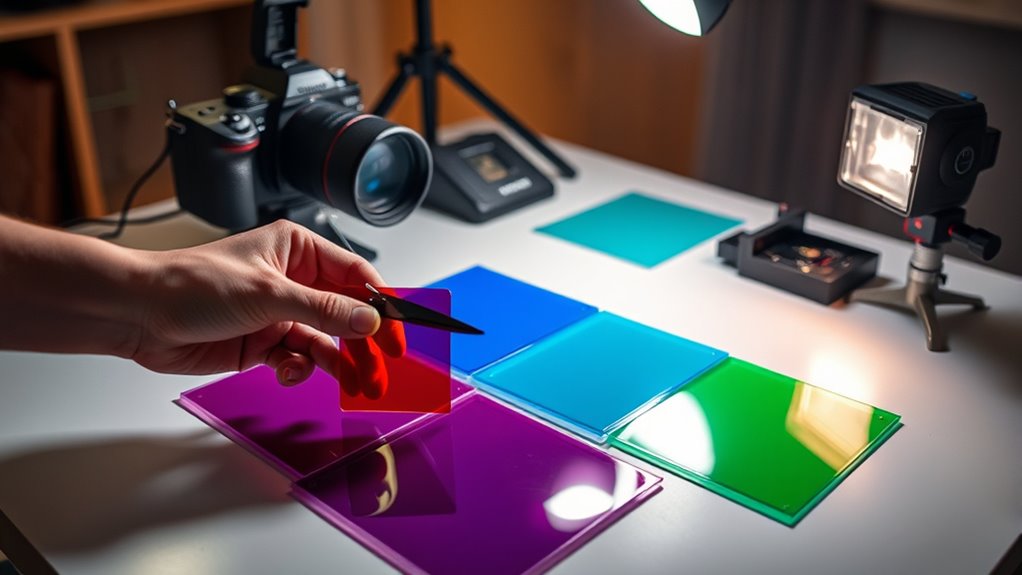
Making your own color gels isn’t complicated, and it offers a cost-effective way to expand your toolkit. You can start with inexpensive materials like colored plastic, acetate sheets, or even transparent film from craft stores. When selecting materials, ensure they are heat-resistant and thin enough to avoid affecting your flash’s performance or damaging your equipment. Cut the material into strips that fit snugly over your flash’s front, and secure them with rubber bands or tape that won’t leave residue. Testing different colors and intensities helps you understand how each gel modifies your light and how it interacts with your camera settings. Keep in mind that some colors may shift the color temperature more dramatically than others, so it’s valuable to experiment and observe the results firsthand.
Using homemade gels also encourages experimentation with creative lighting techniques. You can combine multiple gels to create complex color effects, or adjust their size and placement to control how much light is affected. This hands-on approach makes your flash more versatile and enables you to develop a personalized style. Whether you’re aiming for a surreal, vibrant scene or a subtle, warm ambiance, crafting your own color gels empowers you to push the boundaries of traditional flash photography. With a little practice, you’ll find that these simple modifications can dramatically enhance your images, making your creative lighting truly stand out.
Top picks for "craft color gels"
Open Amazon search results for this keyword.
As an affiliate, we earn on qualifying purchases.
Frequently Asked Questions
Can I Recycle Used Color Gels Safely?
You can’t safely recycle used color gels because gel degradation causes color fading and weakening over time. Reusing old gels risks inconsistent color effects and potential damage to your equipment. Instead, inspect each gel for tears or significant fading, and replace them regularly. Proper disposal is best, and always store your gels in a cool, dark place to prolong their lifespan. This guarantees your flash photography remains vibrant and effective.
How Do Temperature Changes Affect Gel Color Accuracy?
Temperature changes can considerably impact your gel’s color accuracy by causing gel oxidation, which leads to color fading over time. When exposed to heat or cold, the chemicals in the gel break down, altering its hue and reducing vibrancy. To maintain consistent color, store your gels in a stable environment, avoid extreme temperatures, and handle them carefully. This helps preserve their original color and prevents unwanted shifts during your photography sessions.
Are There Eco-Friendly Alternatives to Plastic Gels?
Think of eco-friendly options as a gust of fresh air for your photography. You can opt for biodegradable materials and sustainable alternatives that reduce your environmental footprint. These gels break down naturally, like leaves returning to the earth, making them a responsible choice. By choosing these greener options, you help protect our planet while still achieving vibrant, accurate colors in your flash photography. It’s a win for your art and the environment.
What Are the Best Storage Methods for Long-Term Gel Use?
You should store your color gels in airtight, opaque storage containers to preserve gel durability and prevent fading from light exposure. Keep them in a cool, dry place away from direct sunlight, which can cause warping or deterioration. Label your containers clearly for easy identification and organize them to avoid bending or creasing. Proper storage ensures your gels stay flexible, vibrant, and ready for long-term use.
How Do Gels Impact Flash Recycle Times?
Did you know that using gels can increase your flash recycle time by up to 20%? Gels impact flash recycle times by slightly blocking light, which can cause the flash to work harder and take longer to recharge. To maintain consistent color and avoid gel fading, choose high-quality gels and replace them regularly. This guarantees your flash’s performance stays ideal and your color remains true across shoots.
Conclusion
Don’t let concerns about complicated setups hold you back—crafting your own color gels is simple, affordable,, and highly effective. With a few basic materials, you can customize your lighting to create stunning, professional-looking photos. Plus, experimenting with different colors adds a creative touch you won’t get from store-bought gels. So go ahead, get hands-on, and elevate your flash photography. The vibrant results are worth it—and you might even have fun along the way!