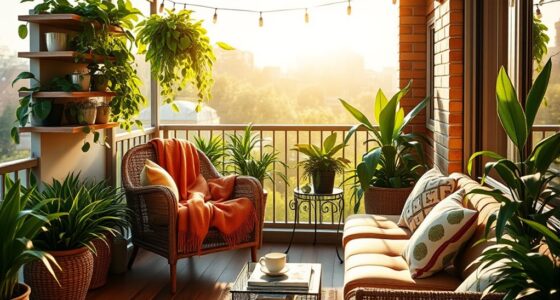
To create a wall-mounted plant shelf for small spaces, start by choosing a sturdy location with good natural light. Use a level to mark precise drill points and select suitable brackets based on your wall type, like drywall or brick. Drill pilot holes and securely install the brackets, then place your shelves and add plants of various sizes and textures. For expert tips on mounting and styling, keep exploring to make your space both beautiful and functional.
Key Takeaways
- Choose a suitable wall with ample natural light and enough space for your plant shelf.
- Use a level to mark precise drill points for straight and secure wall-mounted brackets.
- Select appropriate mounting hardware based on wall type, such as drywall anchors or masonry bits.
- Install sturdy brackets ensuring they are level and securely fastened for plant safety.
- Arrange plants with varying sizes and textures to maximize space and create a lively display.
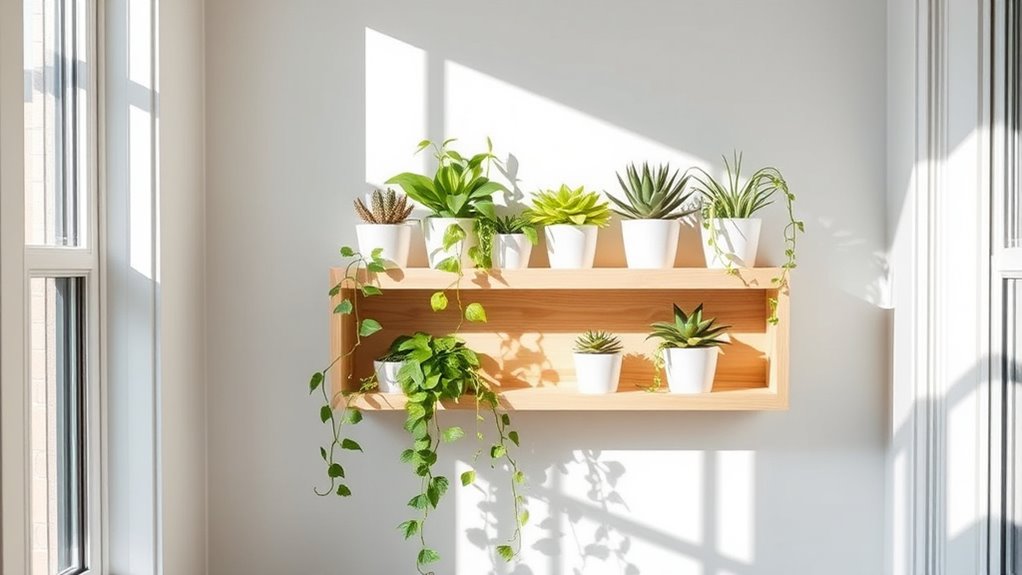
If you’re short on space but still want to enjoy the beauty of houseplants, creating a wall-mounted plant shelf is an excellent solution. This approach not only adds greenery to your home but also maximizes vertical space, making your small area feel more vibrant and alive. To get started, you’ll need to plan your shelf’s placement carefully. Consider the wall’s height and the amount of natural light plants will receive. Once you’ve chosen the perfect spot, it’s time to focus on the installation process, which begins with understanding drilling techniques.
Maximize your space with a wall-mounted plant shelf—perfect for vibrant, vertical greenery.
When drilling into walls, your choice of tools and techniques is vital. If you’re working with drywall, use a drill with a drywall bit, and be sure to locate studs with a stud finder to secure your brackets firmly. For brick or concrete walls, a hammer drill with the appropriate masonry bit is necessary. Always wear safety glasses and a dust mask, especially when working with harder surfaces. Mark your drill points precisely using a level to ensure your shelves will be straight. Start with small pilot holes to prevent cracking or slipping, then gradually increase the size of your drill bit. This careful approach helps you avoid damaging the wall and guarantees your brackets hold securely.
Once your brackets are mounted, it’s time to think about plant arrangement tips to create an appealing display. Start by selecting a variety of plants with different sizes, textures, and colors to add visual interest. Taller plants like pothos or snake plants can sit at the back or center, while smaller, trailing plants such as ivy or string of pearls can drape over the edges. Distribute plants evenly across your shelf to create balance, but don’t be afraid to cluster a few for a more natural look. Remember, placing plants with similar watering needs together simplifies maintenance. Use planters with drainage holes to avoid overwatering, and consider incorporating decorative pots that complement your home decor.
Additionally, choosing vetted products such as quality planters and accessories can ensure your plant display remains attractive and durable over time. As you place your plants, think about the overall aesthetic. Mix and match plant heights and foliage types to craft a dynamic display. Keep in mind your lighting conditions—position plants that thrive in bright light near windows, and opt for shade-loving varieties in darker spots. Regularly rotate your plants to ensure even growth and prevent them from leaning toward light sources. With some patience and attention to detail, your wall-mounted plant shelf will become a focal point, transforming your small space into a lush oasis. By mastering proper drilling techniques and employing thoughtful plant arrangement tips, you’ll create a stunning, functional display that brings nature indoors without sacrificing precious space.

LASZOLA Plant Hangers Shelves Wall Mounted Indoor, Metal Window Plant Holders, 2Pcs Modern Floating Flower Display Stand with 2 Hooks for Outdoor Kitchen Bathroom Decor, Black
【𝐒𝐢𝐦𝐩𝐥𝐞 𝐀𝐬𝐬𝐞𝐦𝐛𝐥𝐲 𝐢𝐧 𝐌𝐢𝐧𝐮𝐭𝐞𝐬】Everything you need is included in the box, such as expansion screws and clear, easy-to-follow…
As an affiliate, we earn on qualifying purchases.
As an affiliate, we earn on qualifying purchases.
Frequently Asked Questions
What Materials Are Best for Outdoor Wall-Mounted Plant Shelves?
For outdoor wall-mounted plant shelves, you should prioritize materials like cedar, redwood, or composite wood, which offer durability and weather resistance. Metal options such as aluminum or galvanized steel are also great choices, especially if coated with weatherproof finishes. These materials withstand the elements and prevent rot or rust, ensuring your shelves stay sturdy and attractive over time. Always opt for weatherproof finishes to extend their lifespan outdoors.
How Do I Prevent Water Damage to Wall Surfaces?
Think of your wall as a treasure chest—protect it fiercely. To prevent water damage, always use a drip tray under your plants to catch excess water. Apply a waterproof sealant on the wall surface and around the shelf edges to create a barrier against moisture. Regularly check for leaks or cracks, and ensure proper drainage. These steps keep your wall safe and your plants thriving.
Can I Install a Plant Shelf on Uneven or Textured Walls?
Yes, you can install a plant shelf on uneven or textured walls. To do so, you’ll need to carefully drill uneven walls, using appropriate anchors or spacers to level the shelf. Secure mounting techniques like using heavy-duty anchors or toggle bolts help guarantee stability. Take your time to measure and mark, ensuring your shelf stays level and secure, even on challenging surfaces.
How Much Weight Can a Typical Wall-Mounted Plant Shelf Support?
A typical wall-mounted plant shelf supports around 10-20 pounds, but this depends on its weight capacity and mounting strength. You should check the manufacturer’s specifications for your specific shelf, ensuring it’s installed into studs or with appropriate anchors for added support. Proper mounting techniques maximize the weight capacity, so always distribute weight evenly and avoid overloading to prevent accidents or damage.
What Are Some Safety Tips for Installing Shelves in High-Traffic Areas?
Imagine the perfect shelf, but don’t rush—safety first. In high-traffic areas, you need to guarantee your shelf is mounted securely, especially at an ideal height to prevent accidental bumps. Use sturdy anchors and check your wall type before drilling. Avoid placing heavy items near doorways or walkways. Regularly inspect the mounting to keep everyone safe. With careful planning, your shelf becomes both beautiful and secure, no surprises needed.
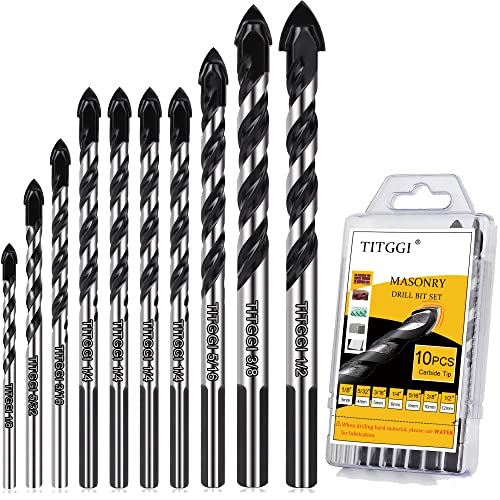
10-PCS Masonry Drill Bit Set & Concrete Drill Bit Set, Professional Drill Bit Set for Glass/Brick/Plastic/Cement/Wood/Tile/Etc, Industrial Strength Carbide Drill Bit Tip, 1/8"-1/2" by TITGGI
HIGH QUALITY DRILL BIT SET; TITGGI Masonry drill bit set, industrial strength carbide drill bit tip, excellent abrasion…
As an affiliate, we earn on qualifying purchases.
As an affiliate, we earn on qualifying purchases.
Conclusion
Now that you’ve learned how to create a wall-mounted plant shelf, you can effortlessly add greenery to even the smallest spaces. Imagine the fresh, vibrant atmosphere it’ll bring to your home. Why not transform an empty wall into a lively focal point? With just a few simple steps, you’re on your way to a stylish, space-saving garden. Ready to turn your walls into a beautiful, green sanctuary? The perfect project awaits!

Gepege 6 Inch Beaded Ceramic Planter Set of 2 with Drainage Hole and Saucer for Plants, Indoor-Outdoor Large Round Succulent Orchid Flower Pot (Smoked Gray, Inner-pots not Larger Than 5 Inch)
【With Drain Holes and Mesh Pad】:Large drain holes are good for draining, and with leak-proof mesh pads, it…
As an affiliate, we earn on qualifying purchases.
As an affiliate, we earn on qualifying purchases.

XNGZY Wall Planters for Indoor Plants, 3 Pack Wall Mounted Plant Holder, Metal Plant Floating Decor Shelves, Space Saving, for Bedroom, Living Room, Kitchen, Office, Bathroom Decor
【Multi Functional Plant Display Solution】This metal plant wall hanger can be used for a variety of green plants,…
As an affiliate, we earn on qualifying purchases.
As an affiliate, we earn on qualifying purchases.