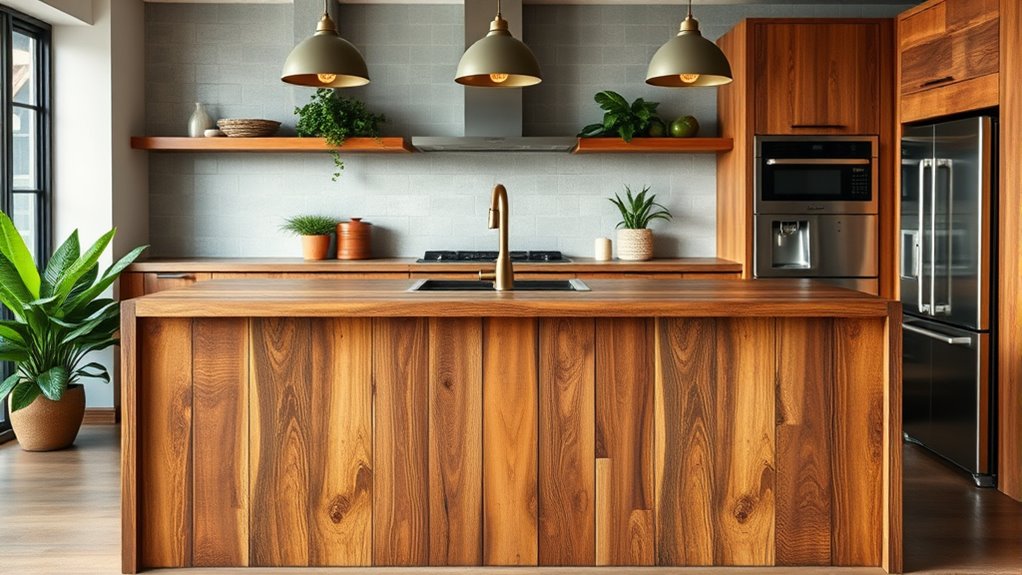

To design a sustainable kitchen island from upcycled wood, start by selecting responsibly sourced reclaimed materials from old structures or furniture to add character and reduce waste. Use eco-friendly, non-toxic finishes like natural oils or beeswax to protect the wood while keeping it safe. Incorporate a modular design that allows easy updates, repairs, and expansion, ensuring longevity and adaptability. By making thoughtful choices at each stage, you’ll create a beautiful, eco-conscious centerpiece—discover more tips to deepen your project’s sustainability.
Key Takeaways
- Use responsibly sourced reclaimed wood from old structures to reduce environmental impact and add character.
- Apply eco-friendly, non-toxic finishes like natural oils, beeswax, or plant-based sealants to protect the wood safely.
- Incorporate modular design for easy customization, expansion, and repair, extending the island’s lifespan.
- Emphasize sustainable practices throughout sourcing, finishing, and assembly to create an eco-conscious, stylish centerpiece.
- Prioritize durability and adaptability to minimize waste and support long-term environmental and functional benefits.
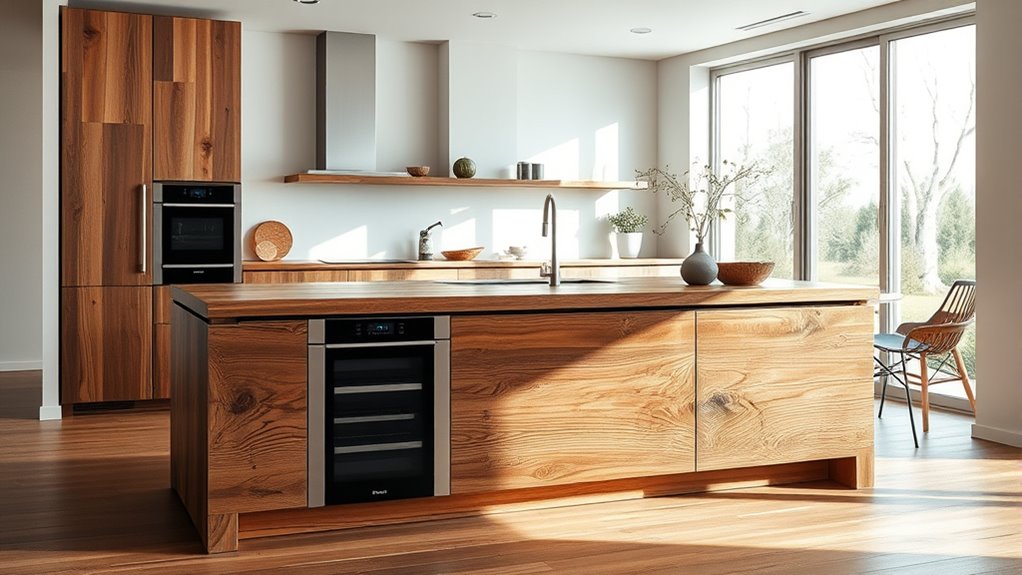
Creating a sustainable kitchen island isn’t just about aesthetics—it’s about making environmentally conscious choices that benefit both your home and the planet. When designing a kitchen island from upcycled wood, you’re already taking a significant step toward reducing waste and conserving resources. To enhance its eco-friendliness, consider using eco friendly finishes. These finishes are free of toxic chemicals and VOCs, which means they’re healthier for you and better for the environment. You can opt for natural oils, beeswax, or plant-based sealants that protect the wood while maintaining its natural beauty. Not only do these finishes help preserve the integrity of the upcycled wood, but they also ensure your kitchen remains a safe, non-toxic space for everyone.
Choose eco friendly finishes like natural oils and beeswax to keep your upcycled wood kitchen island safe and sustainable.
Modular assembly is another smart approach to designing a sustainable kitchen island. With modular components, you can customize the island to fit your space and needs, all while promoting reuse and adaptability. Instead of purchasing a single, bulky piece, you assemble the island from individual modules that can be added, removed, or replaced over time. This flexibility means you can update or expand your island without discarding the entire structure, reducing waste and extending its lifespan. Modular assembly also makes transportation and installation easier, minimizing the environmental impact associated with moving large, heavy furniture. Plus, if one part gets damaged, you can simply replace or repair that section instead of replacing the whole island, further emphasizing sustainability.
When selecting upcycled wood, pay attention to its provenance. Look for reclaimed wood that’s been sustainably sourced or salvaged from old buildings, barns, or furniture. This not only reduces demand for virgin timber but also adds character and history to your kitchen design. Pairing this with eco friendly finishes and modular assembly creates a cohesive plan that’s both eco-conscious and functional. Incorporating sustainable sourcing into your project ensures your choices support responsible resource use and conservation. It’s a way to showcase your commitment to sustainability while crafting a unique, stylish piece that reflects your personal taste.
Incorporating these elements into your design transforms your kitchen island from just a piece of furniture into an eco-friendly statement. The process involves thoughtful choices at each step, from sourcing the wood to finishing and assembly. By choosing eco friendly finishes, you ensure your island remains safe and sustainable, while modular assembly enables adaptability and longevity. Together, these strategies not only reduce your environmental footprint but also create a beautiful, functional centerpiece that you can feel good about for years to come.
Top picks for "design sustainable kitchen"
Open Amazon search results for this keyword.
As an affiliate, we earn on qualifying purchases.
Frequently Asked Questions
How Do I Treat Upcycled Wood to Ensure Safety?
To guarantee safety, you should start with proper wood treatment by cleaning the upcycled wood thoroughly and sanding it to remove splinters. Apply a non-toxic, food-safe sealant or finish to prevent harmful chemicals from leaching. Follow safety measures like wearing gloves and a mask during treatment, and always work in a well-ventilated area. This way, your upcycled wood becomes safe and durable for your kitchen island.
What Tools Are Best for Working With Reclaimed Wood?
Think of working with reclaimed wood as nurturing a wise old tree; you need the right tools to respect its history. For tool selection, a jigsaw, orbital sander, and clamps work best, allowing precise cuts and smooth finishes. Mastering woodworking techniques like gentle sanding and careful measuring will reveal the wood’s hidden beauty. These tools and techniques help you craft a beautiful, sustainable kitchen island that celebrates its past.
How Can I Enhance the Durability of the Island?
To enhance your island’s durability, focus on applying quality finishing techniques like sealing and sealing with oil or wax to protect against moisture and wear. Choose sturdy hardware that resists rust and corrosion, ensuring longevity. Regular maintenance, such as cleaning and reapplying finishes, also helps. Combining these steps makes your upcycled wood island more resilient, so it stays beautiful and functional for years to come.
Are There Design Restrictions With Upcycled Wood?
Did you know that around 30% of furniture waste is upcycled wood? You might face some design constraints with upcycled wood limitations, like irregular shapes, knots, or weaker spots. These can restrict your design choices, especially for structural elements. However, with creativity and careful planning, you can work around these restrictions to create a stunning, sustainable kitchen island that highlights the unique charm of reclaimed materials.
How Do I Match the Island With Existing Kitchen Decor?
To match your island with existing kitchen decor, focus on matching finishes and color coordination. Choose a finish that complements your cabinets and countertops, whether that’s a natural, stained, or painted look. Consider the color palette of your space and select a tone that blends seamlessly or creates a pleasing contrast. You can also add decorative hardware or accessories that tie the island into your overall design for a cohesive look.
Conclusion
Now that you’ve crafted your sustainable kitchen island from upcycled wood, you’ve truly hit two birds with one stone—creating a beautiful centerpiece while helping the environment. Your effort not only reduces waste but also adds charm and character to your space. Remember, every small step counts in making a difference. So, keep your eye on the prize, and let your eco-friendly masterpiece stand as a monument to your commitment to a greener world.