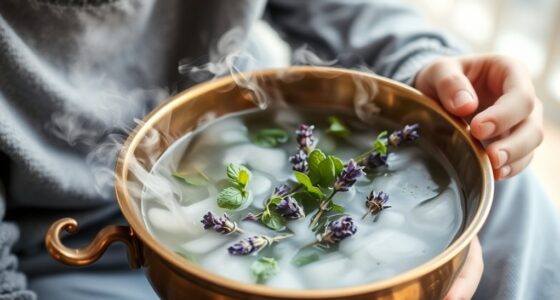
To create herbal compresses for muscle pain, start with natural fabrics like cotton or linen and fill them with herbs such as lavender, ginger, or peppermint known for their soothing properties. Secure the pouch tightly to prevent leaks, then gently heat it in a microwave or steam until warm—not hot. Apply the compress directly to sore muscles for deep relief. Keep exploring to discover unique tips and techniques for customizing your herbal compress experience.
Key Takeaways
- Use clean fabrics like cotton or linen to make pouch, filling with herbs such as lavender, ginger, or peppermint for muscle relief.
- Secure the pouch tightly by sewing or tying to prevent spillage during heating and application.
- Gently heat the compress in a microwave or steam until warm, ensuring it’s comfortable for skin contact.
- Apply the warm herbal compress directly to sore muscles with gentle pressure, holding for several minutes to promote absorption.
- Customize herbs and scents based on personal preference, combining traditional remedies with aromatherapy for enhanced relaxation.

When muscle pain strikes, creating your own herbal compresses can provide soothing relief naturally and affordably. These compresses are simple to make and can be tailored to your specific needs, offering a comforting alternative to over-the-counter remedies. To start, understanding the aromatherapy benefits can enhance their effectiveness. Many herbs used in compresses, like lavender, eucalyptus, and chamomile, emit soothing scents that help relax muscles and calm your mind. Aromatherapy benefits aren’t just about smell; they also include anti-inflammatory properties and stress reduction, making herbal compresses a holistic remedy. Plus, knowing the herbal compress history reveals a long-standing tradition of using heat and herbs for healing. Historically, cultures across Asia, Africa, and Europe have relied on herbal compresses for centuries, recognizing their ability to relieve pain, improve circulation, and promote relaxation. This rich history underscores their effectiveness and cultural significance, showing that herbal compresses aren’t just a modern trend—they’re rooted in time-tested practices.
To create your own herbal compress, start with clean, natural fabrics like cotton or linen. Fill a small cloth pouch with a blend of herbs known for their muscle-relieving properties. Popular choices include lavender for relaxation, ginger for its anti-inflammatory effects, and peppermint for cooling relief. Once filled, sew or tie the pouch securely. To prepare the compress, heat it gently—either in a microwave for a short time or by steaming—until it’s warm but not too hot to avoid burns. The warmth helps open your pores and enhances herb absorption, maximizing their therapeutic benefits. When applying, press the warm compress gently onto the sore muscles, allowing the heat and herbs to penetrate deeply. You can also lay it across larger areas like your back or shoulders for sustained relief. Incorporating proper vessel selection can impact the longevity and presentation of your herbal compress, ensuring it remains effective and easy to handle.
Making herbal compresses is a straightforward process that allows you to harness natural healing power at home. Combining the aromatherapy benefits with the herbal compress history, you tap into centuries of tradition while enjoying the calming scents and healing properties of herbs. Regular use can help reduce muscle tension, improve circulation, and lift your mood. Plus, creating your own compresses means you can customize the herbs and scents to suit your preferences, making the experience more personal and effective. With just a few simple ingredients and some basic techniques, you’re equipped to manage muscle discomfort naturally, saving money and avoiding unnecessary chemicals. In moments of pain, your handmade herbal compress can become a trusted, comforting remedy rooted in both ancient wisdom and modern self-care.
Top picks for "creat herbal compress"
Open Amazon search results for this keyword.
As an affiliate, we earn on qualifying purchases.
Frequently Asked Questions
How Long Should I Leave the Herbal Compress on My Skin?
You should leave the herbal compress on your skin for about 15 to 20 minutes, following duration guidelines to prevent irritation. Pay attention to your skin sensitivity; if you notice any redness or discomfort, remove it sooner. It’s best not to exceed 20 minutes to avoid skin irritation. Always test on a small area first, and consult a professional if you have sensitive skin or underlying conditions.
Can I Use Herbal Compresses for Chronic Muscle Pain?
Yes, you can use herbal compresses for chronic muscle pain as part of your chronic pain management routine. The herbal therapy benefits include reducing inflammation, relieving tension, and promoting relaxation. Incorporate compresses into your daily or weekly schedule to maximize relief. Always consult with a healthcare provider to ensure this herbal therapy complements your overall treatment plan and addresses your specific needs effectively.
Are There Any Herbs to Avoid During Pregnancy?
During pregnancy, you should avoid herbs with questionable safety or known risks to guarantee herbal safety and follow pregnancy precautions. Herbs like mugwort, arnica, and licorice are best avoided because they can stimulate contractions or affect hormone levels. Always consult your healthcare provider before using any herbs or herbal compresses, especially during pregnancy, to prevent unwanted effects and ensure both your safety and your baby’s health.
How Often Can I Repeat the Herbal Compress Therapy?
You can typically repeat herbal compress therapy 2-3 times a week, but always follow the frequency guidelines and safety precautions. If you notice any irritation or discomfort, stop using the compress and consult a healthcare professional. It’s important to listen to your body and avoid overdoing it, especially if you’re pregnant or have sensitive skin. Prioritize safety and adjust the frequency based on your individual response.
What Are Signs of an Allergic Reaction to Herbal Ingredients?
Think of herbal ingredient sensitivities as a silent warning; they show up fast when you’re not paying attention. Signs of an allergic reaction include itching, redness, swelling, or hives. You might also experience difficulty breathing or dizziness. To identify allergy symptoms early, monitor your skin and breathing closely after using herbal compresses. If you notice any of these, stop use immediately and consult a healthcare professional to prevent serious reactions.
Conclusion
So, next time your muscles scream for help, just grab your herbal compress and play the healer. Imagine wrapping yourself in a fragrant, warm hug from Mother Nature herself, easing your pain while you pretend you’re at a luxury spa—minus the bill. Who knew that simple herbs could turn your sore muscles into a serene, aromatic paradise? Just don’t forget: your couch might start thinking you’re permanently attached.