
To make a patchwork denim jacket with upcycled pieces, start by collecting denim scraps from old jeans or thrift shops. Plan your design by cutting diverse patches with interesting textures and colors. Sew the patches onto a base jacket or create a new one by piecing together your fabric. Add finishing touches like topstitching or embellishments for a polished look. Keep exploring to discover detailed steps and tips for turning your ideas into a unique, eco-friendly jacket.
Key Takeaways
- Collect various denim scraps from old garments or thrift stores, focusing on textures, washes, and colors for visual interest.
- Plan your design layout with sketches, selecting patches that create a balanced and personalized patchwork pattern.
- Cut denim pieces into desired shapes, embracing imperfect edges to add character and uniqueness to your jacket.
- Sew patches securely onto a jacket or create a new base using heavy-duty thread and suitable sewing techniques.
- Finish with topstitching and embellishments like embroidery or studs to enhance durability and add personalized style.
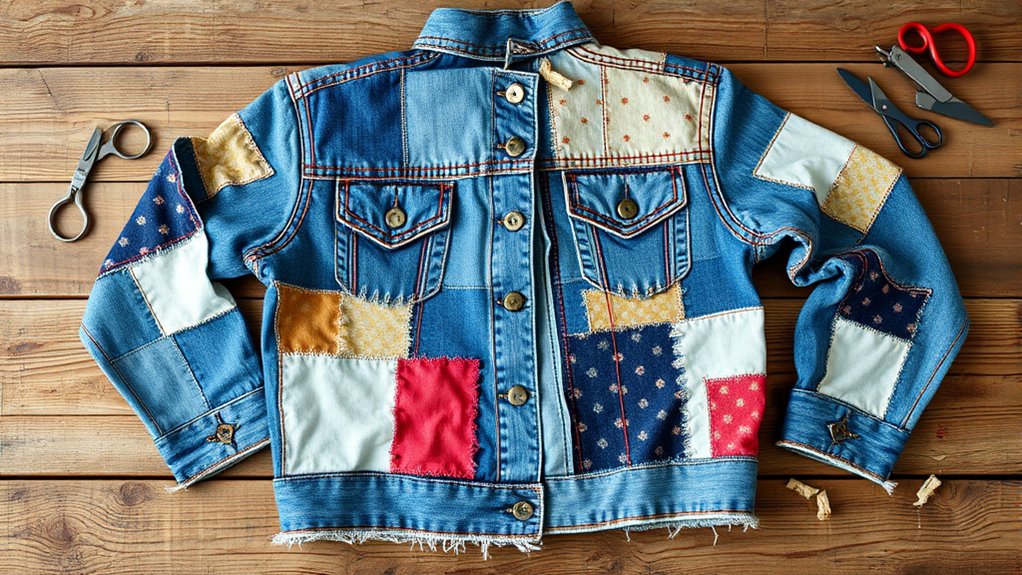
A patchwork denim jacket made from upcycled pieces offers a stylish way to breathe new life into old garments. When you decide to create your own patchwork jacket, you’re engaging in a form of DIY fashion that emphasizes sustainability and personal expression. Instead of buying new, fast-fashion pieces, you’re transforming existing denim into a unique, eco-friendly statement piece. This approach aligns perfectly with sustainable styling, allowing you to reduce waste while showcasing your creativity.
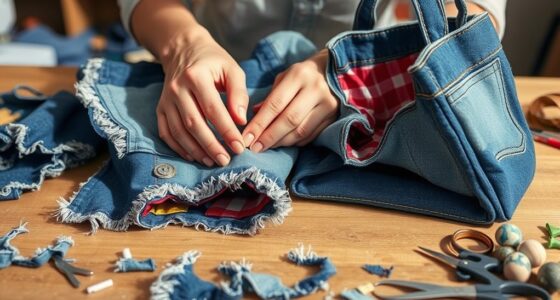
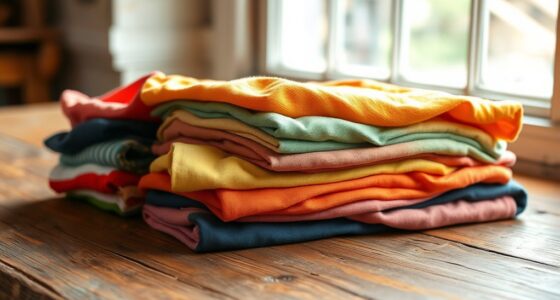
To start, gather denim scraps from old jeans, jackets, or thrift store finds. Look for pieces with interesting textures, washes, or colors that can complement each other. The beauty of patchwork lies in the mix-and-match aesthetic, so don’t be afraid to experiment with contrasting shades or distressed fabrics. Once you’ve collected enough material, plan your design. You can opt for a random, eclectic look or a more structured pattern—either way, sketching your layout beforehand helps to visualize the final product. Keep in mind that the goal is to create a balanced yet personalized appearance.
Gather denim scraps with varied textures and colors for a personalized patchwork design.
Next, measure and cut your denim pieces into the desired shapes. Rectangles, squares, or irregular shapes work well for patchwork, but consistency isn’t essential—embracing imperfect edges adds character. When sewing the patches together, use a sturdy needle and heavy-duty thread suitable for denim. You can sew by hand or with a sewing machine, depending on your skill level and available tools. Take your time to align the edges precisely, ensuring the seams are secure. This process not only results in a durable jacket but also reinforces the idea that DIY fashion is about craftsmanship and intentional design.
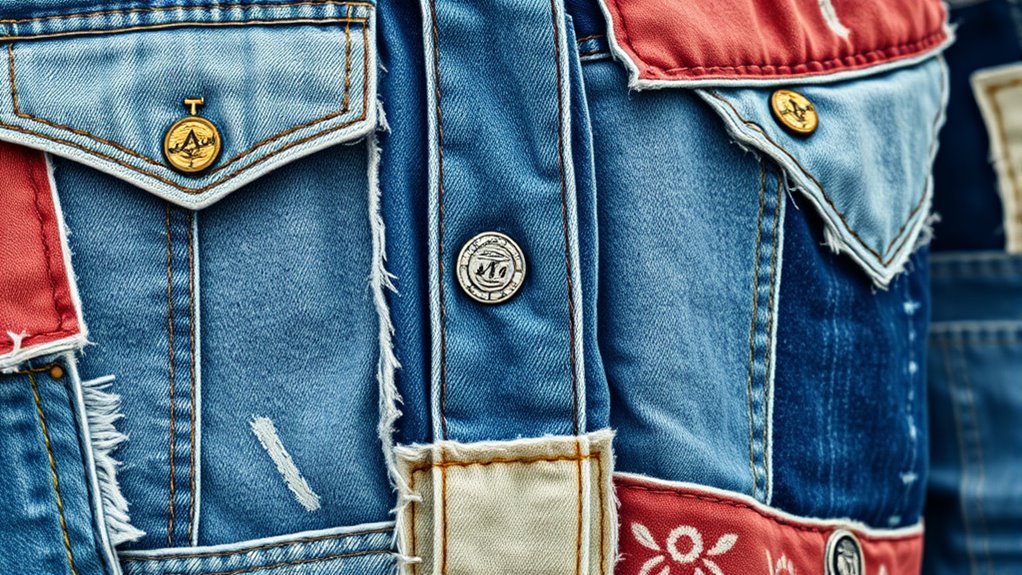
Once your patchwork panels are assembled, attach them to a pre-existing denim jacket or use them to create a new base. If working on an existing jacket, carefully sew the patches onto the fabric, covering worn areas or adding visual interest. If constructing from scratch, sew the patches together into a larger panel, then assemble the jacket structure. Finish with topstitching along the seams for added durability and a polished look. You might also add embellishments like embroidery, studs, or fabric paint to further personalize your creation.
Throughout the process, remember that making your patchwork denim jacket is about more than just style; it’s a statement about sustainable living and reducing fashion waste. By repurposing old denim and embracing DIY fashion, you’re cultivating a sense of individual style that’s eco-conscious and creative. Incorporating upcycled pieces into your wardrobe not only enhances sustainability but also allows for greater customization and uniqueness. The end result will be a one-of-a-kind piece that reflects your personality and values, proving that sustainable styling can be both trendy and meaningful.
Frequently Asked Questions
What Tools Are Best for Patchworking Denim?
You’ll want a good sewing machine to handle thick denim and multiple layers, making your patchwork durable and neat. Fabric scissors are essential for cutting the denim pieces precisely, giving your patchwork a clean look. Additionally, consider using pins or clips to hold fabric in place while sewing. These tools help you create a sturdy, stylish patchwork denim jacket with ease and accuracy.
How Do I Choose Compatible Fabric Pieces?
They say, “Birds of a feather flock together,” and that’s true for fabric pieces too. When choosing compatible fabric pieces, focus on fabric matching and color coordination. Pick denim shades that complement each other, avoiding clashing colors. Look for similar weights for easier sewing, and consider patterns that blend well. This approach guarantees your patchwork jacket looks harmonious and stylish, making your upcycled creation stand out beautifully.
Can I Machine Wash My Finished Patchwork Jacket?
Yes, you can machine wash your finished patchwork denim jacket. To keep it looking its best, follow care instructions like turning it inside out and washing on a gentle cycle with cold water. Maintenance tips include avoiding bleach and air drying to prevent damage. Regularly check for loose stitches or frayed edges, and mend them promptly. Proper care preserves your jacket’s vibrant patchwork and extends its lifespan.
How Do I Prevent Fraying on Raw Edges?
Did you know that 85% of DIYers experience fraying on raw edges? To prevent fraying, you should finish raw edges with techniques like zigzag stitching, serging, or applying fabric glue. You can also fold edges under and sew a hem or use bias tape. These methods guarantee your patchwork denim jacket stays durable and neat, keeping those raw edges from unraveling over time.
What Are Eco-Friendly Alternatives to Traditional Denim?
You can choose eco-friendly alternatives like organic cotton, hemp, or Tencel for sustainable fiber options. These materials are grown with less water and chemicals, reducing environmental impact. For dyeing, opt for eco-conscious methods such as low-impact dyes or natural plant-based dyes that minimize water usage and pollution. This way, you create a stylish, sustainable patchwork denim jacket that’s better for the planet.
Conclusion
Creating a patchwork denim jacket with upcycled pieces not only boosts your style but also supports sustainability. When you repurpose old fabrics, you’re giving new life to materials that might otherwise go to waste. This eco-friendly approach aligns with the growing belief that DIY fashion reduces environmental impact. So, as you craft your unique jacket, remember you’re part of a movement that values creativity and sustainability—proving that upcycling can be both fashionable and environmentally conscious.