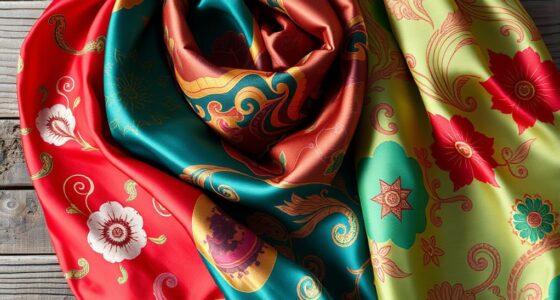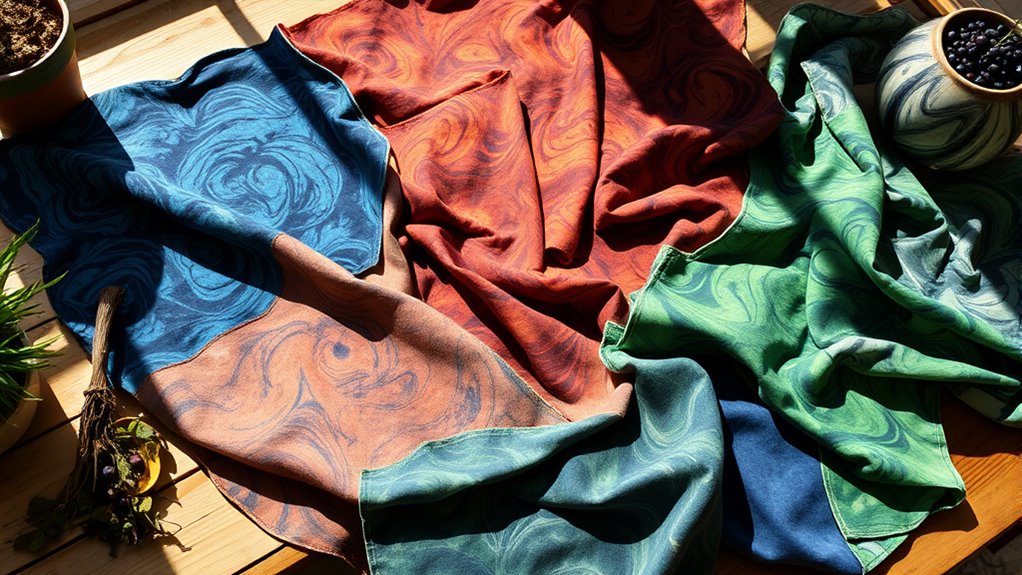

To create eco-friendly tie-dye with natural dyes, start by choosing plant-based fabrics like organic cotton or linen. Use kitchen scraps like avocado pits, beetroot, or turmeric to make your dye baths by boiling and straining the ingredients. Bind your fabric into patterns, then submerge it in the dye, adjusting soak time for different shades. Rinse with cold water, air dry, and reuse leftover dye. Keep exploring to discover more eco-conscious techniques for vibrant, sustainable designs.
Key Takeaways
- Choose sustainable fabrics like organic cotton, linen, or bamboo for eco-friendly dye absorption and biodegradability.
- Extract natural dyes from kitchen scraps such as avocado pits, beetroot, or turmeric by boiling to create vibrant dye baths.
- Use folding, twisting, or binding techniques to create unique tie-dye patterns before immersing fabrics in dye baths.
- Adjust soaking time and pH with vinegar or baking soda to control color intensity and achieve desired shades naturally.
- Rinse and air dry garments to conserve water and energy, ensuring a sustainable and eco-conscious tie-dye process.
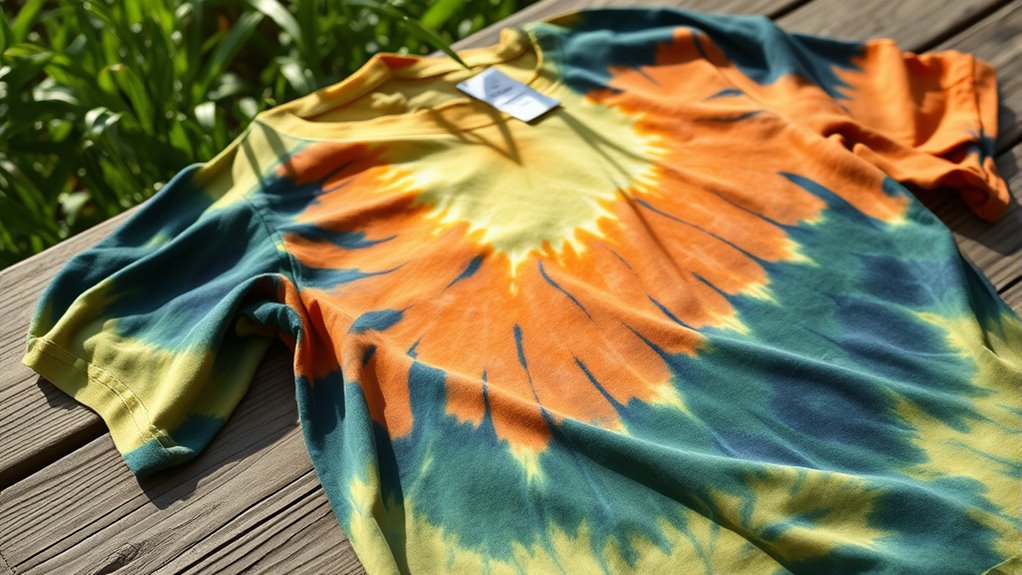
If you’re looking to refresh your wardrobe while helping the environment, DIY eco-friendly tie-dye is a fun and sustainable project you can try at home. The key is using natural dye sources and sustainable fabric choices, which make your creations not only vibrant but also eco-conscious. Instead of relying on synthetic dyes that can be harmful to the planet, you’ll harness the power of plants, fruits, and other natural materials to create beautiful, unique patterns on your clothing.
Create vibrant, eco-friendly tie-dye garments using natural dyes and sustainable fabrics at home.
Start by selecting sustainable fabrics such as organic cotton, linen, hemp, or bamboo. These materials are grown without harmful chemicals and are biodegradable, reducing your environmental footprint. When you choose your fabric, ensure it’s natural and undyed, because plant-based dyes bond better with natural fibers, resulting in more vibrant and long-lasting colors. The texture and weave of your fabric will also influence how well the dye adheres and how vibrant the final design appears.
Next, gather your natural dye sources. Popular options include avocado pits and skins, beetroot, spinach, turmeric, and red cabbage. These ingredients contain natural pigments that, when extracted, can produce a spectrum of colors from pinks and reds to yellows and purples. For example, boiling beetroot or red cabbage creates a rich, colorful dye bath, while turmeric offers a bright yellow hue. You might also experiment with onion skins or coffee grounds for more earthy tones. The best part? These sources are often kitchen scraps, so you’re repurposing waste and reducing overall waste.
Prepare your dye bath by simmering your natural dye sources in water, usually for about an hour or more, to extract the pigments. Strain out the solids, and then dip your fabric into the dye bath. To achieve different shades, you can control the soaking time or adjust the pH of your dye bath with common household ingredients like vinegar or baking soda. Longer soakings yield deeper colors, while shorter ones produce softer tones. For tie-dye effects, fold, twist, or bind your fabric before immersing it, creating unique patterns that showcase the natural dye’s variations.
Throughout the process, keep sustainability in mind. Use eco-friendly mordants when necessary—alum is a common, relatively safe choice—and always reuse or compost your dye scraps. Rinsing your fabric with cold water and air drying reduces water and energy consumption. With these simple steps, you’ll craft stunning, eco-friendly tie-dye garments that reflect your commitment to sustainability and creativity. Not only will you enjoy the process, but you’ll also end up with one-of-a-kind pieces that celebrate both nature and your personal style.

Natural Earth Paint Egg Dye Kit – Eco-Friendly, Non-Toxic Easter Egg Coloring for Kids & Adults – 4 Food-Safe Dyes, No Boiling Needed, Mixable Colors, Vegan & Sustainable
Eco-Friendly & Non-Toxic – Made from plant-based dyes including spinach, purple carrot, turmeric, beet, and red cabbage. Safe…
As an affiliate, we earn on qualifying purchases.
As an affiliate, we earn on qualifying purchases.
Frequently Asked Questions
Can Natural Dyes Produce Vibrant, Long-Lasting Colors?
Natural dyes can produce vibrant, long-lasting colors if you address colorfastness concerns and dye stability. You might notice some colors fade faster than synthetic dyes, but using mordants and proper fixing techniques helps improve dye stability. By following these steps, your eco-friendly tie-dye project will have more durable, vivid hues that last longer. Keep experimenting with different natural dye sources to find the most vibrant and stable shades.
Are Natural Dyes Safe for Sensitive Skin?
Natural dyes are generally safe for sensitive skin, offering hypoallergenic benefits that make them a gentle choice. You’ll notice fewer irritations and skin reactions because they’re free from harsh chemicals. Still, skin sensitivity considerations matter—always do a patch test first to confirm no allergic reactions occur. Natural dyes tend to be a safer, more eco-friendly option for those with sensitive skin, making your tie-dye projects both beautiful and worry-free.
How Do Natural Dyes Compare to Synthetic Dyes Environmentally?
Natural dyes generally have a lower environmental impact than synthetic dyes because they’re biodegradable and derived from renewable resources. You’ll find they produce less pollution during production and disposal, reducing harm to ecosystems. Synthetic dyes often contain harmful chemicals that persist in the environment, causing pollution. By choosing natural dyes, you help minimize environmental damage, making your tie-dye project more eco-friendly and sustainable for the planet.
What Are Common Natural Dye Sources I Can Find Locally?
Natural dye sources are like hidden treasures just waiting to be uncovered. You can find plant-based dyes from local berries, leaves, and roots, such as blackberries, spinach, and turmeric. Mineral dyes, though less common, come from natural clay and ochre. Explore your community markets or wild areas, and you’ll discover a variety of these eco-friendly options perfect for your tie-dye projects.
How Should I Store Leftover Natural Dyes for Future Use?
You should store leftover natural dyes in airtight containers like glass jars or plastic bottles to maintain their color and potency. Use dye preservation techniques such as refrigerating or freezing your dyes, which slows down degradation and extends shelf life. Make sure to label your containers clearly with the dye type and date. Proper storage ensures you can reuse your natural dyes for future projects without losing their vibrant hues.

Honey Oak Natural Tie Dye Kit | 3 Color Extract Set – Olive Green, Sunflower Yellow, Turkey Red | Plant-Based Fabric Dyes for Shibori & DIY Fabric Art | Easy to Use Craft Kit
Natural & Non-Toxic Dye – Made from 100% natural sources, Honey Oak’s dye is safe, chemical-free, and perfect…
As an affiliate, we earn on qualifying purchases.
As an affiliate, we earn on qualifying purchases.
Conclusion
Now that you’ve discovered how simple it is to create stunning, eco-friendly tie-dye with natural dyes, imagine the possibilities waiting to be uncovered. Will your next project turn out even more vibrant? Or perhaps you’ll experiment with new colors and patterns, pushing your creativity further. The best part? Each piece you craft not only looks amazing but also helps protect the planet. Are you ready to see where your eco-friendly journey takes you next?
Honey Oak Natural Tie Dye Kit | 3 Color Extract Set – Olive Green, Sunflower Yellow, Turkey Red | Plant-Based Fabric Dyes for Shibori & DIY Fabric Art | Easy to Use Craft Kit
Natural & Non-Toxic Dye – Made from 100% natural sources, Honey Oak’s dye is safe, chemical-free, and perfect…
As an affiliate, we earn on qualifying purchases.
As an affiliate, we earn on qualifying purchases.

JarThenaAMCS 12Pcs Tie Dye Cotton Fabric Bundles Multi Colored Fat Quarter Colorful Quilting Patchwork for DIY Handmade Sewing Crafting, 18 x 22 Inch
QUANTITY: Includes 12 pieces of cotton fabric bundles, each has a different design, various designs and sufficient quantity…
As an affiliate, we earn on qualifying purchases.
As an affiliate, we earn on qualifying purchases.