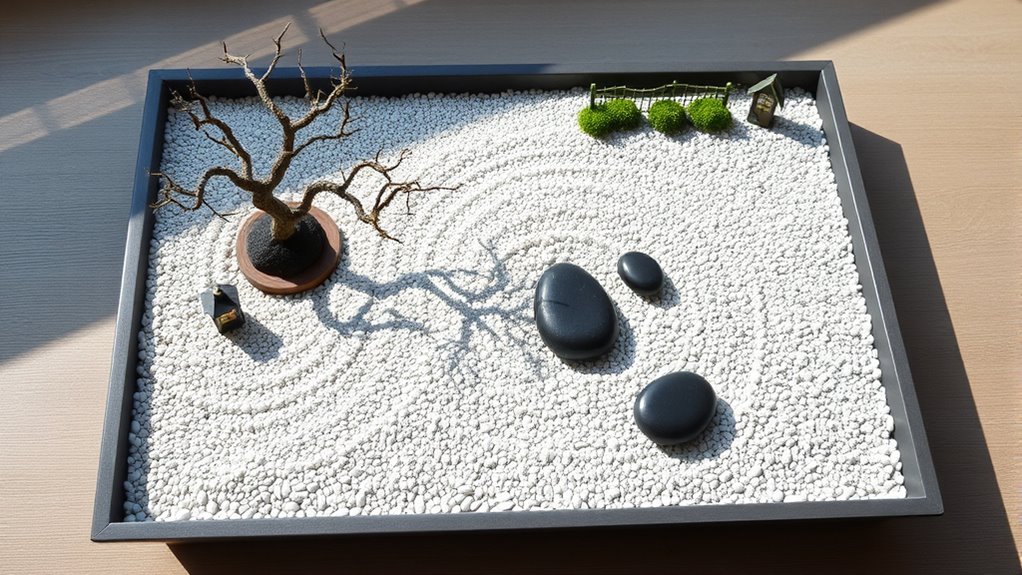

To create a Japanese Zen garden in a tray, select a shallow container and fill it with smooth sand or fine gravel. Place rocks thoughtfully to serve as focal points or symbolic mountains and islands, ensuring the arrangement feels balanced yet natural. Use a simple rake to draw calming patterns, like waves or spirals, focusing on deliberate, gentle strokes. Pay attention to spacing and symmetry, and keep practicing your placement and raking techniques to deepen your mindfulness and serenity.
Key Takeaways
- Select a shallow tray or container to serve as the garden’s base.
- Arrange rocks thoughtfully to mimic natural landscapes, avoiding symmetry for realism.
- Cover the tray with fine, smooth sand, representing water or open space.
- Use a rake to create calming patterns, such as lines or waves, enhancing mindfulness.
- Regularly adjust rocks and patterns to maintain balance and cultivate a sense of tranquility.
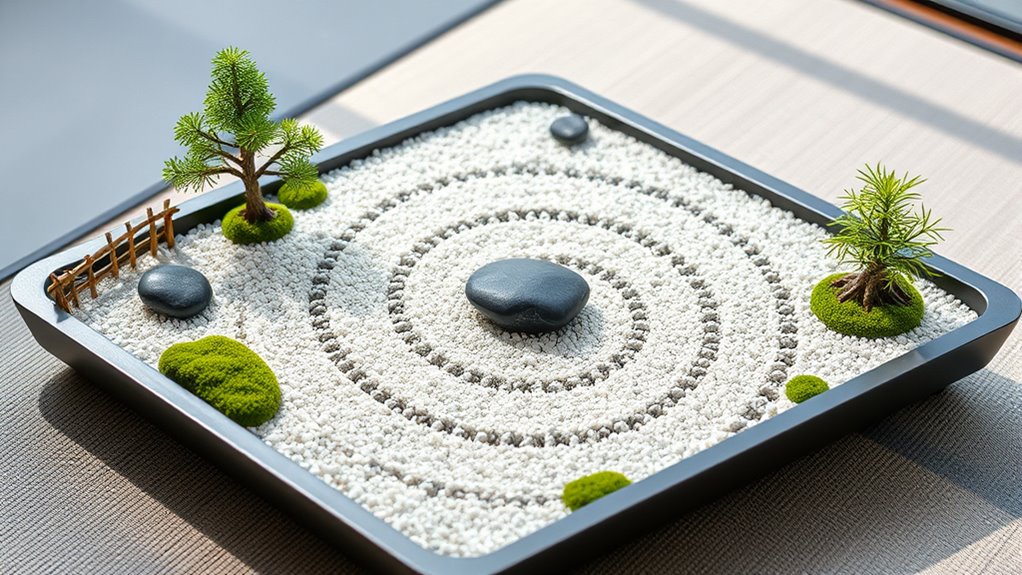
A Japanese Zen garden in a tray offers a peaceful and portable way to bring mindfulness into your daily routine. Creating this miniature sanctuary involves thoughtful design, especially when it comes to rock arrangements and sand raking techniques. You’re essentially crafting a tiny landscape that encourages calmness and focus, so every element should be deliberate.
A portable Zen garden transforms mindfulness into a calming, deliberate practice in your everyday life.
Start by choosing your rocks carefully. The placement of your rocks is vital because they serve as focal points and symbolically represent mountains or islands. You want to arrange them in a way that feels balanced yet natural, avoiding symmetry to mimic the irregularity of nature. Use a flat tray as your canvas, then position your rocks with intention, considering how they interact visually and spatially. A well-placed rock can anchor the scene, guiding your eye and inviting contemplation.
Once your rocks are set, it’s time to work on the sand. The sand represents water or open space, and how you rake it can considerably influence the garden’s overall harmony. Sand raking techniques are more than just aesthetic; they’re a form of meditation. As you rake, follow consistent patterns—such as straight lines, concentric circles, or wave motifs—that evoke tranquility. Keep your strokes smooth and even, maintaining a gentle touch to avoid disturbing the arrangement. Raking in a single direction can symbolize flow and calmness, helping you focus on the present moment. Incorporating an understanding of Zen philosophy can deepen your mindfulness practice as you tend to your garden.
The beauty of a Zen garden in a tray lies in its simplicity and the mindfulness it cultivates. As you work on the rock arrangements, pay attention to how each placement affects the overall balance. Adjust as needed, stepping back periodically to view the scene from different angles. When raking, stay present, noticing how the texture of the sand changes under your hand and how the patterns evolve with each stroke. This process isn’t just about aesthetics; it’s about grounding yourself and fostering a sense of serenity.

Zen Sand Garden for Desk with Rake, Rocks and Figures (Medium)
✔COMPLETE ZEN DECORATION KIT: Our mini Japanese zen sand garden kit includes all the accessories for a peacefully…
As an affiliate, we earn on qualifying purchases.
As an affiliate, we earn on qualifying purchases.
Frequently Asked Questions
What Materials Are Best for a Durable Zen Garden Tray?
For a durable Zen garden tray, you want materials like resin, ceramic, or teak wood, which withstand moisture and daily wear. Resin trays are lightweight and weather-resistant, while ceramic offers aesthetic appeal and sturdiness. Teak wood is naturally durable and resistant to rot. Consider durability factors such as water resistance, strength, and ease of cleaning when choosing your tray materials, ensuring your Zen garden stays beautiful over time.
How Often Should I Refresh the Gravel or Sand?
You should refresh the gravel or sand in your Zen garden about every six months, or as needed, to maintain its clarity and ritual significance. Seasonal adjustments are essential—refresh more often in spring and summer when dust and debris accumulate faster, and less in winter. Regularly raking and replenishing helps preserve the garden’s calming atmosphere, ensuring it remains a meaningful space for meditation and reflection.
Can I Incorporate Live Plants Into My Tray Garden?
Yes, you can incorporate live plants into your tray garden, but choose hardy options like succulent arrangements and moss cultivation. These plants thrive in the limited space and mimic the natural serenity of a Zen garden. Guarantee proper drainage and light, and avoid overwatering. Incorporating these plants adds a touch of nature, enhances tranquility, and creates a more authentic, calming experience in your miniature Zen landscape.
What Are Some Common Mistakes to Avoid?
You should avoid overcrowding your tray garden, which can make it look cluttered and disrupt the peaceful Zen vibe. Also, be mindful of improper scaling; choose miniature plants and accessories that suit the size of your tray to maintain harmony. Keep a balanced arrangement, and don’t overstuff the space. This ensures your garden remains serene and visually appealing, enhancing your meditative experience without feeling cramped or overwhelming.
How Do I Maintain the Tranquility of My Zen Garden?
To maintain the tranquility of your Zen garden, regularly clear debris and keep the sand smooth, creating a calming environment. Use gentle meditation techniques while admiring your decorative accents to deepen your sense of peace. Avoid over-cluttering, which disrupts harmony. Consistent maintenance, mindful meditation, and thoughtful placement of accents help preserve the garden’s serene atmosphere, making it a perfect space for reflection and relaxation.

Gardzen 100ft Dig-Free Landscape Edging Kit – 1.5" Flexible Heavy-Duty Garden Border with 120 Spikes, Easy Install Lawn Edging for Flower Beds, Pathways & Pavers – Black
Premium HDPE Durability: Crafted from industrial-grade HDPE to resist cracking in freezing winters and warping in heat up…
As an affiliate, we earn on qualifying purchases.
As an affiliate, we earn on qualifying purchases.
Conclusion
As you finish your tray Zen garden, remember that patience and perseverance pave the path to peace. By blending balance and beauty, you build a bond with your space, fostering feelings of fulfillment. Let your mindful moments melt away stress, making each element a metaphor for mindfulness. Stay steady, practicing patience as your garden grows—because true tranquility takes time. Cultivate calm, create clarity, and carry the calmness of your tiny temple into your everyday life.

Pilarmuture 6pcs Mini Zen Garden Rake Tool,DIY Sand Zen Garden Tools for Office,Tasteful and Elegant Zen Garden Tools,Meditation Rock Sand Garden Accessories(Beige)
【Enhance Your Zen Garden Creativity】Zen garden sand rakes can let your imagination expand with this prime quality bamboo…
As an affiliate, we earn on qualifying purchases.
As an affiliate, we earn on qualifying purchases.

12PCS Mini Zen Garden Rake Tools, 2 Sets Zen Garden Accessories, Small Sand Zens Gardens Kits for Home, Office, Desk, Gardens Decoration, Sand Painting Meditation Accessories
Package Includes: You will receive 12pcs mini zen garden tools, one set each of black and beige, containing…
As an affiliate, we earn on qualifying purchases.
As an affiliate, we earn on qualifying purchases.