The return of Myers-Briggs and Human Design in pop culture means you now see these tools everywhere—from social media posts to podcasts and conversations. They help you understand yourself and others better, shaping how you approach relationships, work, and personal growth. Their popularity makes self-discovery engaging and accessible, turning complex traits into shared experiences. Keep exploring, and you’ll discover even more about how these frameworks are influencing today’s cultural landscape.
Key Takeaways
- Myers-Briggs and Human Design have become mainstream topics through social media, podcasts, and popular culture.
- These tools are now used to explain behaviors, identity, and personal growth in everyday conversations.
- Memes, quizzes, and influencer content make discovering personality types engaging and accessible online.
- Their cultural resurgence enhances self-awareness, empowering individuals and fostering community connections.
- The integration of these assessments into pop culture promotes a more open, accepting approach to identity and self-discovery.
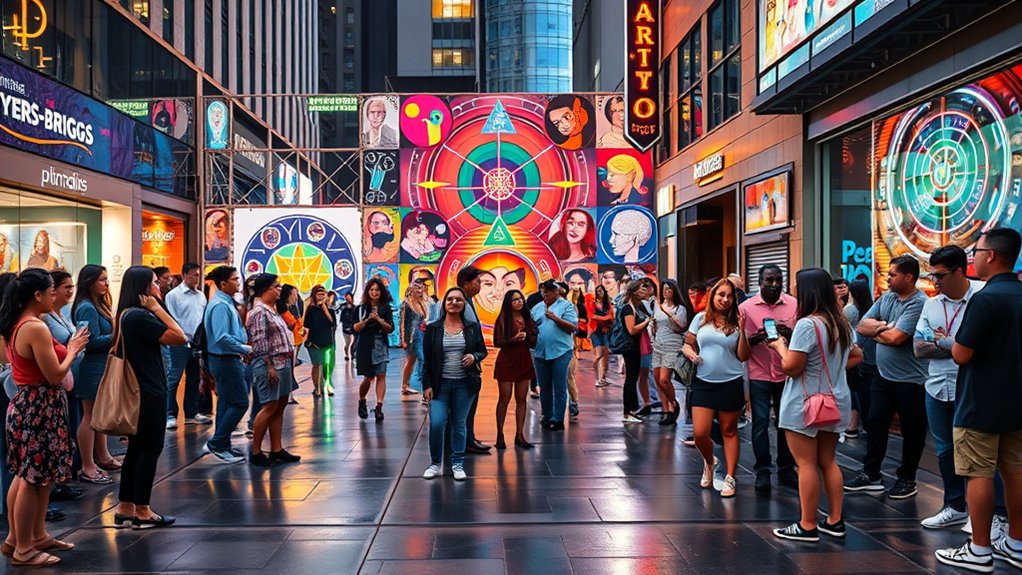
In recent years, Myers-Briggs and Human Design have made a noticeable comeback in pop culture, fascinating a new generation enthusiastic to understand themselves better. These personality assessments have shifted from niche tools used by psychologists to mainstream topics found in social media feeds, podcasts, and even workplace conversations. The pop culture influence of these systems has made self-discovery more accessible and engaging, encouraging people like you to explore your identity in ways that feel both fun and meaningful. With their rise in popularity, you might have noticed friends, influencers, or even brands referencing your personality type or Human Design chart to explain behaviors, preferences, or compatibility. This widespread adoption fuels a sense of community and shared understanding, making it easier to connect with others over common traits or differences.
The appeal of Myers-Briggs and Human Design lies in their ability to provide clear frameworks for understanding complex human behaviors. These tools offer insights into why you might be energized by certain activities or drawn to particular careers, giving you a sense of clarity and purpose. As these assessments gain more influence in pop culture, they shape how you see yourself and others. You may find yourself explaining your tendencies to friends or even using your type to navigate social situations, relationships, or work dynamics. The impact of pop culture influence has made these personality assessments feel less clinical and more like personalized identities that you can embrace, share, and even celebrate.
Moreover, social media platforms have played a pivotal role in amplifying the reach of Myers-Briggs and Human Design. Memes, quizzes, and influencer content often center around discovering your type or chart, making the process feel approachable and even entertaining. This democratization of self-knowledge means you don’t need a background in psychology to engage with these systems; instead, they become part of the broader cultural conversation about identity and personal growth. The visibility of these assessments in pop culture encourages you to explore your traits, understand your strengths, and accept your quirks without judgment. Recognizing how gaslighting tactics can distort perceptions in social interactions further enhances your ability to interpret behaviors and strengthen your self-awareness. It’s not just about labeling yourself but about feeling empowered by the insights these tools can provide, turning self-awareness into a shared cultural experience.
Frequently Asked Questions
How Accurate Are Myers-Briggs and Human Design Tests?
You might find Myers-Briggs and Human Design tests somewhat accurate, but they often rely on personality stereotypes that can oversimplify your unique traits. While they offer insight, authenticity concerns remind you that these tests shouldn’t define you entirely. Use them as tools for self-discovery rather than strict labels, and remember, your true personality is more complex than any test can capture.
Can These Systems Predict Future Behavior Accurately?
Think of personality prediction and behavioral forecasting as weather vests—helpful guides but not foolproof umbrellas. These systems can hint at your tendencies and likely responses, but they can’t see around the next corner. Your future actions are a mosaic of choices, circumstances, and shifts. So, while they offer insight, don’t rely solely on them to predict exactly what you’ll do next—they’re more like helpful compass points than crystal balls.
Are Myers-Briggs and Human Design Scientifically Validated?
You should know that Myers-Briggs and Human Design lack strong scientific validation for personality classification. While many people find them insightful, these systems haven’t been rigorously proven to reliably predict behavior. Scientific validation requires consistent, empirical evidence, which these frameworks currently don’t have. So, approach them as helpful tools for self-reflection rather than definitive assessments backed by scientific research.
How Do These Systems Influence Celebrity Culture?
You see how Myers-Briggs and Human Design shape celebrity culture by influencing celebrity branding, making stars seem more relatable or mysterious based on their profiles. Fans engage more deeply when celebrities share their types, fueling conversations and loyalty. This personalization boosts fan engagement, helping celebrities craft authentic images that resonate. Ultimately, these systems help stars connect with audiences on a personal level, strengthening their cultural presence and influence.
Can Personality Types Change Over Time?
Sure, your personality types can change over time, much like your taste in questionable reality TV. While core traits show personality stability, developmental changes occur as you grow, learn, and experience life’s chaos. So, don’t panic if you suddenly find yourself questioning whether you’re an INTJ or an ESFP—personality is fluid, not set in stone, allowing you to evolve beyond your initial typing, one quirky phase at a time.
Conclusion
So, as you see, Myers-Briggs and Human Design are making a comeback in pop culture, helping you understand yourself better—kind of like decoding the Rosetta Stone. Just remember, even in a world obsessed with tech and trends, these tools remind us that self-awareness isn’t a new invention but an age-old quest. Embrace the journey, and don’t forget: sometimes, the keys to your future are hidden in the past.