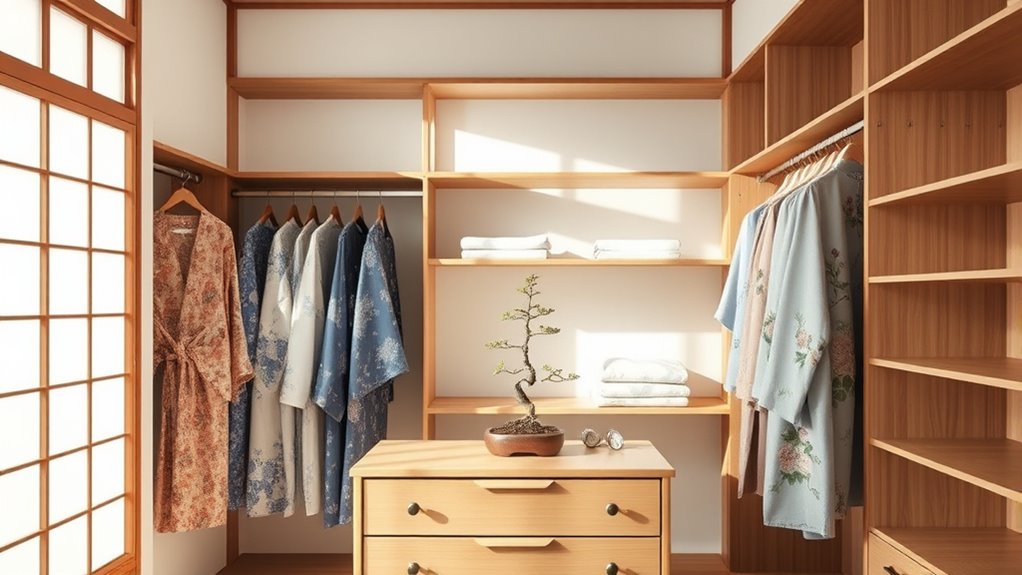

The KonMari Method reflects cultural values of harmony and respect, encouraging you to tidy with mindfulness and gratitude. It emphasizes keeping only items that spark joy, which aligns with traditions that honor emotional and spiritual connections to belongings. This approach fosters a peaceful, organized space that supports well-being and sustainability. By understanding these cultural influences, you can transform decluttering from a chore into a meaningful, respectful practice—exploring further reveals how these principles shape a mindful lifestyle.
Key Takeaways
- The KonMari Method emphasizes cultural values of respect, mindfulness, and harmony, influencing decluttering practices in Japan and beyond.
- Japanese culture’s emphasis on minimalism and appreciation for craftsmanship aligns with the KonMari focus on joyful possessions.
- Cultural attitudes toward emotional attachment shape how individuals approach discarding items across different societies.
- The method’s emphasis on gratitude and reverence for belongings reflects traditional Japanese values and spiritual principles.
- Adoption of the KonMari approach varies globally, integrating local cultural norms around space, clutter, and emotional connection to possessions.

Decluttering can feel overwhelming, but the KonMari Method offers a clear and effective approach to transforming your space. At its core, this method encourages you to focus on what truly sparks joy, guiding you to evaluate each item based on your emotional attachment rather than just utility. This focus not only helps you declutter but also promotes sustainable organizing by encouraging you to keep only what genuinely benefits and uplifts you. When you handle your belongings with intention, you become more conscious of how your choices impact the environment, reducing waste and fostering a more sustainable lifestyle.
One of the unique aspects of the KonMari Method is how it addresses emotional attachment. It’s natural to feel connected to certain possessions—perhaps a gift from a loved one or a memento of a special memory. Instead of dismissing these feelings, the method invites you to honor your attachments while making mindful decisions. You learn to appreciate the sentimental value of your belongings without letting it hinder your progress or clutter your space unnecessarily. This approach helps you develop a healthier relationship with your possessions, transforming decluttering from a chore into a reflective process.
As you sort through your items, you’ll find that the physical act of tidying becomes an emotional journey. You’re not just discarding things; you’re evaluating what truly serves your life and aligns with your values. This mindful process ensures that you’re not just throwing things away but making deliberate choices that foster a more organized and intentional environment. Over time, you’ll notice a shift in how you view your belongings—less as burdens and more as meaningful parts of your life.
The KonMari Method also emphasizes the importance of proper storage once you’ve decided what to keep. Sustainable organizing involves more than just decluttering—it’s about creating a system that maintains order without excess. You’ll learn to fold and store items efficiently, reducing clutter and making it easier to maintain your tidy space. This not only benefits the environment by minimizing waste but also makes your daily routine smoother and more enjoyable. Additionally, understanding the importance of contrast ratio and color accuracy in visual presentation can enhance how you arrange and display your belongings, ensuring your space is both functional and aesthetically pleasing. The key is clarity and consistency, which helps reinforce your commitment to a clutter-free lifestyle.
Ultimately, embracing this cultural approach to tidying can lead to a more peaceful, intentional home. By respecting your emotional attachments and practicing sustainable organizing, you’ll find that decluttering becomes less of a daunting task and more of a fulfilling act of self-care. It’s about creating a space that reflects who you are and supports your well-being, all while honoring the environment and your feelings.
Frequently Asked Questions
How Does Cultural Background Influence Decluttering Habits?
Your cultural background shapes your decluttering habits through cultural rituals and material values. If your culture emphasizes minimalism or spiritual practices, you’re more likely to keep only meaningful items. Conversely, cultures that value abundance may lead you to hold onto more possessions. These influences guide what you consider necessary or sentimental, making your approach to decluttering deeply personal and rooted in your cultural identity.
Are There Specific Cultural Items to Prioritize When Tidying?
You should prioritize cultural heirlooms and items tied to traditional rituals when tidying. These objects carry emotional and cultural significance, making them essential to preserve. By carefully sorting through heirlooms and ritual items, you honor your heritage while decluttering. Keep what truly resonates with you, and consider donating or repurposing less meaningful items. This approach helps maintain cultural identity while creating a more organized and meaningful space.
How Do Different Cultures View Attachment to Possessions?
Different cultures view attachment to possessions through cultural symbolism and material value. You might find that some see belongings as part of identity or spiritual significance, making it harder to part with them. Others prioritize practicality over sentimentality, valuing items for their function. Recognizing these perspectives helps you approach decluttering with sensitivity, respecting cultural differences while deciding what truly adds value to your life.
Can the Konmari Method Be Adapted for Communal Living Spaces?
You can absolutely adapt the KonMari method for shared spaces, turning clutter into harmony like a symphony. Embrace communal routines that honor everyone’s belongings, treating each item with respect. By tidying together, you create a sanctuary where shared spaces breathe easy, fostering connection rather than chaos. Think of it as weaving individual threads into a collective tapestry—each person’s effort brightens the whole, making tidying a joyful group dance.
What Role Does Spirituality Play in Cultural Decluttering Practices?
Spirituality often plays a significant role in cultural decluttering practices by emphasizing spiritual cleansing and respecting sacred possessions. You might find that letting go of material items is seen as clearing negative energy or honoring spiritual beliefs. You’re encouraged to handle sacred possessions with reverence, ensuring they retain their spiritual significance. This approach helps you connect more deeply with your cultural values and creates a sense of harmony during the decluttering process.
Conclusion
Imagine walking into a room where everything sparkles with purpose, each item finding its perfect place like stars in a clear night sky. By embracing decluttering and the KonMari method, you create a space that’s calm, inviting, and filled with intention. It’s more than tidying; it’s a cultural journey toward harmony. When you let go of what no longer serves you, your surroundings become a sanctuary—bright, peaceful, and ready for new possibilities to unfold.