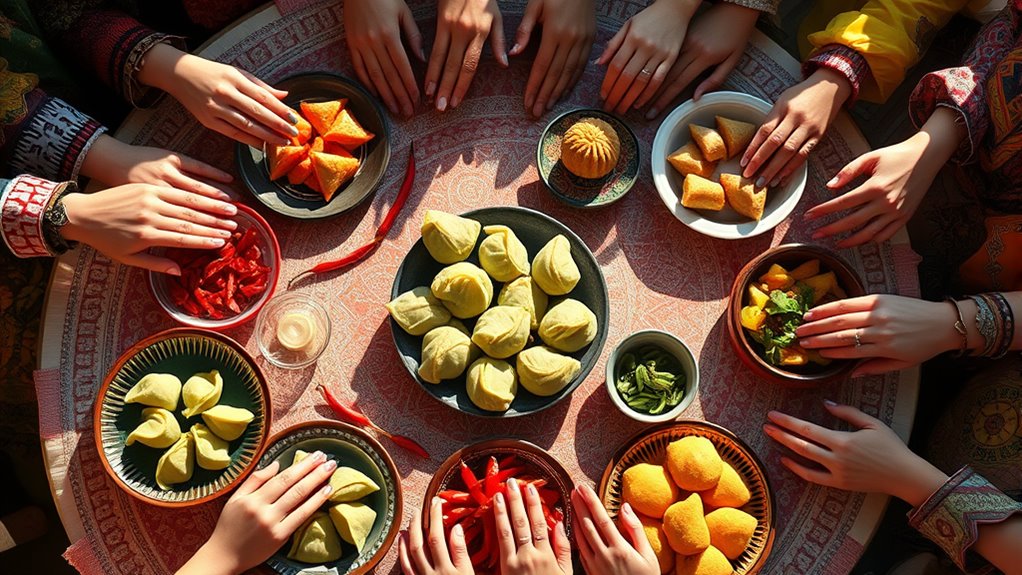

Food rituals play a vital role in shaping your cultural identity by connecting you to traditions, ancestors, and community. When you participate in preparing and sharing traditional dishes, you honor your heritage and reinforce a sense of belonging. These rituals also promote wellness by fostering mindful eating, emotional connection, and spiritual grounding. Continuing your exploration will reveal how these sacred practices help preserve your culture and support overall well-being through meaningful rituals.
Key Takeaways
- Food rituals serve as vital expressions of cultural identity, strengthening community bonds and preserving traditions across generations.
- Participating in traditional food practices honors ancestors and maintains culinary heritage amid modern influences.
- Rituals during food preparation and sharing promote mindfulness, emotional connection, and overall well-being.
- Food rituals act as resilience tools, safeguarding cultural roots during times of change or uncertainty.
- Engaging in these practices nurtures both physical health and spiritual wellness, fostering a sense of belonging and continuity.
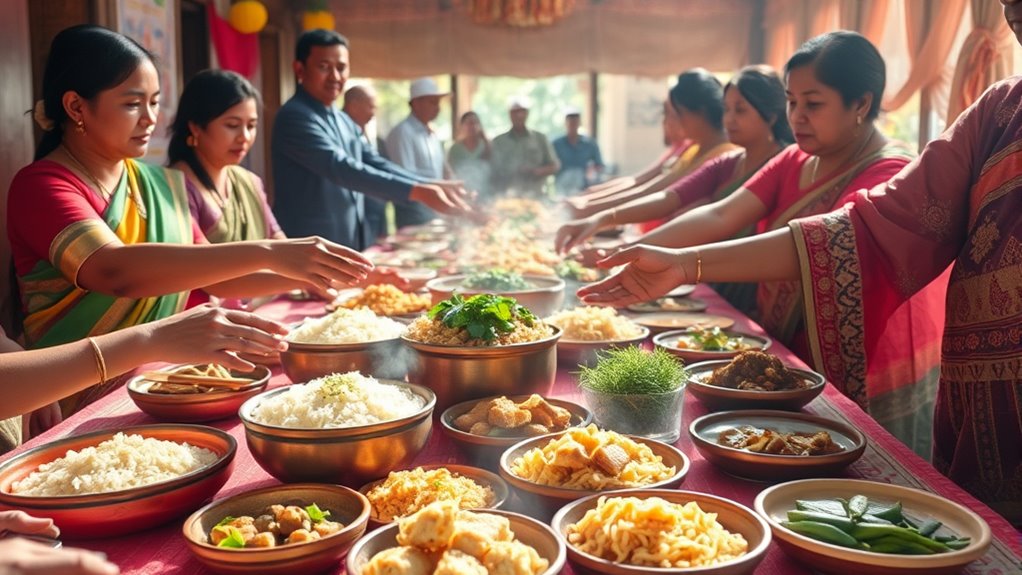
Food rituals serve as essential expressions of cultural identity, shaping how communities celebrate their traditions and connect across generations. These rituals are more than just eating habits; they embody sacred traditions that carry deep spiritual and cultural significance. When you participate in these rituals, you’re actively engaging in a living piece of your community’s culinary heritage, passing down stories, values, and beliefs through generations. For example, preparing and sharing traditional dishes during festivals or family gatherings isn’t just about nourishment—it’s a way to honor ancestors and preserve your cultural roots. These practices reinforce a sense of belonging and continuity, reminding you of your place within a larger cultural tapestry.
Your participation in food rituals also influences your wellness, both physically and emotionally. Engaging in these sacred traditions fosters mindfulness and intentionality, helping you slow down and savor more than just the taste of food. It becomes a moment of connection—whether with loved ones, ancestors, or your community—that nurtures your emotional well-being. The act of preparing traditional dishes often involves specific gestures, prayers, or blessings, which can create a sense of spiritual grounding. These rituals serve as a form of mindfulness, reducing stress and promoting a sense of calm. Additionally, adhering to traditional recipes often means consuming ingredients that have been part of your cultural culinary heritage for generations, offering nutritional benefits aligned with your cultural practices.
Participating in food rituals also helps you maintain a sense of identity during times of change or uncertainty. When you adhere to sacred traditions, you reaffirm your cultural roots and resist the erosion of heritage caused by modern influences. This act of cultural preservation strengthens your sense of self and community, giving you resilience in challenging times. It’s not just about the food itself but the meaning behind it—how each ingredient, each step, and each shared meal ties you to your ancestors’ wisdom and collective history. By honoring these culinary traditions, you’re actively keeping your cultural identity alive, ensuring that future generations will continue to understand and value their heritage.
In essence, food rituals serve as a bridge between the past and the present, connecting you to your cultural identity in a deeply meaningful way. They reinforce sacred traditions and safeguard your culinary heritage, providing emotional comfort and promoting wellness. You become a living part of this ongoing story, where every meal is an act of cultural preservation and personal healing. It’s through these rituals that your community’s history, beliefs, and values continue to thrive, nourishing not just your body but also your soul.

Shabbat: Recipes and Rituals from My Table to Yours
As an affiliate, we earn on qualifying purchases.
As an affiliate, we earn on qualifying purchases.
Frequently Asked Questions
How Do Food Rituals Influence Mental Health?
Food rituals can positively influence your mental health by fostering mindfulness practices, helping you stay present during meals and reduce stress. These rituals also strengthen emotional resilience, providing comfort and stability during challenging times. When you engage in shared food traditions, you build a sense of community and belonging, which boosts your mood and overall well-being. Embracing these practices helps you nurture both your body and mind.
Are Food Rituals Consistent Across Different Generations?
Food rituals are not always consistent across generations, as generational change often introduces new traditions and practices. Yet, you can see the effort to preserve tradition through family recipes and shared meals. You adapt, evolve, and honor your roots while embracing new influences. This balance between change and preservation keeps food rituals meaningful, connecting you across time, strengthening cultural identity, and nurturing wellness in your daily life.
Can Adopting New Food Rituals Improve Well-Being?
Yes, adopting new food rituals can boost your well-being. Embracing culinary traditions from different cultures introduces you to diverse flavors, fostering food nostalgia and enriching your palate. Trying new rituals creates meaningful experiences, reduces stress, and promotes mindfulness during meals. By blending old and new practices, you can enhance your mental health, build connections, and deepen your appreciation for cultural diversity, ultimately supporting a healthier, more fulfilled lifestyle.
What Role Do Food Rituals Play in Community Bonding?
Food rituals are like the glue that holds communities together, strengthening bonds through shared experiences. You participate in cultural symbolism and communal celebrations that create a sense of belonging and tradition. By gathering around food, you foster trust, unity, and collective identity. These rituals remind you of your roots and connect you with others, making community bonding a powerful and nourishing part of life.
How Do Food Rituals Evolve With Cultural Globalization?
As cultural globalization spreads, you notice food rituals blending through fusion cuisine, creating new traditions. You might see culinary authenticity shift as chefs combine flavors from different cultures, making rituals more inclusive yet diverse. This evolution reflects how communities adapt, maintaining their essence while embracing change. You can participate in these evolving rituals, experiencing a richer, interconnected culinary landscape that celebrates both heritage and innovation.

Secrets Of The Southern Table: A Food Lover's Tour of the Global South – A Modern Cookbook Celebrating Cultural Heritage with Traditional and Contemporary Southern Recipes
As an affiliate, we earn on qualifying purchases.
As an affiliate, we earn on qualifying purchases.
Conclusion
By embracing food rituals, you weave a vibrant tapestry of cultural identity that grounds you amidst life’s chaos. These traditions are the heartbeat that keeps your heritage alive, nourishing not just your body but your spirit. As you partake in these rituals, you plant seeds of wellness and belonging, creating a symphony of connection that echoes through generations. In this dance of flavors and customs, you find your roots and flourish in the richness of your cultural story.

Mindful Eating: A Guide to Rediscovering a Healthy and Joyful Relationship with Food (Revised Edition)
As an affiliate, we earn on qualifying purchases.
As an affiliate, we earn on qualifying purchases.

The Italian Family Kitchen: Authentic Recipes That Celebrate Homestyle Italian Cooking
As an affiliate, we earn on qualifying purchases.
As an affiliate, we earn on qualifying purchases.