Adopting circular fashion encourages you to make more mindful wardrobe choices, focusing on quality and sustainability rather than fast fashion trends. You’ll develop habits like repairing, responsibly shopping, and reusing clothing, which reduces environmental impact. This shift fosters a lifestyle rooted in durability, minimal waste, and thoughtful consumption. Over time, it transforms how you value clothing, making eco-conscious decisions second nature—if you keep exploring, you’ll discover even more ways this approach can benefit your life.
Key Takeaways
- Promotes mindful wardrobe choices, encouraging consumers to prioritize quality and durability over fast fashion.
- Encourages sustainable shopping habits, including repairing, reusing, and recycling clothing items.
- Fosters a more intentional relationship with clothing, reducing impulse buying and promoting thoughtful consumption.
- Inspires participation in circular practices like thrift shopping, clothing swaps, and upcycling projects.
- Leads to lifestyle shifts emphasizing environmental responsibility and long-term garment care.
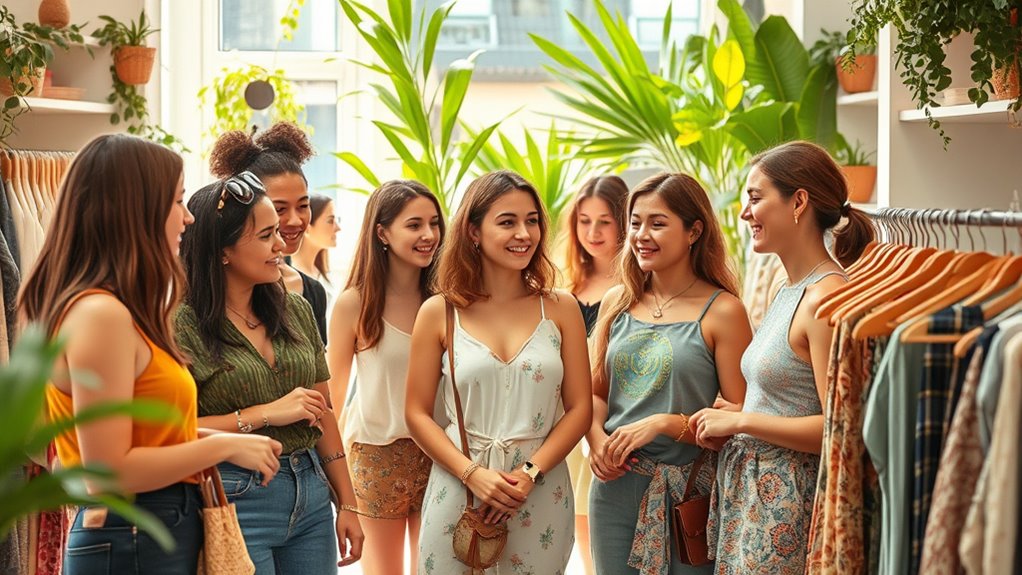
As awareness of environmental issues grows, circular fashion is increasingly influencing how you approach your wardrobe choices. You’re beginning to realize that sustainable shopping isn’t just a trend; it’s a mindset that can considerably reduce your environmental footprint. Instead of constantly buying new clothes, you’re exploring ways to extend the life of what you already own. This shift encourages you to prioritize clothing longevity, seeking out quality pieces that last longer rather than fleeting, fast-fashion items that wear out quickly. By making mindful decisions, you’re contributing to a more sustainable cycle where garments are reused, repurposed, or recycled, minimizing waste and conserving resources.
Circular fashion encourages mindful wardrobe choices and sustainable practices that reduce waste and extend clothing lifespan.
Sustainable shopping becomes more than just a buzzword; it transforms into a practical approach that influences your daily habits. You start researching brands committed to circular principles—those that design for durability, offer repair services, or encourage clothing swaps. You’re more intentional with your purchases, asking if the item can be repaired or repurposed in the future, rather than opting for cheap, disposable fashion. This shift not only benefits the environment but also encourages you to build a wardrobe rooted in quality rather than quantity. As a result, you find yourself investing in timeless pieces that serve multiple seasons, reducing the impulse to constantly replace worn-out items.
Clothing longevity plays a central role in this transformation. You realize that by caring for your clothes properly—following washing instructions, repairing small tears, or donating items you no longer wear—you’re extending their lifespan. This practice aligns with circular fashion’s goal of creating a closed-loop system where garments are continuously reused or recycled. You start to see your wardrobe as a resource, not just a collection of individual outfits. Each piece becomes a part of a sustainable cycle, decreasing your reliance on fast fashion and reducing landfill waste. Additionally, understanding the importance of necessary cookies helps you recognize how data collection and website functionality support your sustainable shopping efforts.
This mindset also encourages you to participate in clothing exchanges, thrift shopping, or upcycling projects, reinforcing the idea that fashion can be both stylish and eco-friendly. By embracing clothing longevity and sustainable shopping, you’re not only making environmentally conscious choices but also cultivating a more intentional, thoughtful relationship with your wardrobe. Over time, these habits become second nature, shaping your lifestyle into one that values durability, quality, and sustainability. Circular fashion isn’t just about what you buy—it’s about transforming your entire approach to fashion into a more responsible and mindful practice that benefits both the planet and your personal style.
Frequently Asked Questions
How Does Circular Fashion Influence Consumers’ Purchasing Frequency?
Circular fashion tends to slow down your purchasing frequency because it encourages you to buy fewer, higher-quality items rather than constantly opting for fast fashion. Your purchase motivation shifts toward sustainability and durability, making you more intentional with each buy. Instead of frequent shopping sprees, you focus on investing in pieces that last longer, reducing waste and aligning your habits with environmentally conscious values.
What Are the Environmental Benefits of Adopting Circular Fashion Habits?
Ever wonder how your choices can help the planet? By adopting circular fashion habits, you promote sustainable resource use, ensuring materials are reused and recycled instead of wasted. This considerably reduces your carbon footprint, which helps combat climate change. You’re not just updating your wardrobe; you’re supporting a healthier environment. Isn’t it rewarding to make fashion more eco-friendly while enjoying stylish, durable clothing? Your actions truly make a difference.
How Do Circular Fashion Practices Affect Brand Loyalty?
Circular fashion practices boost your brand loyalty by aligning with sustainable branding and ethical consumerism. When you see brands embracing eco-friendly materials and recycling initiatives, you’re more likely to trust and stay loyal to them. This commitment resonates with your values, encouraging repeated purchases. As a result, brands that prioritize sustainability foster stronger emotional connections, making you feel part of a positive change and reinforcing your loyalty to their sustainable and ethical initiatives.
Are There Demographic Differences in Circular Fashion Adoption?
You’ll find that demographic preferences influence how quickly you adopt circular fashion; younger consumers often embrace it more readily, driven by eco-conscious values. However, adoption barriers like limited awareness or higher costs may slow others down. Recognizing these differences helps you understand that age, income, and lifestyle shape your engagement with circular fashion, encouraging brands to tailor their approaches and motivate broader participation across diverse demographics.
What Challenges Do Consumers Face When Shifting to Circular Fashion?
When shifting to circular fashion, you face challenges like cost barriers that make eco-friendly options seem expensive. Social perceptions can also influence your decision, causing concerns about how others view sustainable choices. You might worry about fitting in or being judged. Overcoming these obstacles requires awareness that circular fashion benefits the environment and can be affordable, helping you make more conscious, sustainable choices without feeling pressured by social norms.
Conclusion
As you embrace circular fashion, you might notice your habits subtly shifting—buying less, reusing more, and feeling good about reducing waste. It’s almost like the planet’s positive change coincides with your own lifestyle. When you choose sustainable options, you become part of a larger movement that’s transforming consumer habits worldwide. So, next time you recycle or opt for eco-friendly brands, remember—you’re not just making a difference; it’s also shaping your everyday life in unexpected, meaningful ways.