
TL;DR

Get beauty and skincare favorites delivered free with Prime
- Fast, free delivery on millions of items
- Prime Video, Amazon Music and more included
- Member-only deals all year
Glamour UK has spotlighted several ’80s-inspired hairstyles as ideas for autumn 2026, including voluminous blowouts, curly bobs, half-up styles and natural curls. The report connects the looks to modern celebrity examples, but does not establish how widely the styles are being adopted or cite sales, runway data or industry forecasts.
Glamour UK has identified seven hairstyles drawn from the 1980s as inspiration for autumn 2026, including side-parted blowouts, curly bobs and voluminous half-up styles. The fashion publication frames them as part of a renewed interest in maximalist hair, but its report is a trend roundup rather than evidence that the looks are widespread across salons or consumers.
The roundup links familiar styles and figures from the decade with contemporary celebrity references. It pairs Princess Diana’s short, softly voluminous page-boy style with Emma Stone’s grown-out pixie bob, and Cindy Crawford’s glossy, side-parted blowout with a 2026 look from Kaia Gerber. The comparisons point to shared features—shape, movement and volume—rather than exact reproductions.
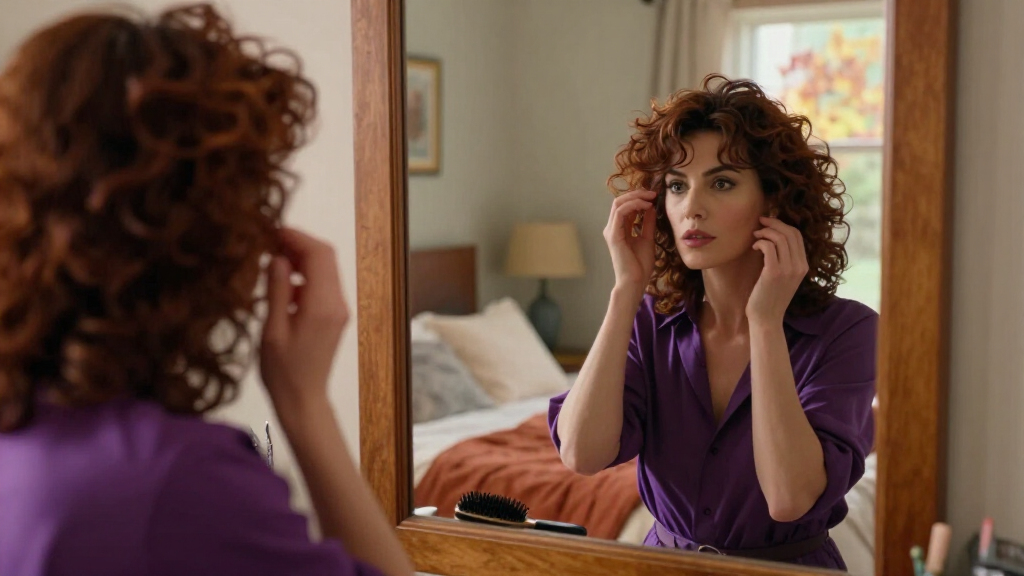
Other pairings include Whitney Houston’s textured curly bob and an Ayo Edebiri look from 2025, plus Olivia Newton-John’s high half-updo and a Dakota Johnson style from 2025. The article also cites Julia Roberts as inspiration for messy curls, with Natasha Lyonne as a more recent reference, and connects Diana Ross’s natural, full curls with a 2026 look from Olivia Dean.
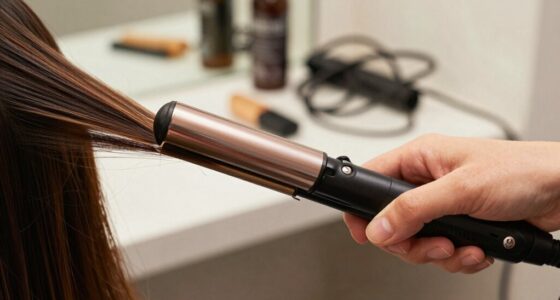
The practical suggestions are based on styling methods described in the source. For a Crawford-inspired blowout, it recommends drying hair upside down, using heat rollers directed away from the face and finishing with flexible-hold hairspray. For loose, defined curls, it suggests mousse or volumising foam and a curling iron, followed by loosening the curls with fingers. These are editorial styling tips, not reported professional guidance for every hair type.
Why ’80s Hair Fits Autumn Styling
The roundup’s point is that hair can be a prominent part of a look, not just its finishing detail. Its references span cropped shapes, straight blowouts and natural curls, giving readers several ways to interpret the decade’s emphasis on personality without choosing one uniform trend.
For readers planning a salon appointment, the examples offer visual references that can be adapted to individual texture and length. The article repeatedly favors contemporary interpretations over copying a historic celebrity style exactly. That distinction matters: the headline presents a seasonal fashion direction, while the examples show how familiar silhouettes can be adjusted for current tastes.
The report does not quantify interest or establish that consumers are changing their routines. Its relevance is chiefly editorial: it gathers celebrity comparisons and styling ideas ahead of the autumn season, when readers and stylists may be looking for fresh references.
As an affiliate, we earn on qualifying purchases.
From ’80s Volume to Modern Texture
The original styles emerged from a decade associated in the article with bold clothes, strong silhouettes and a “more is more” approach. Famous looks ranged from Madonna’s changing punk and rocker influences to Houston’s teased texture, Cyndi Lauper’s colorful cuts and Diana’s carefully shaped short hair. Scrunchies, wide headbands, hairspray and gel also formed part of the period’s visual vocabulary.
Glamour UK says the current appeal is tied to a return of maximalism, but its supplied report does not name a particular runway, designer collection or survey as the basis for that assessment. It instead builds its case through celebrity comparisons, including examples dated 2025 and 2026. The roundup also distinguishes between a style’s original moment and its later influence: for example, it traces the round-brush blowout technique to earlier decades, while noting its association with Crawford in the 1980s.
The article’s broader message is less about reproducing period styling products or levels of back-combing and more about retaining volume, movement and an individual finish. Its suggestions include natural curls and softer, touchable shapes alongside more structured blowouts.
““The point isn’t to try to replicate Diana’s exact hairstyle, but to learn how to wear your own natural texture with the same ease and personality.””
— Glamour UK
As an affiliate, we earn on qualifying purchases.
How Broad Is the Comeback?
The source does not establish how widespread the trend is, or whether salons, consumers or fashion labels are adopting these styles at a measurable rate. It provides no survey results, sales figures, runway analysis or named industry forecasts. “Making a comeback” is therefore best understood as the publication’s editorial assessment, not a quantified market finding.
Some celebrity examples are identified by year, but the material does not explain where or when each look appeared, or whether the celebrities or their stylists intended to reference the 1980s. The supplied text also ends during a section on the pineapple updo, so it does not provide enough information to describe that style’s full treatment in the original article.
It is also unclear how the suggested techniques would work for different hair lengths, textures or levels of heat tolerance. Readers considering heat styling should use tools carefully and follow product guidance; the source does not offer tailored safety advice.
As an affiliate, we earn on qualifying purchases.
More Seasonal Hair Coverage Ahead
Glamour UK presents the roundup as inspiration for a future salon visit, rather than announcing a scheduled industry event or a formal trend forecast. The next practical step for readers is to choose a reference image and discuss how its shape, volume and styling demands could be adapted to their own hair with a stylist.
Whether the looks gain broader traction should become clearer through autumn coverage, salon offerings and additional reporting on consumer or fashion-industry adoption. No follow-up date, named designer rollout or measurement of the trend is provided in the source material.
As an affiliate, we earn on qualifying purchases.
Key Questions
Which ’80s hairstyles does the report highlight for autumn 2026?
It names a fashion page-boy bob, a voluminous side-parted blowout, a curly bob, a half-updo, messy curls, natural curls and a pineapple updo. The supplied source text cuts off as it begins discussing the last style.
Does the report show that ’80s hairstyles are already widespread?
No. Glamour UK describes them as returning trends and offers celebrity examples, but the supplied material includes no consumer survey, salon data or other measure of how widely the looks are being adopted.
Are the modern examples exact recreations of the original styles?
The roundup presents them as comparisons and inspiration, not exact copies. It emphasizes adapting details such as volume, fringe, curl pattern and shape to a modern look and individual hair texture.
What styling methods does the article suggest?
For a voluminous blowout, it describes upside-down blow-drying, heat rollers and flexible-hold hairspray. For messy curls, it suggests mousse or volumising foam, curling from the roots and loosening the curls with fingers.
Source: rss
Halloween Picks
halloween
As an affiliate, we earn on qualifying purchases.