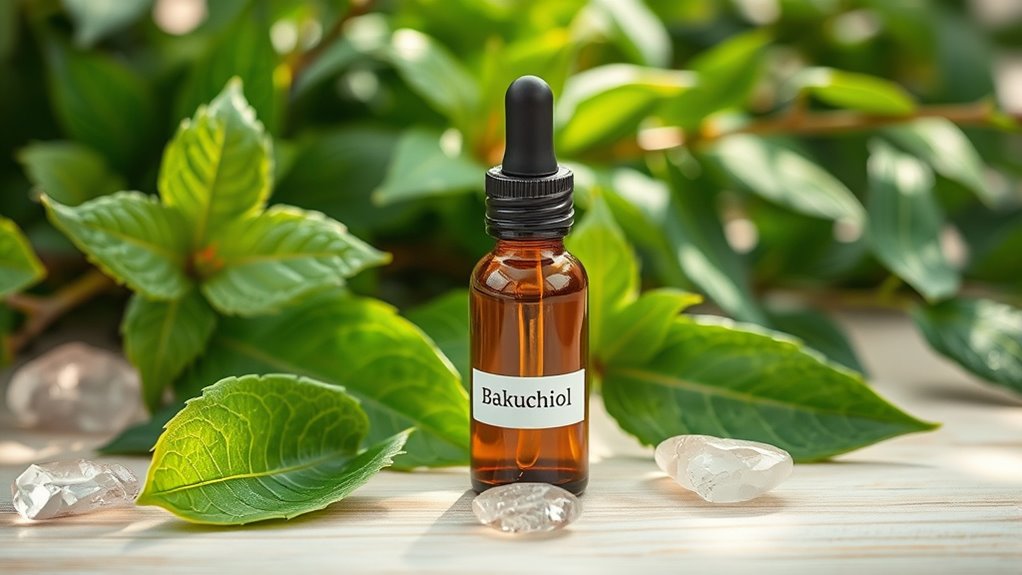

If you’re seeking plant-based alternatives to retinol, bakuchiol is a popular option that offers similar skin-renewing benefits with less irritation. Derived from the Psoralea corylifolia plant, it helps boost cell turnover and smooth fine lines naturally. Beyond bakuchiol, ingredients like rosehip and sea buckthorn oils support skin health and glow. Exploring this natural route can lead to effective, gentler skincare solutions, and there’s more to discover to help you achieve youthful, radiant skin.
Key Takeaways
- Bakuchiol, derived from Psoralea corylifolia, is a natural, plant-based alternative to retinol that promotes skin renewal gently.
- Natural oils like rosehip and sea buckthorn support skin regeneration and brightness but do not fully replace retinol’s anti-aging effects.
- Plant-based ingredients offer safer, irritation-free options suitable for sensitive skin while delivering visible skin improvements.
- Increasing formulations incorporate natural actives, advancing the effectiveness of plant-based skincare alternatives to retinol.
- The future of natural skincare focuses on sustainable, safe, and effective ingredients that support youthful, radiant skin.
Are you looking for effective skincare options that deliver similar benefits to retinol without the potential irritation? If so, you’re not alone. Many people want the visible anti-aging and skin-renewing effects of retinol but struggle with dryness, redness, or sensitivity. The good news is that natural ingredients are stepping into the spotlight, offering safer, gentler options that still support skin health. This shift is part of a broader skincare innovation that emphasizes plant-based solutions, making it easier to achieve your skincare goals without compromising your skin’s comfort.
One of the most well-known plant-based alternatives to retinol is bakuchiol. Derived from the seeds and leaves of the Psoralea corylifolia plant, bakuchiol has garnered attention for its ability to promote cell turnover, smooth fine lines, and improve skin elasticity—just like retinol. However, unlike retinol, bakuchiol tends to be gentler and less likely to cause irritation. This makes it an appealing choice for those with sensitive skin or those who want to incorporate retinol-like benefits into their routine without the risk of redness and peeling. Thanks to ongoing skincare innovation, formulations containing bakuchiol are becoming more effective and accessible, providing a plant-based alternative that aligns with natural skincare philosophies.
Bakuchiol offers gentle, plant-based retinol benefits—improving skin firmness and smoothness without irritation.
Beyond bakuchiol, other natural ingredients are gaining recognition for their skin-renewing potential. Examples include rosehip oil, rich in vitamin A and antioxidants, which helps fade scars and promote a brighter complexion. Similarly, sea buckthorn oil offers nourishing fatty acids and vitamins that support skin regeneration. While these ingredients don’t replicate all retinol’s effects, they contribute to overall skin health and can enhance your skincare routine when combined thoughtfully.
The appeal of plant-based alternatives lies in their ability to harness skincare innovation while focusing on natural ingredients. This approach appeals to those seeking cleaner, more sustainable products that work harmoniously with the skin. Many brands now incorporate these ingredients into serums, creams, and oils, making it easier than ever to find products that fit your needs. As research continues, expect new formulations that amplify the benefits of these natural ingredients, bringing you closer to achieving youthful, radiant skin without the drawbacks of traditional retinoids.

EQQUALBERRY Bakuchiol Plumping Face Serum – Retinol Natural Alternative for Sensitive Skin, with Niacinamide & Hyaluronic Acid, Pore & Wrinkle Korean Skin Care (1.01oz / 30ml)
NATURAL ALTERNATIVE TO RETINOL: Experience the power of Bakuchiol, a natural alternative to retinol. Formulated with 5,000ppm of…
As an affiliate, we earn on qualifying purchases.
As an affiliate, we earn on qualifying purchases.
Frequently Asked Questions
How Does Bakuchiol Compare to Retinol in Anti-Aging Effectiveness?
You’ll find that clinical studies show bakuchiol is quite effective for anti-aging, matching retinol in reducing fine lines and wrinkles. Unlike retinol, bakuchiol boasts better ingredient stability and causes less irritation, making it suitable for sensitive skin. While retinol remains a gold standard, bakuchiol offers a natural, gentler alternative without sacrificing results, and ongoing research continues to confirm its promise as an effective anti-aging ingredient.
Are Plant-Based Retinol Alternatives Suitable for Sensitive Skin?
Like a delicate morning dew, plant-based retinol alternatives often offer gentle formulations perfect for sensitive skin. You’ll appreciate their softer touch, reducing allergen concerns while still delivering effective anti-aging benefits. Unlike traditional retinol, these options can soothe irritation and minimize redness. If you’re seeking a natural, nourishing approach that respects your skin’s fragility, plant-based retinol substitutes provide a harmonious balance, helping you achieve youthful radiance without harsh side effects.
Can Plant-Based Retinol Help With Acne and Hyperpigmentation?
Yes, plant-based retinol can help with acne and hyperpigmentation. As an effective acne treatment, it promotes cell turnover and reduces breakouts, while also diminishing dark spots and uneven skin tone. These plant-based retinol options work as hyperpigmentation remedies, offering a gentle alternative to traditional retinol. You’ll notice clearer, brighter skin over time, especially if you incorporate them into your skincare routine consistently.
What Are the Best Natural Ingredients to Combine With Bakuchiol?
Imagine your skincare routine as a vibrant garden—each ingredient working in harmony. To enhance bakuchiol, combine herbal extracts like chamomile and green tea for soothing benefits. Add vitamin boosters such as vitamin C or E to brighten and protect your skin. These natural partners amplify each other’s effects, creating a powerful, plant-based skincare symphony that nurtures your skin’s health and radiance.
How Long Does It Take to See Results From Plant-Based Retinol Alternatives?
You can expect to see visible improvements from plant-based retinol alternatives like bakuchiol within 4 to 8 weeks, depending on your skin type and concerns. Timing expectations vary, but consistent use is key. Some people notice smoother skin, reduced fine lines, or improved texture sooner, while others might take longer. Stay patient and committed, and you’ll likely start seeing positive changes in your skin’s appearance over time.

Andalou Naturals Age Defying Plant-Based Retinol Alternative Cream, 1.7 Ounce
Rejuvenating Cream: This gentle, antioxidant rich anti aging cream reduces the appearance of lines and wrinkles and improves…
As an affiliate, we earn on qualifying purchases.
As an affiliate, we earn on qualifying purchases.
Conclusion
If you’re searching for plant-based options that truly revolutionize your skincare, bakuchiol and other alternatives are your best bet. They’re gentle yet powerful, offering a natural glow without the harsh effects of traditional retinol. Embrace these botanical wonders and watch your skin transform—it’s like revealing a secret weapon in your beauty arsenal. Don’t settle for less when nature has provided a solution that can make you feel radiant and confident every day.

The Ordinary 100% Organic Cold-Pressed Rose Hip Seed Oil, Addresses Signs of Aging by Improving the Appearance of Uneven Skin Tone, Supporting Skin Elasticity, 1 Fl Oz
NATURALLY HYDRATES & IMPROVES APPEARANCE OF UNEVEN SKIN TONE: 100% Organic Cold-Pressed Rose Hip Seed Oil hydrates skin…
As an affiliate, we earn on qualifying purchases.
As an affiliate, we earn on qualifying purchases.

Pomberries Sea Buckthorn Oil – 100% Pure Cold-Pressed from Fruit & Seed – Sea Buckthorn Seed Oil for Face, Hair, Skin & Nails – Supports Radiant, Youthful-Looking Skin – Amber Glass Bottle 2 fl oz
100% PURE, COLD-PRESSED & UNREFINED – Made from carefully sourced Sea Buckthorn Seeds, this oil is free from…
As an affiliate, we earn on qualifying purchases.
As an affiliate, we earn on qualifying purchases.