TL;DR
A Cosmetics Business report says travel retail is emerging as a sales opportunity for luxury beauty brands facing pressure from lower-priced rivals and consumer scrutiny of premium prices. The supplied report excerpt offers no sales figures or examples of brands, so the scale and causes of the airport opportunity remain unquantified.
Travel retail is emerging as a new sales opportunity for luxury beauty brands facing pressure from lower-priced competitors, according to a 2026 report by Cosmetics Business. The report describes airports as a setting where shopping habits may give premium products a different opening, but the available excerpt provides no figures showing how much airport beauty sales have grown.

Get beauty and skincare favorites delivered free with Prime
- Fast, free delivery on millions of items
- Prime Video, Amazon Music and more included
- Member-only deals all year
The report places the opportunity against a crowded beauty market in 2026, where brands are competing with a growing range of products and claims of innovation. It says premium companies are finding it harder to maintain and justify higher price points as consumers turn to cheaper alternatives and dupes. The excerpt does not quantify those shifts or identify particular brands gaining or losing sales.
Skin care illustrates the pressure on luxury pricing. Cosmetics Business cites McKinsey’s State of Beauty Industry Trends 2026 report, which says the assumption that premium products necessarily perform better is no longer holding for many consumers. McKinsey’s research, as summarized by Cosmetics Business, found that shoppers are embracing lower-priced products, including options from dermatologist-backed and K-beauty brands, which they see as offering visible results and clinical credibility without luxury price tags.
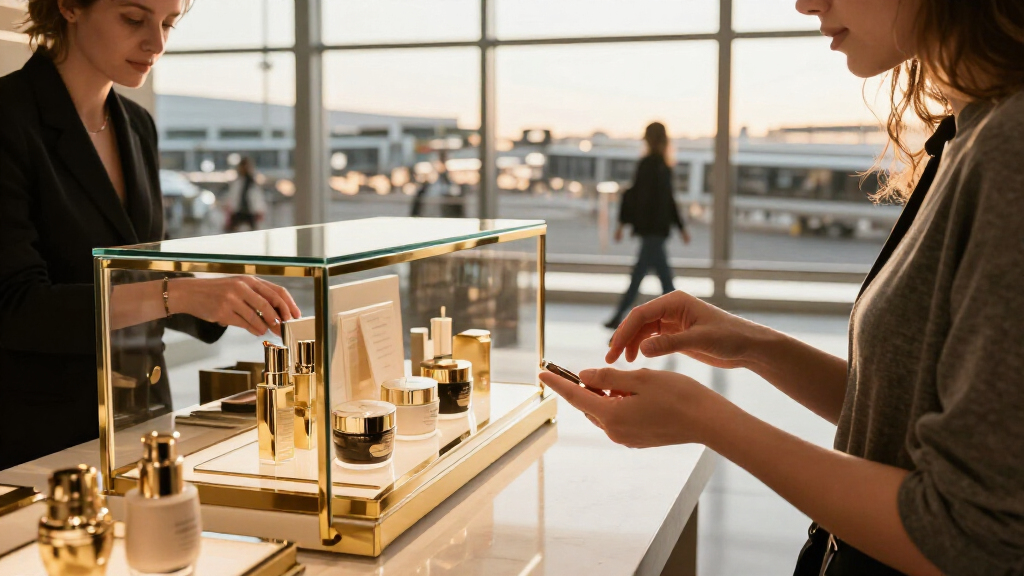
Cosmetics Business presents travel retail as a possible counterpoint: airports may change how people shop compared with online and conventional stores, creating an opening for premium beauty. The source material available here is an excerpt from a subscriber-only report, however, and does not describe the airport shopping patterns in detail or provide evidence that they have already translated into higher sales.
If airport shopping does attract buyers differently, travel retail could give luxury beauty companies a way to reach customers outside the channels where lower prices and dupes are particularly visible. That matters as consumers scrutinize whether premium products justify their cost. A travel setting could offer brands a distinct point of sale, but the supplied material does not establish whether the difference comes from product discovery, convenience, promotions, shopper demographics, or another factor.
The report’s framing also highlights a broader commercial challenge: established price positioning alone may not persuade shoppers when less expensive products claim credible performance. For readers and industry observers, the key question is whether travel retail can generate sustained demand rather than simply provide another place to display premium products. No revenue, conversion, or repeat-purchase data is included in the excerpt, so the commercial impact remains uncertain.
Products Worth Considering

Oura Ring 4 Smart Ring, Silver, Size 8

Therabody SmartGoggles 2nd Generation Heated Eye and Temple Massager

Hyperice Hypervolt Go 3 Lightweight Percussion Massage Gun with Carry Case
As an affiliate, we earn on qualifying purchases.
Price Pressure Meets Airport Shopping
The development comes amid a wider contest for beauty shoppers. According to the Cosmetics Business excerpt, competition has intensified as more products and brands enter the market, while dupes and consumer interest in cheaper options put pressure on premium players. The report describes this as a difficult environment for brands that need to defend higher prices.
McKinsey’s 2026 beauty-industry research, as quoted in the report, focuses on changing consumer expectations in skin care: shoppers are less likely to accept a direct link between premium pricing and performance. The cited research points instead to interest in lower-cost options that consumers regard as clinically credible or capable of visible results. Cosmetics Business then identifies travel retail as a prospective avenue for premium brands, not as a proven replacement for other sales channels.
The supplied source is only a small extract of a longer subscriber-only article. It does not provide a detailed account of airport retail’s recent performance, a timeline for the alleged shift in shopping habits, or comparisons with online and traditional stores. Those limits make it possible to report the direction of the article’s argument, but not to measure the trend.
“The perceived rule that “premium equals performance” no longer holds true.”
— McKinsey, as cited in the Cosmetics Business report
Sales Growth and Shopper Behavior Unquantified
The available excerpt does not state how much luxury beauty sales in travel retail have increased, over what period, or against what baseline. It also does not identify the airports, retailers, regions, or brands involved. The report’s characterization of changing airport shopping habits is not accompanied in the supplied material by survey results, transaction data, or other evidence that would show how those habits differ from other channels.
It is also unclear whether travel retail is already producing meaningful growth or is being presented as a promising channel for future sales. No information is provided on price differences, product ranges, marketing tactics, or whether airport shoppers are buying luxury beauty for themselves or as gifts. The full report may contain further detail, but it is not present in the source material provided.
More Data Needed to Test the Opportunity
The next useful evidence would be sales and shopper data from airport retailers and beauty brands, including a defined time period and comparison with other retail channels. Examples identifying which markets or product categories are performing would help show whether the opportunity extends beyond a general industry observation.
For now, the confirmed development is that Cosmetics Business has identified travel retail as a potential opening for luxury beauty amid price pressure. Whether airports can deliver durable growth, and which brands might benefit, remains to be established by further reporting and measurable results.
Key Questions
What is the reported development?
Cosmetics Business reports that travel retail, particularly airport shopping, may offer luxury beauty brands a new sales opportunity as they face competition from lower-priced products.
Why are premium beauty brands under pressure?
The report says dupes and cheaper alternatives are making it harder for premium brands to defend their prices. It cites McKinsey research finding that shoppers are embracing lower-priced skin-care products they consider credible and effective.
Has airport beauty sales growth been quantified?
No sales figures or growth comparisons appear in the source excerpt. The scale of the opportunity and the period it covers are not stated.
What does McKinsey’s research say about skin care?
As summarized by Cosmetics Business, McKinsey’s State of Beauty Industry Trends 2026 report says consumers are less likely to assume that premium prices mean better performance and are choosing some lower-priced dermatologist-backed and K-beauty options.
What remains unknown about travel retail?
The excerpt does not identify which airports, brands, or markets are involved, or explain with data how airport shopping differs from online and conventional retail. It is not clear whether the channel is already generating substantial growth.
Source: cosmeticsbusiness.com