
To protect your hair from chlorine and saltwater during wellness trips, start by thoroughly wetting your hair with plain water before swimming to create a barrier. Apply a leave-in conditioner or pre-swim oil for extra protection, and consider wearing a swim cap. After swimming, rinse with gentle, sulfate-free shampoo, then deep condition to restore moisture. Using proper drying techniques and regular nourishing treatments will keep your hair healthy—learn more ways to safeguard your hair’s health throughout your trip.
Key Takeaways
- Wet hair thoroughly with clean water before swimming to create a barrier against chemicals and salt.
- Apply leave-in conditioner or pre-swim hair oil to protect hair from damage during water exposure.
- Wear a swim cap to minimize direct contact with chlorinated and saltwater.
- Rinse hair with gentle, sulfate-free shampoo immediately after swimming to remove residue.
- Follow with deep conditioning treatments to restore moisture and maintain hair health long-term.
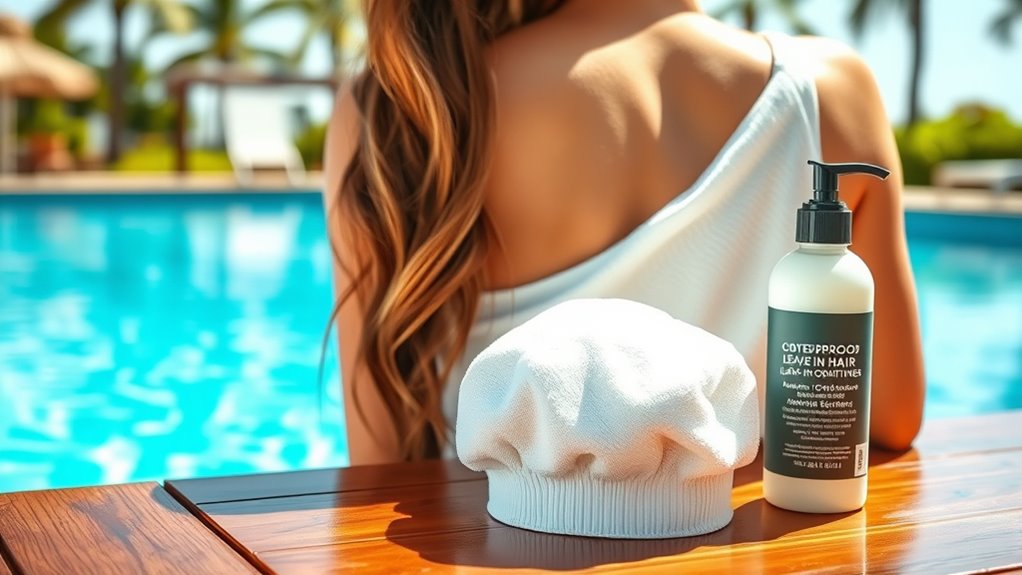
Spending time in chlorinated pools or saltwater can damage your hair if you’re not careful. The chemicals and minerals in these waters strip away your hair’s natural oils, leading to dryness, brittleness, and color fading. To keep your hair healthy during your wellness trips, you need effective hair repair strategies and moisturization techniques that counteract these effects. Before diving in, it’s wise to wet your hair with plain water. This creates a barrier, reducing the amount of chlorinated or salty water your hair absorbs. Applying a leave-in conditioner or a pre-swim hair oil can also help form an extra protective layer, minimizing damage from harsh chemicals and salt. After swimming, don’t rush to rinse your hair with just water; instead, use a gentle, sulfate-free shampoo designed for swimmers or clarifying purposes. This helps remove residual chlorine or salt, preventing buildup that can further dry out your hair. Follow this with a deep conditioning treatment or hair mask to replenish lost moisture and restore elasticity. These moisturization techniques are *essential* because they help repair damage and prevent your hair from becoming overly porous and prone to breakage. Regular use of nourishing products infused with ingredients like keratin or coconut oil can further strengthen your hair against future exposure.
To maintain the integrity of your hair, incorporate regular hair repair routines into your post-swim shower. Look for products infused with nourishing ingredients like keratin, coconut oil, or shea butter, which work to rebuild damaged strands and restore softness. Deep conditioning treatments once or twice a week can provide extra hydration and strengthen hair from within. When drying your hair after exposure, avoid vigorous towel rubbing, which can cause additional breakage. Instead, gently pat your hair dry and consider using a microfiber towel designed to reduce frizz and damage. If you’re planning to be in and out of water frequently, consider wearing a swim cap. While it might not be the most stylish, it’s an effective barrier against chlorine and salt, giving your hair a better shot at staying healthy.
During your wellness trips, always pay attention to your hair’s needs. Regularly applying nourishing treatments and practicing proper moisturization techniques will help you repair damage caused by chlorinated and salty waters. These habits not only protect your hair in the moment but also promote long-term health and *vitality*. Being aware of your hair’s exposure to harsh elements is an important concept that can help you maintain beautiful, healthy hair over time. With the right care, you can enjoy your swimming and wellness activities without sacrificing the strength and beauty of your hair.
Top picks for "protect hair chlorine"
Open Amazon search results for this keyword.
As an affiliate, we earn on qualifying purchases.
Frequently Asked Questions
Can Wearing a Swim Cap Prevent Hair Damage?
Yes, wearing a swim cap can prevent hair damage. Swim caps provide a barrier that shields your hair from chlorine and saltwater, reducing dryness and breakage. They also help keep your hair dry, which minimizes exposure to harsh chemicals and salt. For ideal hair protection during your wellness trips, choose a snug-fitting, high-quality swim cap made from silicone or latex. This simple step keeps your hair healthier and looks stylish too.
Are Certain Hair Treatments More Resistant to Chlorine and Saltwater?
Did you know that keratin-treated hair is 30% more resistant to damage? Certain hair treatments, like keratin or protein treatments, can make your hair more resistant to chlorine and saltwater. Using pre-swim conditioning and applying hair barrier sprays create a protective layer that shields your hair from harsh elements. These treatments help maintain your hair’s health, making it easier to enjoy your wellness trip without worrying about damage.
How Often Should I Wash My Hair After Swimming?
You should wash your hair immediately after swimming to effectively manage your hair washing frequency and maintain healthy swimming hair care. Rinse thoroughly with clean water to remove chlorine or saltwater, then use a gentle shampoo designed for swimmers if needed. Avoid overwashing, which can strip natural oils, but don’t skip washing altogether. Aim to wash your hair within an hour of swimming for ideal results and better hair protection.
Do Natural Oils Protect Hair Better Than Commercial Products?
Natural oils do offer some protection for your hair, acting as a barrier against chlorine and saltwater. They help seal the hair cuticle, locking in moisture and reducing damage from environmental stressors. However, commercial products like leave-in conditioners or specialized shields often provide more consistent, targeted protection. For best results, combine natural oils with these products to maximize hair protection during your wellness trips.
Can Trimming Hair Reduce Damage From Chlorine and Saltwater?
A little pampering can go a long way. Trimming your hair can indeed help reduce damage from chlorine and saltwater by removing split ends and weak strands. Regular hair trimming supports damage prevention, keeping your hair healthier and more resilient against environmental stressors. By maintaining your ends, you minimize breakage and keep your hair looking vibrant, even during wellness trips. Think of it as a gentle refresh for your hair’s natural vigor.
Conclusion
Think of your hair as a delicate garden, vulnerable to the harsh elements of chlorine and saltwater. With a little preparation, you become the gentle gardener, shielding your blooms from damage. By rinsing and conditioning, you’re watering your hair’s roots, ensuring they stay strong and vibrant. Embrace these habits as your protective umbrella, turning your wellness trip into a sanctuary where your hair blossoms, resilient and radiant, ready to face any adventure that comes your way.