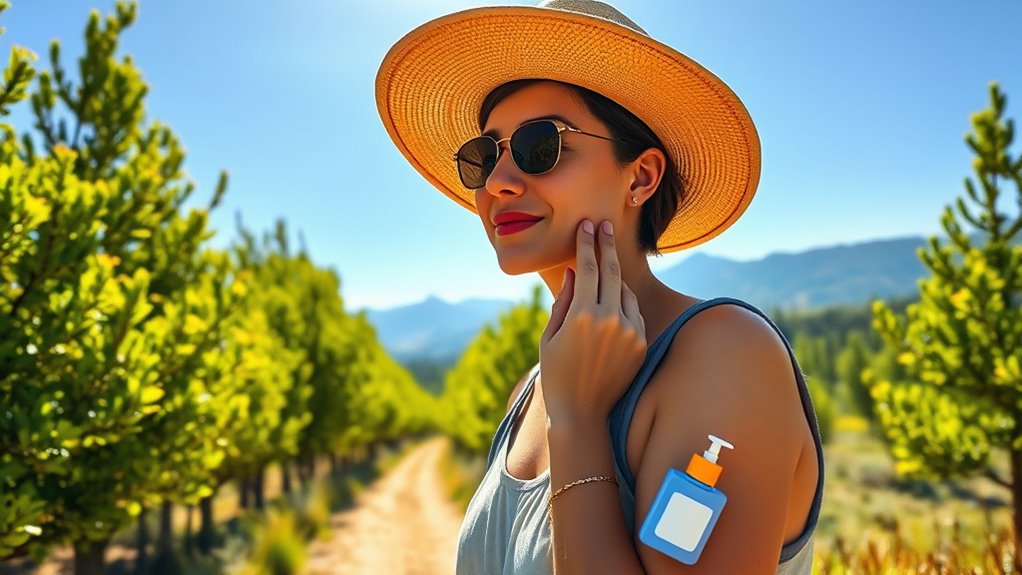

To protect your skin year-round, consistently apply broad-spectrum sunscreen with at least SPF 30 to all exposed areas, even on cloudy days. Reapply every two hours or after sweating and swimming, and don’t forget tricky spots like eyelids and behind the knees. Wear protective clothing, such as wide-brim hats and UV-rated fabrics, especially during peak hours from 10 a.m. to 4 p.m. Keep your skin safe daily and discover more easy tips to stay protected all year.
Key Takeaways
- Apply broad-spectrum SPF 30+ sunscreen to all exposed skin 15 minutes before outdoor activity, reapplying every two hours or after swimming or sweating.
- Incorporate daily sun protection routines year-round, including cloudy days, using UV-protective clothing and accessories.
- Wear protective clothing such as long-sleeved shirts, wide-brimmed hats, and UV-rated fabrics to shield your skin consistently.
- Use 100% UV-protection sunglasses and apply sunscreen on your face, eyelids, and other sensitive areas regularly.
- Avoid peak UV hours (10 a.m. – 4 p.m.) and adapt your outdoor plans or protective measures based on UV index levels.

With sunshine and warm weather, it’s essential to protect your skin from harmful UV rays. Whether you’re heading outdoors for a quick stroll, a day at the beach, or just running errands, taking proper sun protection steps can make a big difference. One of the most important habits you can develop is consistent sunscreen application. Apply a broad-spectrum sunscreen with at least SPF 30 to all exposed skin, about 15 minutes before going outside. Be thorough—cover your face, neck, ears, arms, and legs. Don’t forget often-missed spots like your eyelids, the tops of your feet, and behind your knees. Reapply every two hours, or more frequently if you’re sweating or swimming, to maintain protection throughout the day. Remember, sunscreen isn’t just for beach days; it should be part of your daily routine, rain or shine, to guard against UV rays that can penetrate clouds and reflections. Using a sunscreen with added UV protection can enhance your defense against harmful rays.
Alongside sunscreen, protective clothing is your best defense against sun damage. Choose lightweight, tightly woven fabrics that shield your skin without causing overheating. Long-sleeved shirts, wide-brimmed hats, and UV-protective clothing are excellent options, especially when you plan to spend extended periods outdoors. A hat with a broad brim offers shade for your face, ears, and neck, reducing direct UV exposure. Sunglasses with 100% UV protection also play a crucial role, safeguarding your eyes from harmful rays and preventing eye strain. Covering up is particularly important during peak sunlight hours between 10 a.m. and 4 p.m., when UV intensity is strongest. If you’re active outdoors, consider clothing with built-in UV protection or consider layering with UPF-rated garments for added defense.
Top picks for "protection body face"
Open Amazon search results for this keyword.
As an affiliate, we earn on qualifying purchases.
Frequently Asked Questions
How Often Should I Reapply Sunscreen During the Day?
You should reapply sunscreen every two hours, especially if you’re outdoors or exposed to sun for extended periods. If you’re swimming, sweating heavily, or towel-drying, reapply more frequently. Keep in mind that reapplication frequency depends on your sun exposure duration and activity level. To stay protected, make sure to reapply regularly, even on cloudy days, to maintain effective sun defense and prevent skin damage.
Can I Use the Same Sunscreen for Face and Body?
Using the same sunscreen for your face and body is like sharing a versatile tool; it can work, but specialized options often perform better. Chemical filters absorb oils and sweat, ideal for your body, while mineral blockers provide a gentle shield for your face’s delicate skin. For peak protection, choose a broad-spectrum sunscreen suited for each area’s needs, ensuring your skin stays safe and radiant all year round.
Is SPF 50 Necessary on Cloudy Days?
Yes, SPF 50 is necessary on cloudy days because cloud coverage doesn’t block all UV rays. UV penetration can still reach your skin, increasing the risk of damage. Even if you don’t feel sun exposure, UV rays can penetrate clouds, so wearing SPF 50 helps protect your skin from long-term harm. Keep in mind, UV rays can be just as strong in winter or overcast days.
Are Natural Oils Effective Sun Protectants?
Natural oils alone aren’t effective sun protectants. While some oils, like coconut or red raspberry seed oil, offer minor SPF benefits, they don’t provide reliable sun protection. For proper sun protection, you need a broad-spectrum sunscreen with at least SPF 30. Relying solely on natural oils leaves your skin vulnerable to UV damage. Always combine oils with a good sunscreen for effective, year-round sun protection.
How Does Altitude Affect Sun Protection Needs?
Altitude impacts your sun protection needs because higher elevations increase UV intensity. As you go higher, the atmosphere becomes thinner, allowing more harmful UV rays to reach your skin. You should wear broad-spectrum sunscreen with a higher SPF, reapply more often, and seek shade during peak hours. Remember, the UV impact at altitude makes it essential to be vigilant about sun protection year-round, especially in mountainous areas.
Conclusion
Remember to protect your skin every day, whether it’s sunny, cloudy, or rainy. Wear sunscreen, seek shade, and cover up to shield your body and face. Stay consistent with your skincare routine, reapply regularly, and stay mindful of the sun’s rays year-round. Protecting your skin isn’t just a habit; it’s a commitment. Prioritize your skin’s health, preserve your youthful glow, and enjoy the outdoors safely. Your skin will thank you today, tomorrow, and for years to come.