
Using retinoids on your body can improve skin texture, tone, and address issues like hyperpigmentation or signs of aging. Since body skin is thicker and less sensitive, you can use higher concentrations but should start slowly to avoid irritation. Applying a thin layer after cleansing, using moisturizer, and always wearing sunscreen protects your skin. By following proper precautions, you can enjoy benefits without causing damage—more tips to guarantee safe and effective use await you.
Key Takeaways
- Retinoids can improve skin texture and tone on the body but require gradual introduction to prevent irritation.
- Thicker body skin tolerates retinoids better, making them suitable for areas like elbows and knees.
- Always perform patch tests and start with lower concentrations to minimize sensitivity and adverse reactions.
- Proper application involves a thin, even layer after cleansing, with daily sunscreen use to protect from UV damage.
- Monitor skin response and adjust frequency or strength to maintain skin health and avoid overuse or irritation.
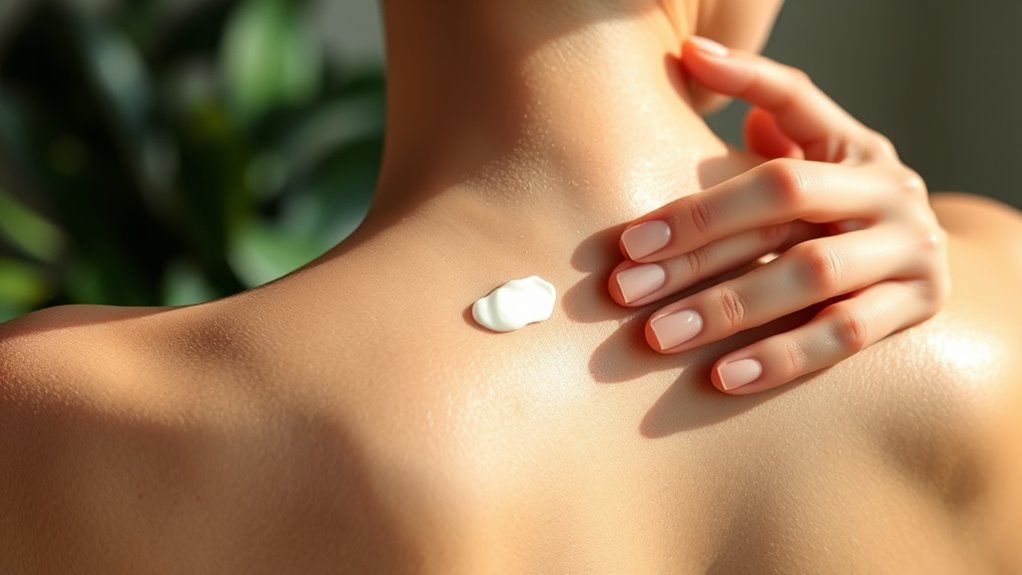
Retinoids are a powerful skincare tool not just for your face but also for your body. When you start applying retinoids to larger areas, understanding how they interact with your skin becomes essential. One key aspect is retinoid absorption, which can vary depending on your skin’s condition and the formulation you use. Typically, the skin on your body is thicker and less sensitive than your facial skin, allowing for potentially higher absorption rates. However, this doesn’t mean you should ignore caution—overly aggressive use can lead to irritation or increased skin sensitivity. To maximize benefits while minimizing risks, it’s important to start with lower concentrations and gradually increase as your skin adapts. This way, you give your skin time to build tolerance, reducing the likelihood of redness, peeling, or discomfort.
Applying retinoids on your body requires caution and patience for safe, effective results.
Your skin sensitivity plays a major role in how well retinoids work and how your skin reacts. When applying retinoids on your body, especially if it’s your first time, you should be mindful of how your skin responds. Some areas, like elbows, knees, or thighs, tend to be less sensitive, making them suitable starting points. But even then, it’s wise to do a patch test first to see how your skin reacts. If you notice excessive dryness, burning, or irritation, cut back on frequency or strength. Keep in mind that while your body’s skin might tolerate retinoids differently than your face, it can still become sensitive over time. Using a gentle moisturizer can help support your skin barrier and reduce discomfort. Additionally, understanding your skin’s condition can help tailor your retinoid routine effectively.
Another consideration is how you apply retinoids to guarantee proper absorption without causing unnecessary irritation. Applying a thin, even layer after cleansing allows the product to penetrate effectively. Avoid rubbing vigorously, as this can increase sensitivity and irritation. Also, since retinoids can make your skin more vulnerable to sun damage, it’s vital to use sunscreen daily on treated areas. If you notice your skin becoming overly sensitive or inflamed, give it a break from retinoids until it calms down. Remember, patience is key—retinoids work gradually, and consistent, careful use will yield the best results without compromising your skin’s health.
As an affiliate, we earn on qualifying purchases.
Frequently Asked Questions
Can Retinoids Be Used During Pregnancy or Breastfeeding?
You should avoid using retinoids during pregnancy and breastfeeding because they pose risks to your baby. For pregnancy safety, retinoids can cause birth defects, so consult your doctor before use. During breastfeeding, consider breastfeeding considerations, as retinoids may pass into breast milk. Always prioritize safety, and discuss alternative skincare options with your healthcare provider to protect both you and your baby.
How Long Does It Take to See Results From Body Retinoid Treatments?
Imagine your skin waking up, revealing smoother, brighter layers beneath. Usually, you’ll start noticing visible improvements within 4 to 6 weeks of consistent body retinoid use. Timing expectations vary depending on your skin type and concerns, but patience pays off. Keep in mind, gradual changes are normal, and with continued use, you’ll see your skin transform into a healthier, more radiant version of itself.
Are There Specific Retinoid Formulations for Different Skin Types?
Yes, there are specific retinoid formulations for different skin types. You should look for formulation compatibility, which means choosing options tailored to your skin’s needs, such as milder formulas for sensitive skin or stronger ones for oily skin. Skin-specific options help prevent irritation and optimize results. Always read product labels and consult a dermatologist if you’re unsure, ensuring you pick the right retinoid for your skin type.
Can Retinoids Be Combined With Other Body Skincare Products Safely?
Yes, you can safely combine retinoids with other body skincare products by paying attention to product compatibility. Use proper layering techniques, applying lighter, water-based products before thicker, oil-based ones. Avoid mixing retinoids with harsh exfoliants or strong acids, which can cause irritation. Always patch-test new combinations and consult your dermatologist if unsure, ensuring your skincare routine remains effective and safe.
What Are the Signs of Retinoid Overuse or Irritation?
You’ll notice signs of irritation like redness, itching, or dryness when you overuse retinoids. Overuse symptoms also include peeling, burning sensations, or increased sensitivity to sunlight. If you see these signs, it’s a clear indicator you might be applying too much or too often. To avoid damage, reduce usage and incorporate soothing products. Always listen to your skin and consult a dermatologist if irritation persists.
retinoid cream for elbows and knees
As an affiliate, we earn on qualifying purchases.
As an affiliate, we earn on qualifying purchases.
Conclusion
Think of using retinoids on your body like tending a delicate garden—you need patience, care, and the right tools. I once saw a friend start retinoids and, after a few weeks, her skin blossomed brighter and smoother, much like a garden in full bloom. Just remember, with consistent use and precautions, you’ll see your skin transform gradually. Be gentle, stay committed, and enjoy the beautiful results that come with nurturing your skin.
As an affiliate, we earn on qualifying purchases.
sunscreen for retinoid-treated skin
As an affiliate, we earn on qualifying purchases.
As an affiliate, we earn on qualifying purchases.