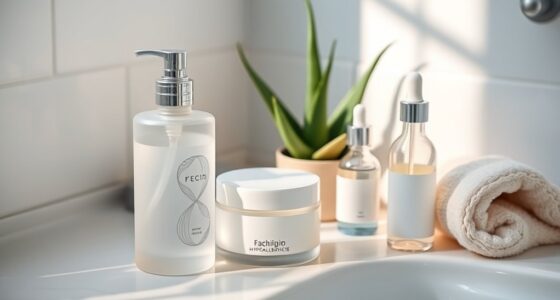
To improve your skin health with probiotic skincare, focus on choosing products with beneficial strains like Lactobacillus or Bifidobacterium. Use them consistently in your routine to support your skin’s microbiome and help maintain a healthy, balanced pH. Be gentle when cleansing, avoid over-washing, and keep your skin hydrated. When you explore further, you’ll discover how these habits can boost your skin’s resilience and radiance over time.
Key Takeaways
- Incorporate probiotic skincare products like serums or mists regularly to nurture your skin’s microbiome.
- Choose formulations with beneficial strains such as Lactobacillus or Bifidobacterium to support microbiome health.
- Maintain proper skin pH with gentle cleansers to enhance barrier function and probiotic effectiveness.
- Avoid over-washing and harsh products that can disrupt your skin’s natural balance.
- Support skin hydration and protect against environmental stressors to promote resilient, healthy skin over time.

Probiotic skincare has gained popularity because it actively supports your skin’s natural defenses and balance. When you choose products with probiotics, you’re helping to nurture your skin’s microbiome, the community of beneficial bacteria that naturally reside on your skin’s surface. Maintaining a healthy microbiome balance is essential for protecting against harmful bacteria, reducing inflammation, and promoting a radiant complexion. These probiotics work by introducing good bacteria that can outcompete harmful microbes, creating a protective barrier that keeps your skin resilient and healthy. Regular use of probiotic skincare can help restore this delicate balance, especially if your skin is prone to breakouts, sensitivity, or dryness.
Probiotic skincare nurtures your skin’s microbiome for a healthier, more resilient complexion.
Another critical aspect of effective probiotic skincare involves pH regulation. Your skin’s natural pH level hovers around 4.5 to 5.5, making it slightly acidic. This acidity helps keep bacteria in check and supports the skin’s barrier function. Many conventional skincare products can disrupt this pH balance, leading to increased vulnerability to irritants and infections. Probiotic formulations are often designed to support pH regulation, ensuring your skin remains in its ideal acidic state. When your skin’s pH is properly regulated, it enhances the effectiveness of your skin’s natural defenses and prevents issues like dryness, redness, and breakouts.
To maximize the benefits, look for probiotic skincare products that include strains like Lactobacillus or Bifidobacterium, which are known for their ability to support microbiome health. Incorporate these products into your routine consistently—whether that’s a probiotic facial mist, serum, or moisturizer—so that your skin can continuously reap their benefits. It’s also important to keep your skin hydrated and protect it from harsh environmental factors, as a well-hydrated skin surface supports better microbiome balance and pH stability.
You should also pay attention to your overall skincare habits: avoid over-washing your face, which can strip your skin of its natural oils and disrupt the microbiome, and opt for gentle cleansers that respect your skin’s pH. Additionally, understanding the importance of a self-watering plant pot system can serve as a reminder to maintain consistent and balanced skincare routines. Remember, probiotic skincare is not a quick fix but a way to support your skin’s natural ecosystem over time. When you focus on nurturing your microbiome balance and maintaining proper pH regulation, you’re setting the foundation for healthier, more resilient skin.
Top picks for "improve skin health"
Open Amazon search results for this keyword.
As an affiliate, we earn on qualifying purchases.
Frequently Asked Questions
Can Probiotic Skincare Prevent Acne or Breakouts?
Probiotic skincare can help prevent acne and breakouts by balancing your skin’s microbiome, reducing pore clogging, and calming inflammation. It can also improve skin dryness, which often triggers excess oil production and acne. By strengthening your skin’s natural defenses, probiotics promote clearer, healthier skin. However, individual results vary, so consistent use and choosing the right product are key to seeing benefits in preventing breakouts.
Are Probiotic Creams Suitable for Sensitive Skin Types?
Probiotic creams are generally suitable for sensitive skin because they promote ingredient compatibility and soothe irritation. You should look for formulas with gentle, non-irritating ingredients to avoid reactions. Always do a patch test before regular use, and choose probiotic skincare products specifically designed for sensitive skin. This way, you can enjoy the benefits of probiotics without compromising your skin’s delicate balance.
How Long Does It Take to See Results From Probiotic Skincare?
Most people see results from probiotic skincare within 4 to 6 weeks. You’ll notice improvements as your skin’s microbiome balances, but this depends on ingredient stability and your application frequency. Consistently using the product daily maximizes benefits. For faster results, choose formulas with stable probiotics and follow the recommended routine. Patience is key—your skin needs time to adapt and reveal its healthier, clearer appearance.
Can Probiotics Help With Skin Conditions Like Eczema or Rosacea?
Probiotics can help with skin conditions like eczema and rosacea by supporting your microbiome balance and strengthening your skin barrier. When your microbiome is in harmony, it reduces inflammation and irritation, which are common in these conditions. Incorporating probiotic skincare can promote a healthier skin environment, easing symptoms over time. Consistency is key, and you may notice improvements as your skin’s microbiome and barrier become more resilient.
Are Probiotic Skincare Products Safe for Pregnant Women?
Probiotic skincare products are generally safe for pregnant women when you choose reputable brands. They can support your pregnancy skincare by balancing your skin’s microbiome without harmful chemicals. However, it’s wise to check probiotic safety and consult your healthcare provider before adding new products to your routine. Prioritize products with gentle, pregnancy-safe ingredients to protect both your skin and your baby’s health.
Conclusion
By incorporating probiotic skincare into your routine, you’re planting seeds for vibrant, resilient skin. Think of your skin as a garden—you nurture it with beneficial bacteria, and it blooms with health and radiance. With consistent use, you’ll foster a balanced ecosystem that fights off harm and promotes natural beauty. Remember, healthy skin isn’t a distant dream; it’s a thriving garden within you, waiting to flourish with the right care.