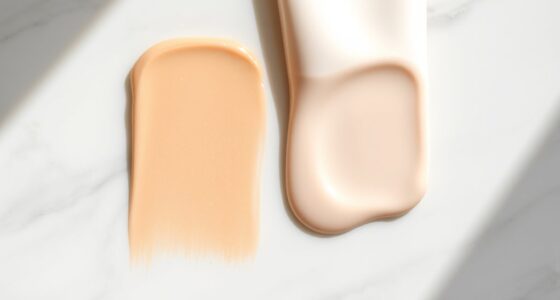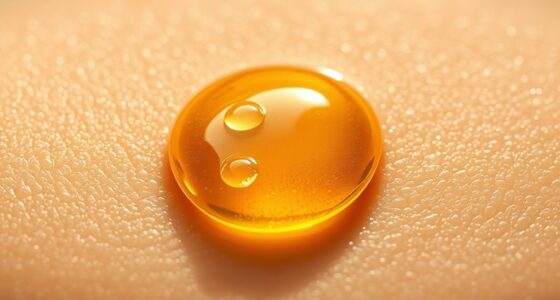
To layer lotions, oils, and creams effectively, start with the lightest, fastest-absorbing products like serums or gels. Apply them in order from thinnest to thickest, sealing in moisture as you go. Use hydrating ingredients like hyaluronic acid first, then layer nourishing lotions, followed by facial oils or richer creams to lock everything in. This technique boosts hydration and glow, helping your skin stay dewy and healthy—more tips await for perfecting your routine.
Key Takeaways
- Start with lightweight, fast-absorbing products like serums or essences before applying lotions or gels.
- Layer from thinnest to thickest textures, sealing each layer properly before adding the next.
- Use facial oils after lotions to lock in moisture and boost skin radiance.
- Finish with richer creams or occlusives at night to prevent moisture loss and enhance hydration.
- Adjust product layering based on skin type and environmental conditions for optimal hydration.

Ever wondered how to keep your skin truly hydrated and glowing? The secret lies in mastering the art of layering your skincare products effectively. When it comes to moisturizing techniques, understanding the right order and product selection can make a significant difference in achieving that dewy, healthy complexion. Your goal should be to lock in moisture while nourishing your skin, and that starts with choosing the right products and applying them correctly.
Start by selecting your products carefully. Hydration tips often emphasize the importance of picking the right moisturizer suited to your skin type. For example, if you have dry skin, opt for richer creams or oils that provide deep nourishment and create a barrier to prevent moisture loss. If your skin is oily or prone to acne, lightweight lotions or gels with hydrating ingredients like hyaluronic acid can deliver moisture without clogging pores. When selecting products, look for those containing humectants, emollients, and occlusives—these ingredients work together to attract, seal, and lock in moisture. Your product selection should align with your skin’s needs and the climate you live in, ensuring your skin gets the hydration it craves.
Once you’ve chosen your products, timing and layering become key. The general hydration tips suggest applying products in order of consistency, starting with the thinnest and moving to the thickest. After cleansing and toning your skin, begin with a hydrating serum or essence. These lightweight formulas penetrate deeply and prepare your skin to absorb subsequent layers more effectively. Follow this with your lotion or lightweight moisturizer, which provides an initial barrier and adds moisture. If your skin is particularly dry, add a few drops of facial oil after the lotion—this extra step helps seal in the hydration and enhances the glow. Finish your routine with a richer cream or occlusive if needed, especially at night or in dry environments, to lock everything in and prevent moisture from escaping.
Frequently Asked Questions
Can Layering Products Cause Skin Breakouts or Irritation?
Layering products can cause skin breakouts or irritation if you’re sensitive or have allergy risks. When you apply multiple products, there’s a chance of product sensitivity, especially if ingredients clash or clog pores. To avoid issues, test new products on a small skin area first, and choose non-comedogenic options. Pay attention to how your skin reacts, and if irritation occurs, simplify your routine to prevent further breakouts.
What’s the Best Order to Apply Lotions, Oils, and Creams?
Did you know that applying skincare products in the correct order can boost their effectiveness by up to 50%? To get the best results, start with the thinnest product, like a lotion, and move to thicker ones like creams. Oils should go last, as they lock in moisture. Always check product compatibility to prevent irritation, and apply each layer gently to maximize absorption and benefits.
How Often Should I Reapply Layered Moisturizers?
You should reapply layered moisturizers every 2 to 4 hours, depending on your skin’s hydration needs and activities. Pay attention to skin hydration intervals, especially if you’re exposed to dry or harsh environments. If your skin feels dry or tight, it’s time for a reapplication. In humid conditions, you might need less frequent reapplication. Regularly reassessing your skin helps maintain ideal moisture and comfort throughout the day.
Are There Specific Ingredients to Look for in Each Layer?
Imagine your skin as a delicate canvas—choose ingredients that enhance its natural glow. For lotions, seek humectants like hyaluronic acid to attract moisture; in oils, opt for nourishing antioxidants such as vitamin E; and for creams, prioritize occlusives like petrolatum to lock everything in. Using proper layering techniques with these ingredients guarantees your skin stays hydrated, resilient, and radiant all day long.
Can Layering Moisturizers Help With Skin Conditions Like Eczema?
Layering moisturizers can definitely help with eczema by optimizing hydration and strengthening your skin barrier. When you apply products in the right order, you lock in moisture and create a protective layer that reduces irritation. Use a lightweight lotion first for hydration, followed by oils or creams that seal in moisture. This technique supports your skin’s healing process, making it more resilient and less prone to flare-ups.
Conclusion
Remember, a little goes a long way when it comes to moisturizing. By layering lotions, oils, and creams correctly, you’ll keep your skin hydrated, healthy, and glowing. Don’t forget, Rome wasn’t built in a day, so be patient and consistent with your routine. With each step, you’re investing in your skin’s future—so embrace these techniques and enjoy the radiant results. After all, beautiful skin is a reflection of your care and dedication.